
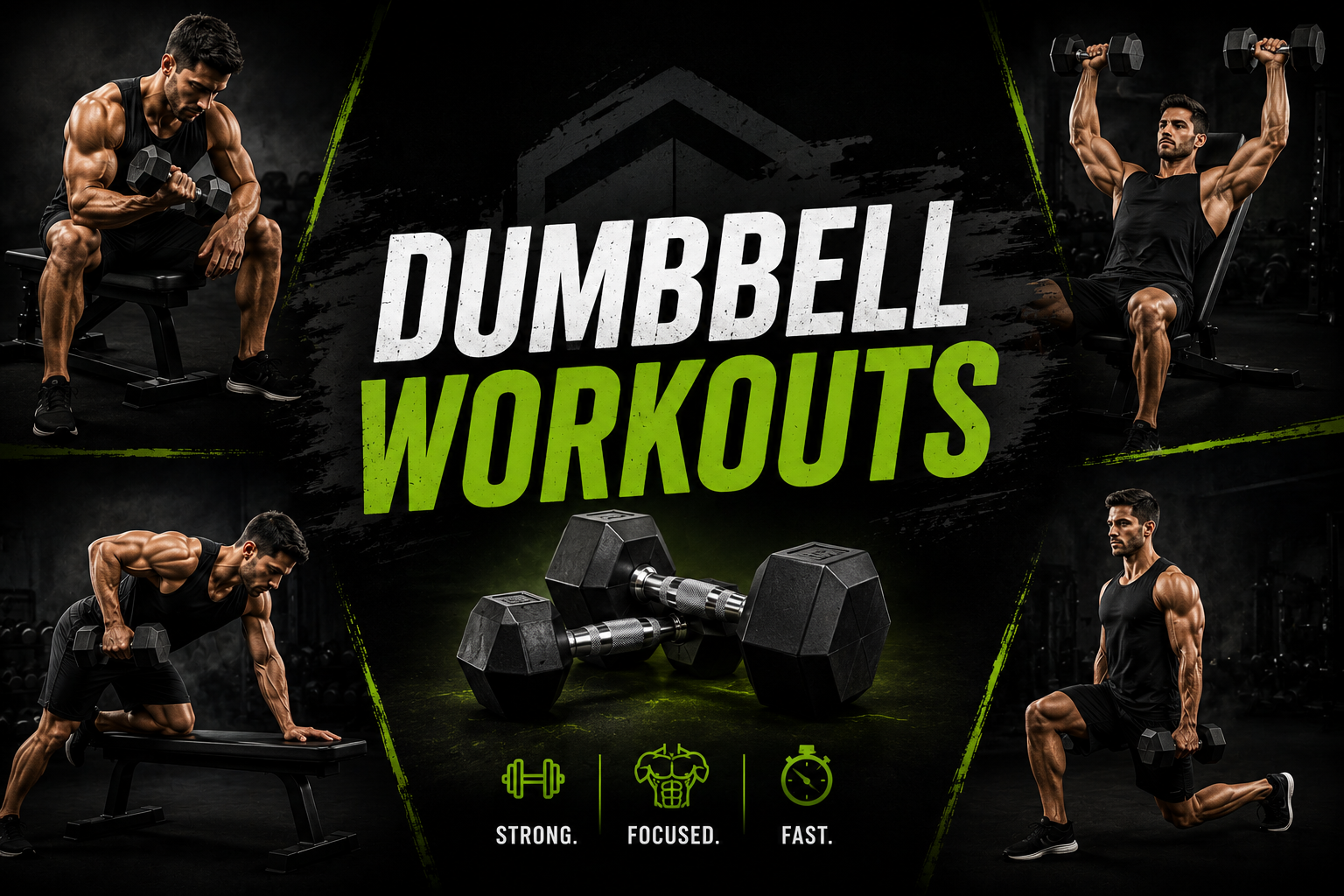
Dumbbell Workouts at Home
Choose a push, pull, and legs split or a three-day full-body routine. Follow the linked exercise guides and build a schedule that fits your week.
For the split: dumbbells, an adjustable bench, and a stable step. For the full-body plan: dumbbells and floor space.
New to lifting? Explore our beginner training programs. Compare more options in full-body workouts.
Push / Pull / Legs
Push
Dumbbell Bench Press · 3 × 6–10
Incline Dumbbell Press · 3 × 8–12
Dumbbell Fly · 3 × 8–12
Dumbbell Shoulder Press · 3 × 8–12
Lateral Raise · 3 × 8–12
Overhead Triceps Extension · 3 × 8–12
Pull: back & biceps
Single-Arm Dumbbell Row · 3 × 8–12
Chest-Supported Row · 3 × 6–10
Rear Delt Fly · 3 × 8–12
Dumbbell Shrugs · 3 × 10–14
Dumbbell Biceps Curl · 3 × 6–10
Hammer Curl · 3 × 8–12
Legs & core
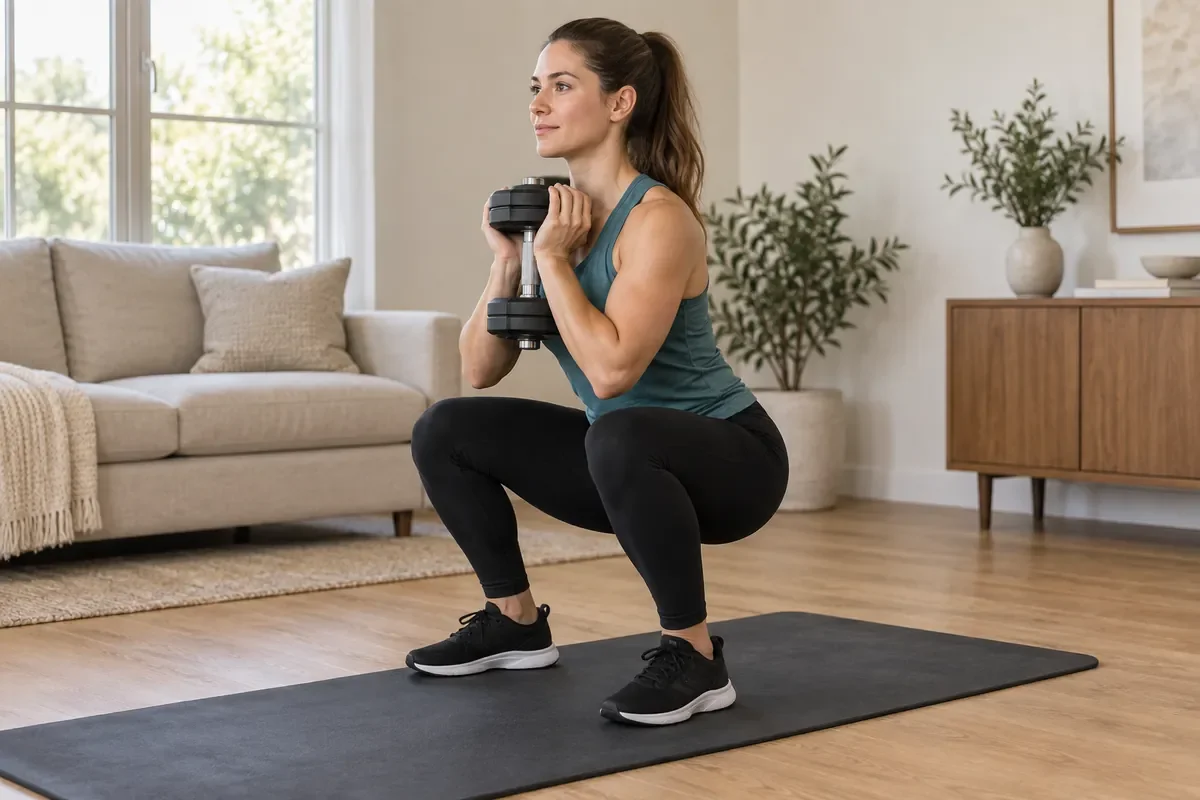
Goblet Squat · 3 × 8–12
Bulgarian Split Squat · 3 × 8–12 per side
Romanian Deadlift · 3 × 6–10
Dumbbell Step-Up · 2 × 6–10 per side
Single-Leg Calf Raise · 3 × 12 per side
Weighted Russian Twist · 3 × 16 total
3-Day Dumbbell Workout: Full-Body Plan
This sample plan is for intermediate lifters who are comfortable with squats, hip hinges, presses, and rows. Complete Workout A, B, and C on nonconsecutive days, such as Monday, Wednesday, and Friday.
Choose this plan or the push/pull/legs split above. They are separate options; you do not need to complete both in the same week.
You will need adjustable dumbbells or several pairs, clear floor space, and an optional exercise mat. No bench is required for this full-body option.
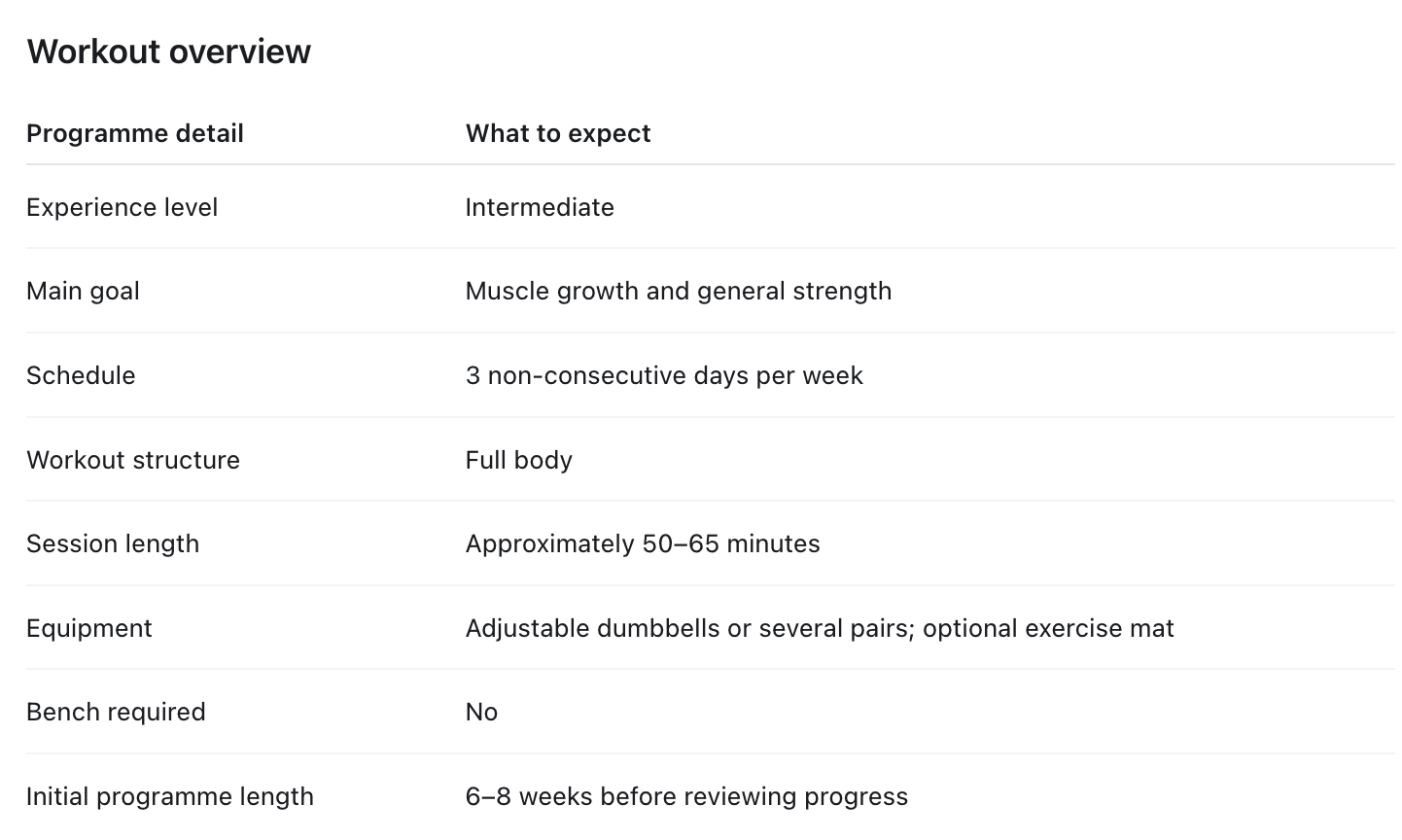
A single fixed pair can work for some exercises, but your legs and back will usually need more resistance than your shoulders and arms. Access to different weights makes the programme easier to follow effectively.
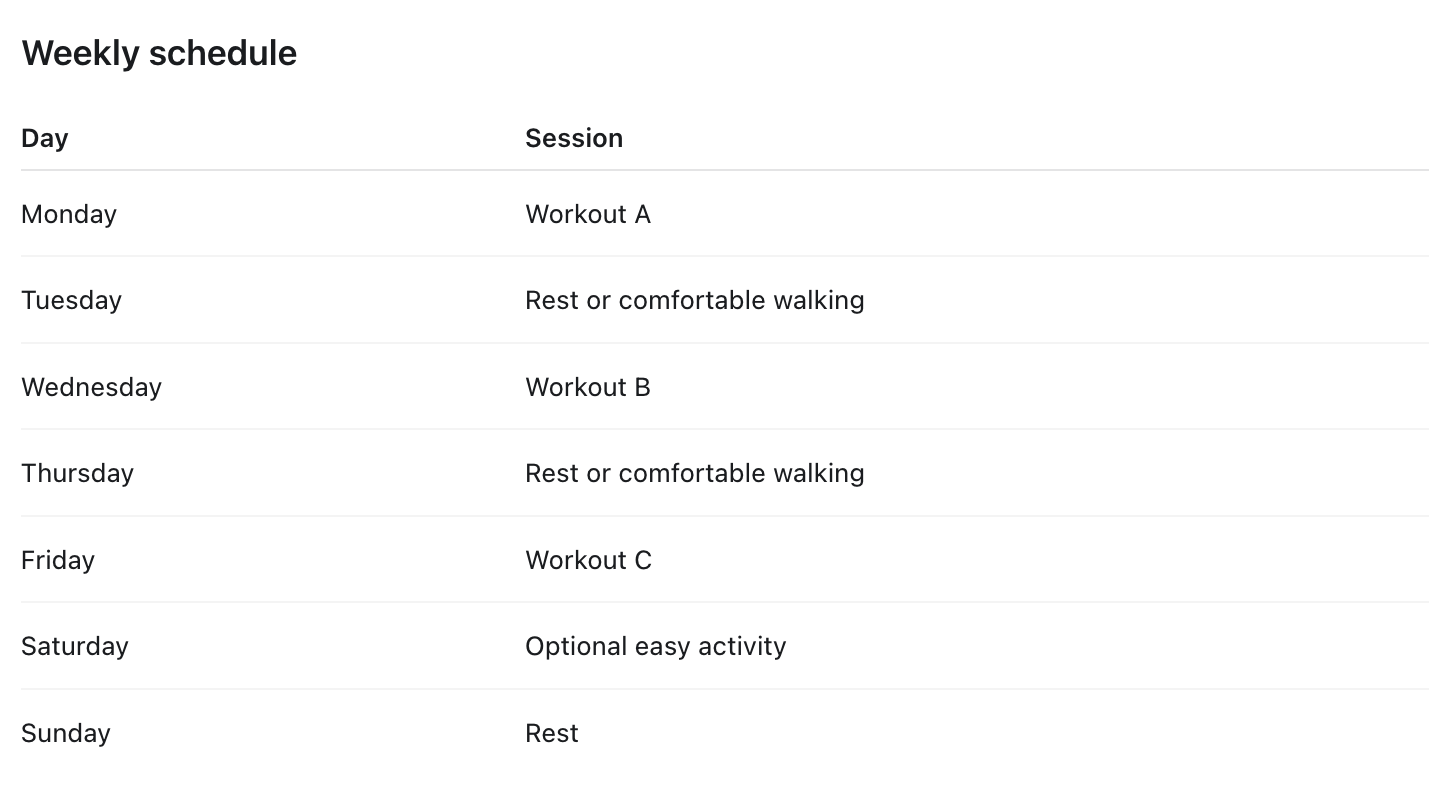
You can move the sessions to suit your schedule. Keep at least one day between these full-body workouts to allow recovery. Mayo Clinic’s strength-training guidance recommends avoiding training the same muscle groups on consecutive days.
How to follow the programme
Choose weights that leave 1–3 repetitions in reserve
Finish most working sets when you could complete another 1–3 controlled repetitions. This is often called “reps in reserve”, or RIR.
For example, if you complete 10 repetitions and could manage another two with good technique, you have approximately two reps in reserve.
Use this as a practical effort target, not a reason to force repetitions once your form changes. Training every set to failure is unnecessary; ACSM’s current evidence review also identifies failure training as an optional approach rather than a requirement for the average healthy adult. ACSM resistance-training guidance
Complete straight sets
Finish all sets of an exercise before moving to the next one. The rest periods below are part of the programme: take enough time to repeat your sets with control.
For single-sided exercises, complete both sides before taking the listed rest. Take a short break between sides if needed. “Three sets per side” means three sets for each limb.
Warm up before each session
Spend approximately 5–8 minutes preparing:
March briskly or walk for 2–3 minutes.
Perform 8–10 bodyweight squats.
Perform 8–10 unloaded hip hinges.
Make controlled arm circles and practise a few unloaded presses.
Complete 1–3 progressively heavier warm-up sets before your first demanding lower-body exercise and first press or row.
Warm-up sets do not count towards the working sets in the tables.
Day 1: Workout A
Begin the week with a squat, floor press, and row. Rest two minutes between sets of squats, presses, and deadlifts; 90–120 seconds after both sides of rows; 60–90 seconds for lateral raises; and about 60 seconds for dead bugs.
Dumbbell goblet squat — 3 sets of 8–12.
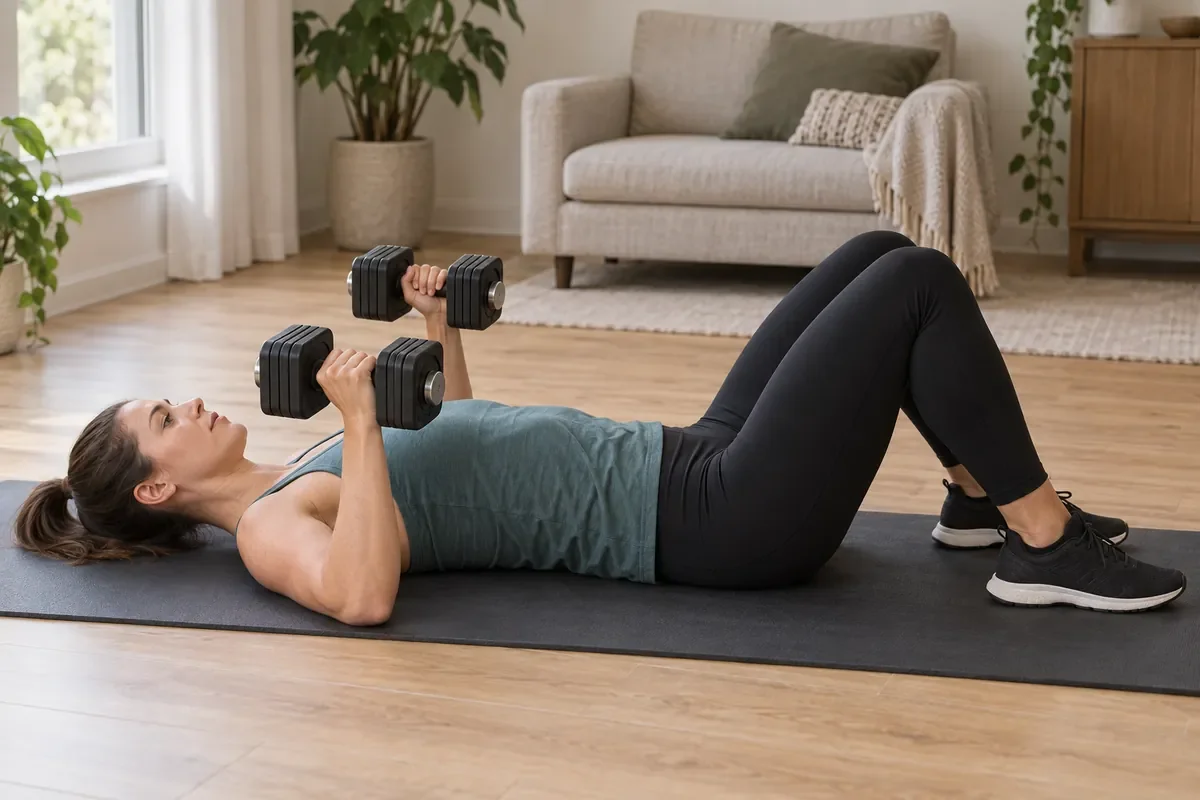
Dumbbell floor press — 3 sets of 8–12.
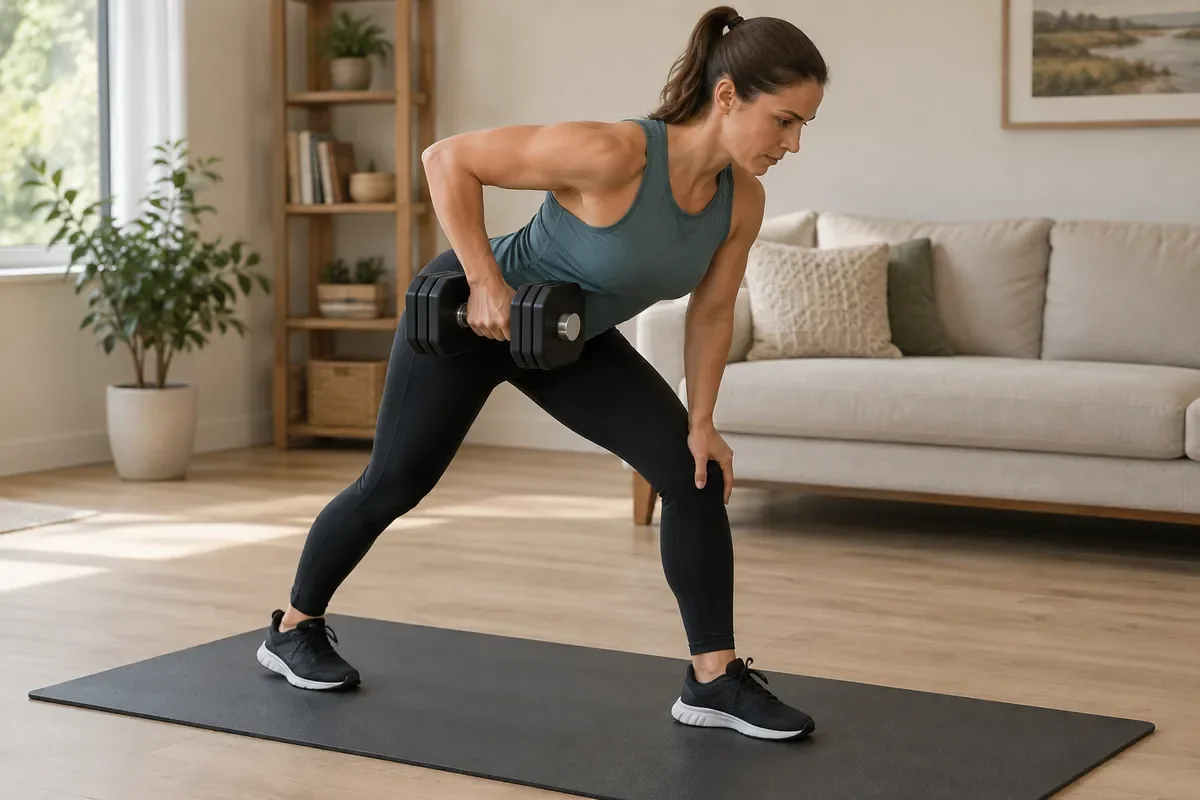
One-arm dumbbell row — 3 sets of 10–15 per side.
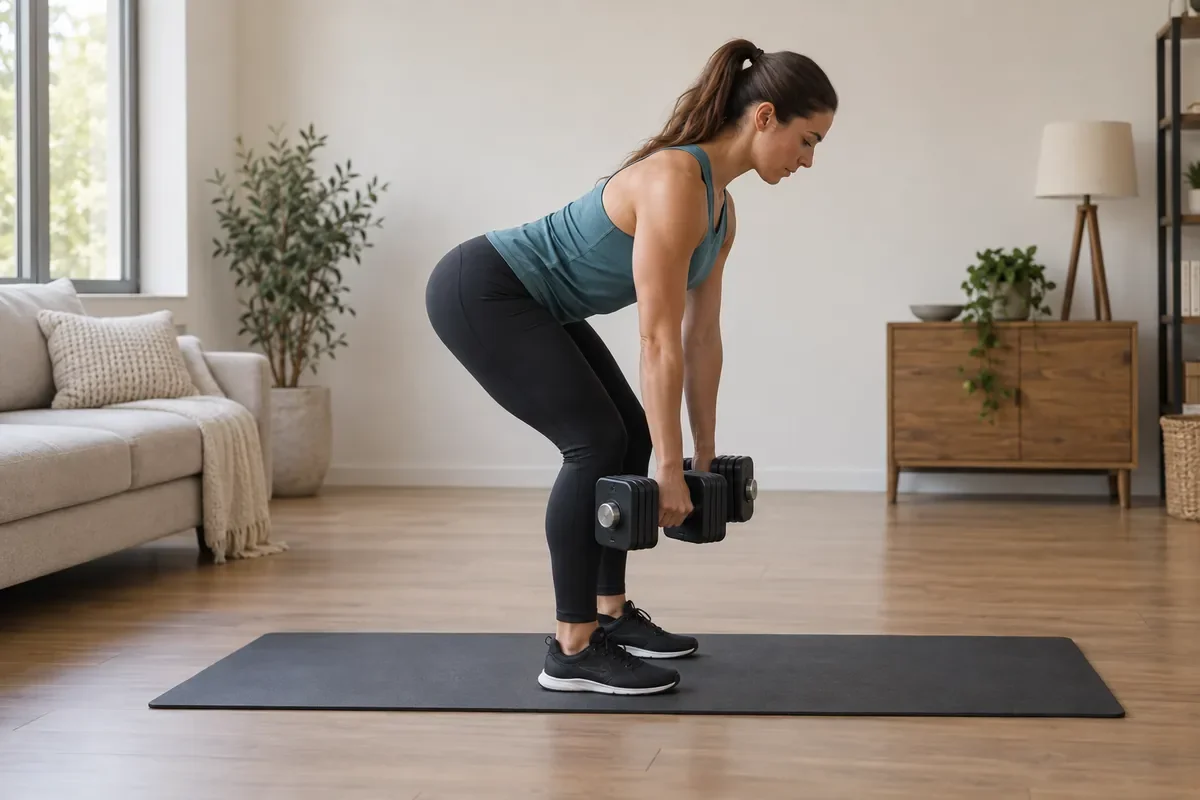
Dumbbell Romanian deadlift — 3 sets of 8–12.
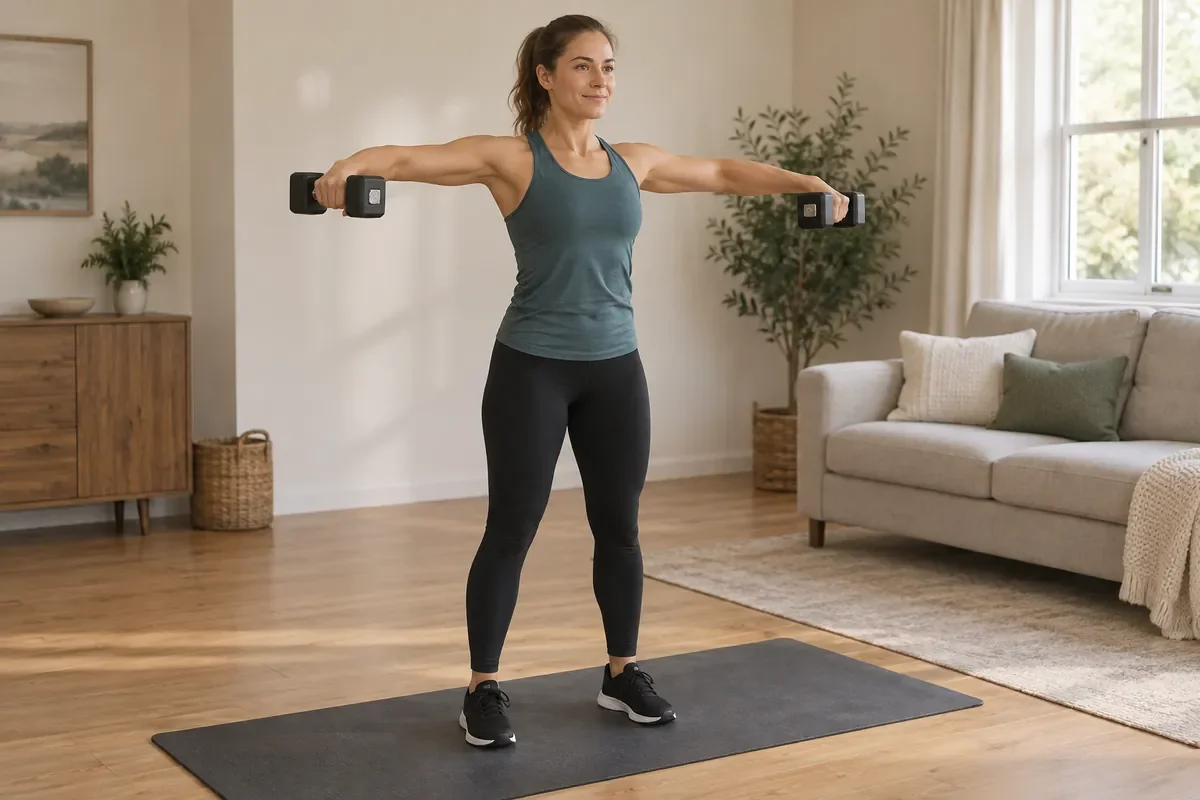
Dumbbell lateral raise — 2 sets of 12–20.
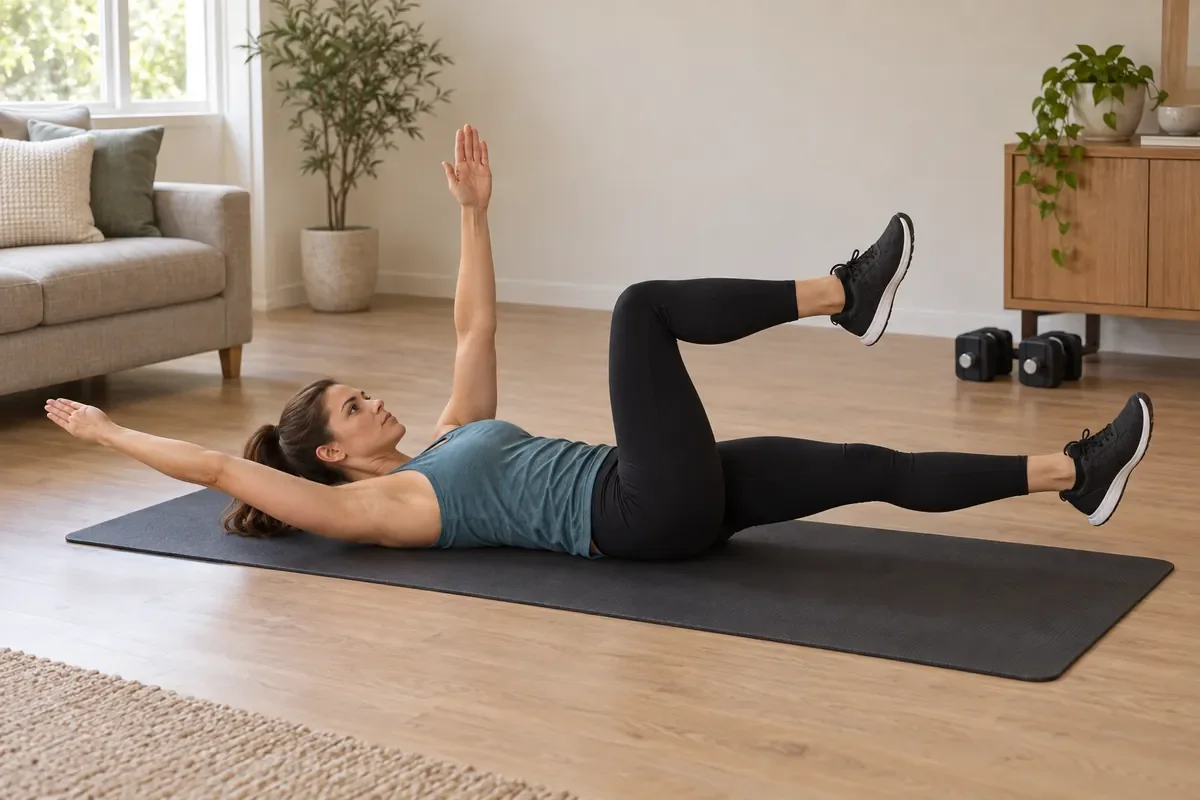
Dead bug — 2 sets of 6–10 per side.
Day 2: Workout B
Start your second session with a hip hinge and an overhead press. Rest about two minutes between sets of the first five exercises and 60–90 seconds for side planks. Take longer if needed to maintain control.
Dumbbell Romanian deadlift — 3 sets of 8–12.
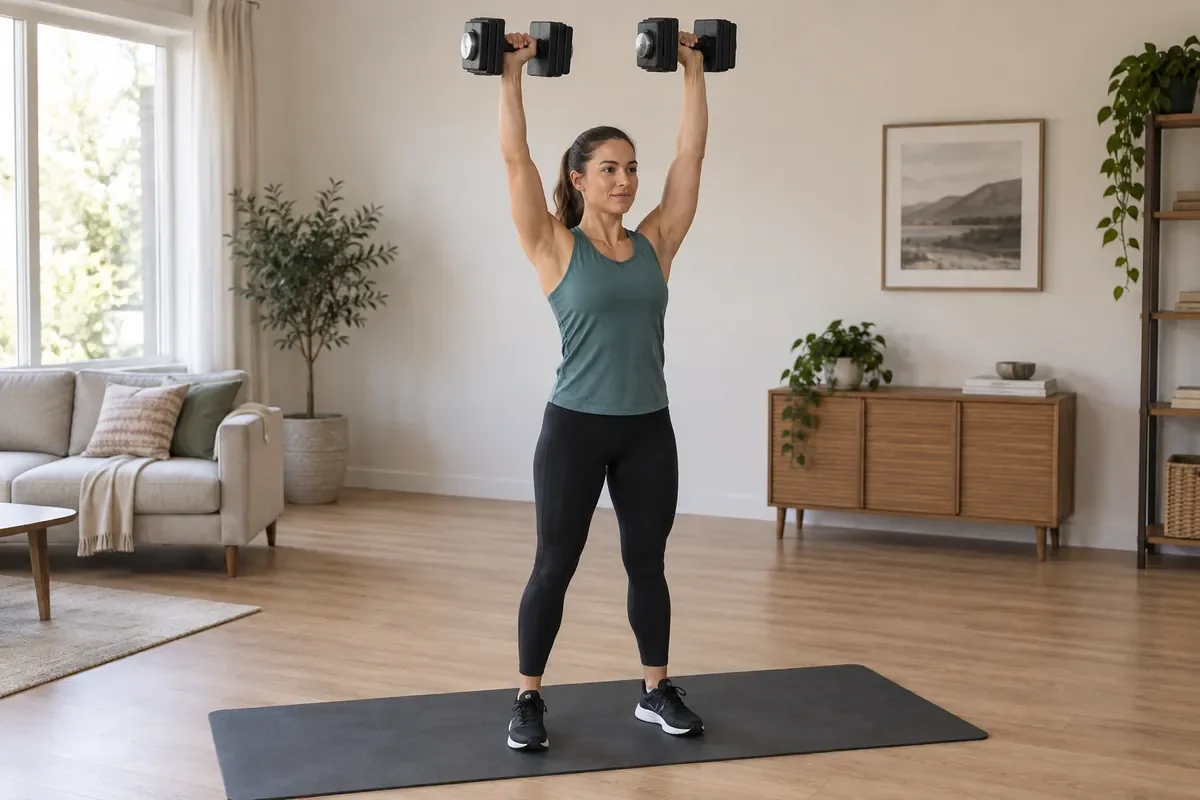
Standing dumbbell shoulder press — 3 sets of 8–12.
One-arm dumbbell row — 3 sets of 10–15 per side. Support your free hand on your thigh if you have no bench.
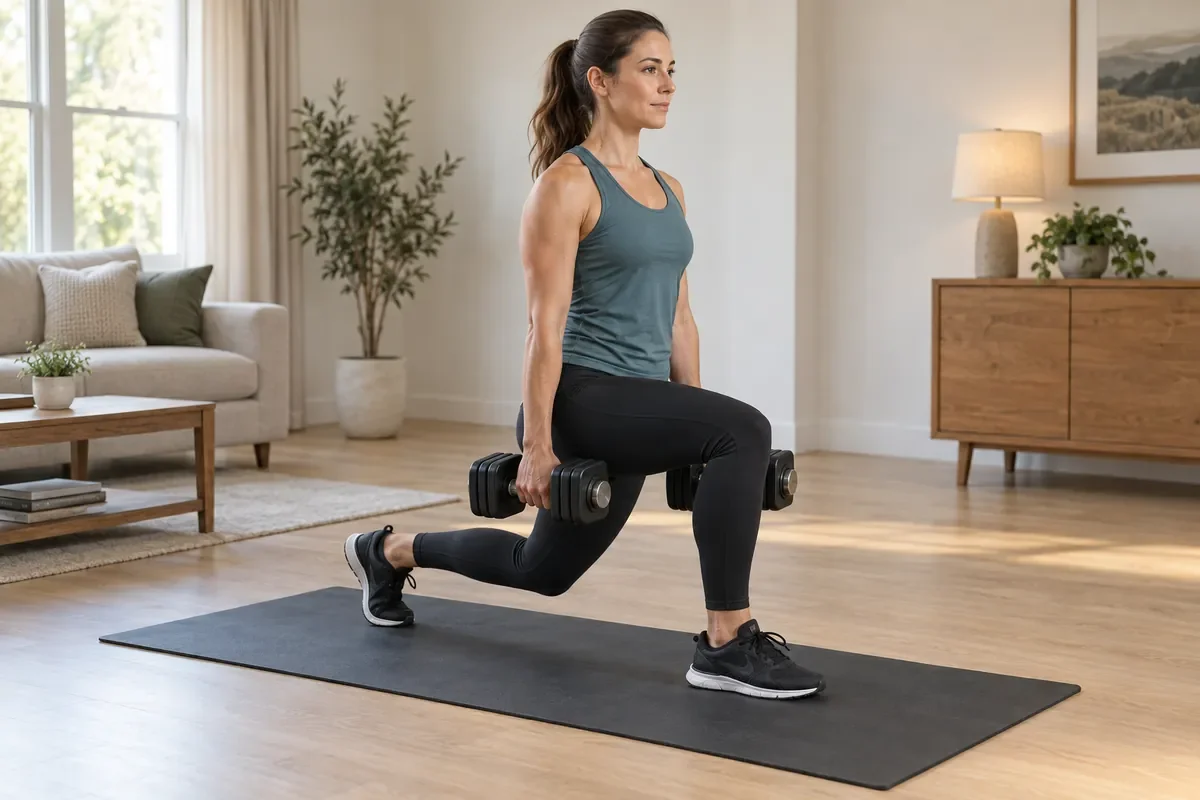
Stationary split squat, both feet on the floor — 2 sets of 8–12 per side. Start without weights if needed.
Dumbbell floor press — 2 sets of 8–12.
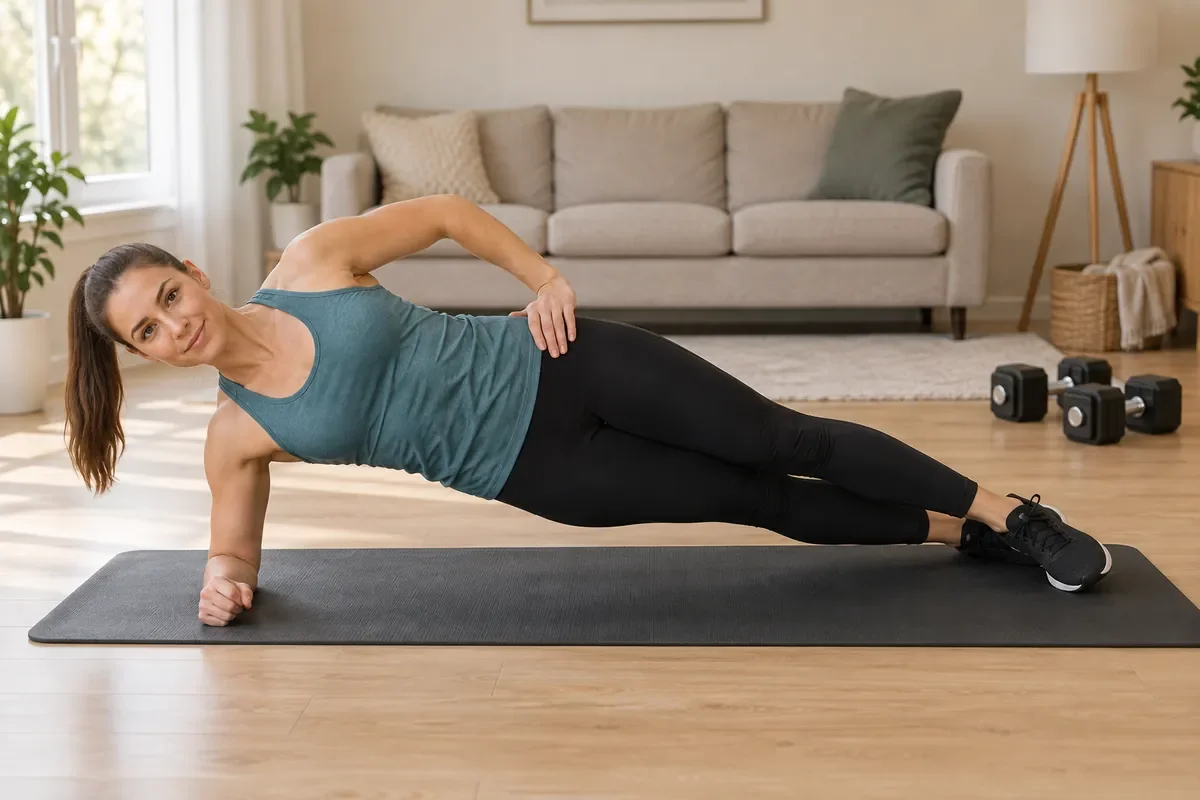
Side plank — 2 sets of 15–30 seconds per side.
Day 3: Workout C
Finish the week with another full-body session. Rest about two minutes between sets of the first four exercises and 60–90 seconds for curls and dead bugs.
Dumbbell goblet squat — 3 sets of 8–12.
Dumbbell floor press — 3 sets of 8–12.
One-arm dumbbell row — 3 sets of 10–15 per side.
Dumbbell Romanian deadlift — 2 sets of 8–12.
Hammer curl — 2 sets of 10–15.
Dead bug — 2 sets of 6–10 controlled repetitions per side.
How to progress
Record your weight and repetitions. For this sample plan, build toward the top of the listed range while keeping 1–3 controlled repetitions in reserve. When you can do that for every set, try the smallest available weight increase and return toward the lower end of the range. Keep the same weight if your technique becomes inconsistent.
Dumbbell workout questions
Can I follow the full-body plan without a bench?
Yes. It uses floor presses, standing exercises, and floor-based core work. For a floor press, lie on your back with knees bent, lower the dumbbells until your upper arms gently meet the floor, then press upward. Set up and put down the weights with control.
How do I perform a dead bug?
Lie on your back with arms up and hips and knees bent. Slowly lower the opposite arm and leg while keeping your torso still, then return and switch sides. Use a shorter movement if your back begins to arch.
Is one pair of dumbbells enough?
It can be a starting point, but one weight may not suit every exercise. Choose a load you can control for the listed range. Do not force a weight that is too heavy for smaller movements such as lateral raises.
Where should beginners start?
This full-body sample is written for intermediate lifters. If you are still learning technique, explore our beginner training programs or browse all workout categories.
What if an exercise hurts?
Stop an exercise that causes pain. Seek individualized guidance if you are unsure whether a movement is appropriate for you.