
Dumbbells only · No bench required
4-Day Dumbbell Upper/Lower Workout
Give each session a clear focus. Alternate upper-body and lower-body workouts across four days, using dumbbells, floor space, and a repeatable plan you can track.
This sample routine is for intermediate lifters who already feel comfortable with squats, hip hinges, presses, and rows. Train your upper body twice and your lower body twice each week, with recovery days built into the schedule.
Your plan at a glance
| Schedule | 4 sessions per week: upper / lower / rest / upper / lower |
|---|---|
| Equipment | Adjustable dumbbells or several pairs; clear floor space; optional exercise mat |
| Experience | Intermediate; familiar with the exercises below |
| Session length | Allow roughly 40–60 minutes including warm-up; adjust for your pace and rest needs |
| Starting block | Repeat for 6–8 weeks, reviewing technique, recovery, and your training log |
Use weights suited to each movement. The weight you can squat with may be too heavy for lateral raises. A single fixed pair can limit your options; never force a load you cannot control.
Weekly workout schedule
| Day | Session |
|---|---|
| Monday | Upper A |
| Tuesday | Lower A |
| Wednesday | Rest or easy walking |
| Thursday | Upper B |
| Friday | Lower B |
| Saturday | Optional easy activity |
| Sunday | Rest |
Move the days to fit your week, keeping a day without direct training between sessions for the same muscle groups. If you miss a session, resume the sequence instead of doubling up.
How to follow the plan
Warm up, then start light
Begin with 5–8 minutes of comfortable movement: brisk walking or marching, controlled arm circles on upper days, and bodyweight squats and hip hinges on lower days. Add 1–3 progressively heavier practice sets before your first demanding exercise. Warm-up sets are separate from the working sets below.
Leave 1–3 good reps in reserve
For this routine, finish most sets when you could still perform another 1–3 controlled repetitions. If you complete 10 reps and could do two more with sound technique, you have about two reps in reserve. Reduce the weight if you cannot reach the lower end of the range without straining your form.
Finish each exercise before moving on
Use straight sets, following the rest times on each card. For one-sided movements, complete both sides before taking the listed rest; pause between sides when needed. Two sets per side means two sets for each limb. Take longer rests if necessary to keep your repetitions controlled.
Day 1 · Upper A
Start with a horizontal press and row, then work your shoulders and arms. Set up and put down your dumbbells carefully, especially for floor presses.
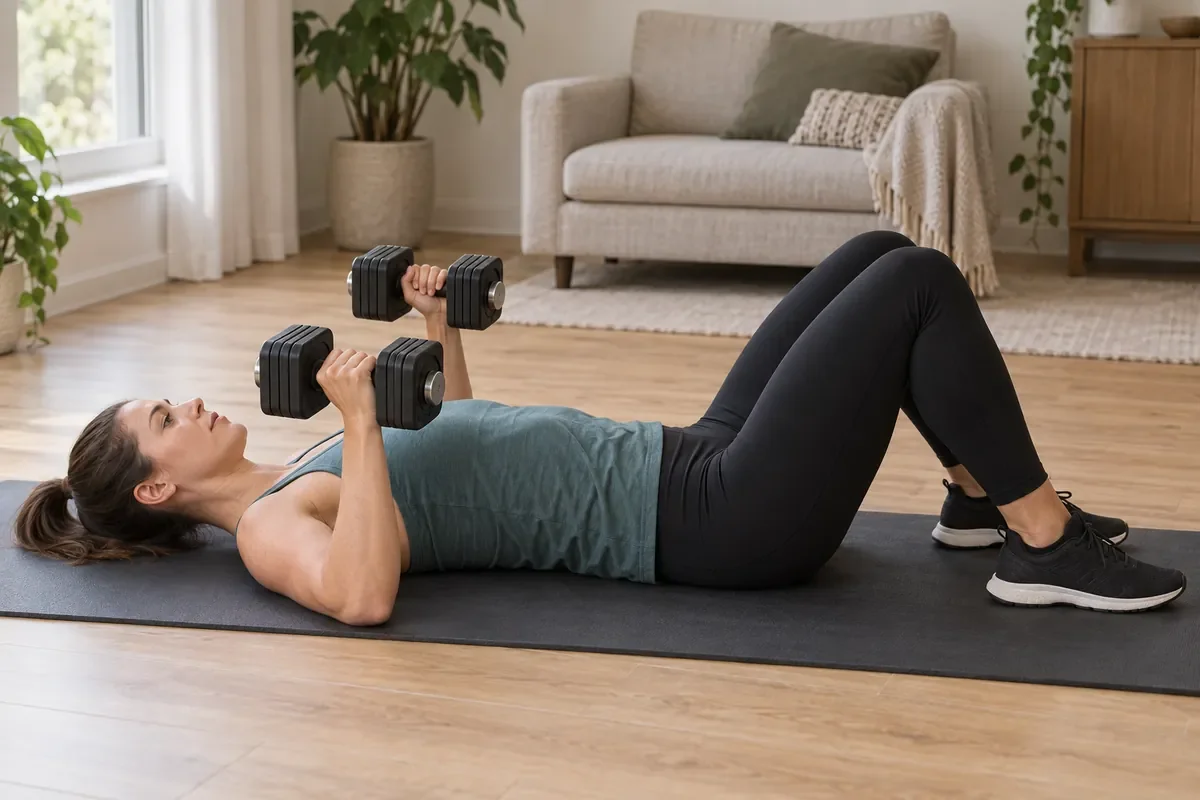
Dumbbell floor press
3 sets × 8–12 reps · Rest 2 minutes
Lie with knees bent. Lower until your upper arms gently touch the floor, then press up with wrists stacked over elbows.
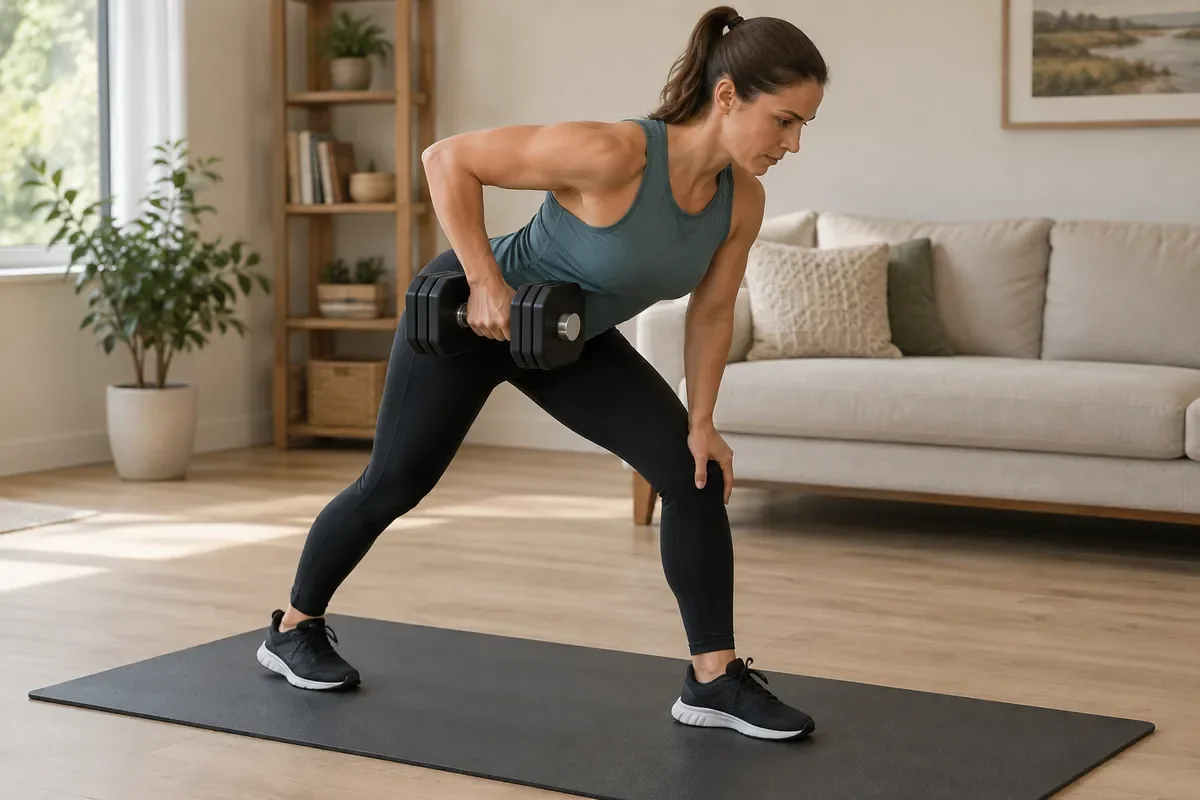
One-arm dumbbell row
3 sets × 10–15 reps per side · Rest 90–120 seconds
Brace your free hand on your thigh, keep your torso steady, and draw the weight toward your hip.
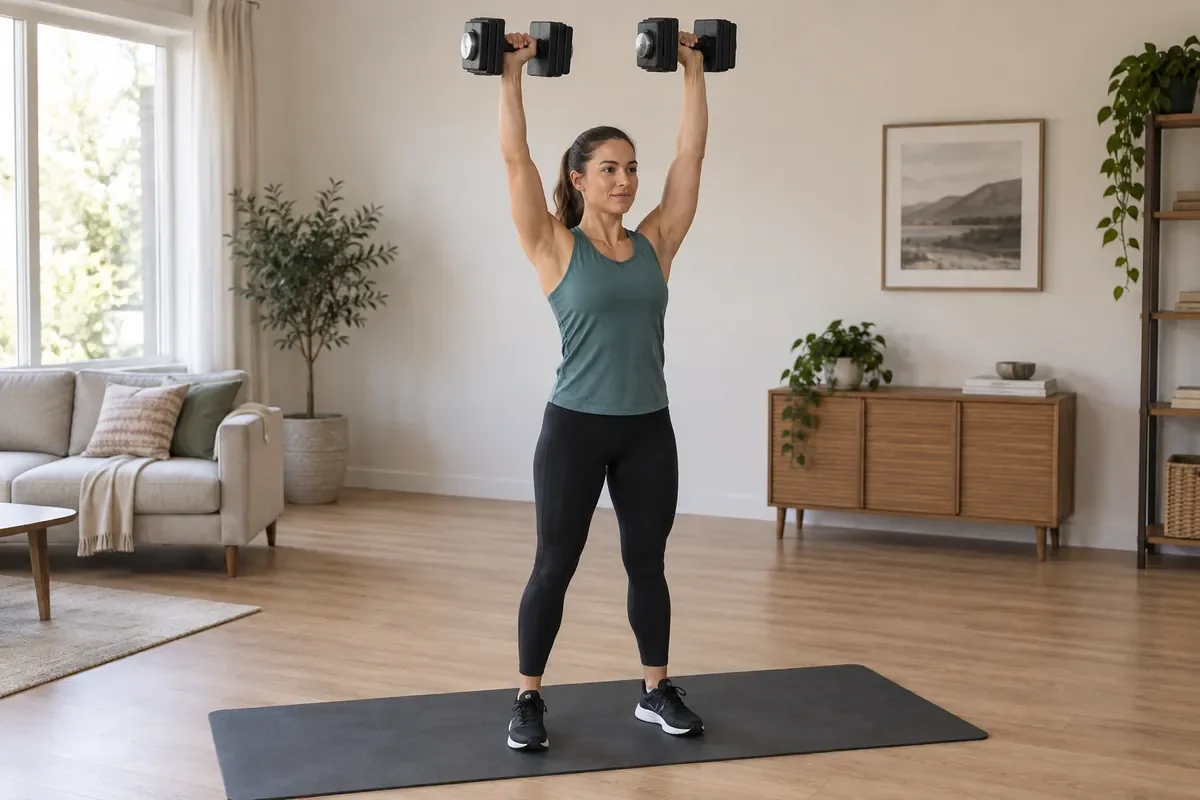
Standing dumbbell shoulder press
2 sets × 8–12 reps · Rest 2 minutes
Keep your ribs down and avoid leaning backward. Use a comfortable overhead range.
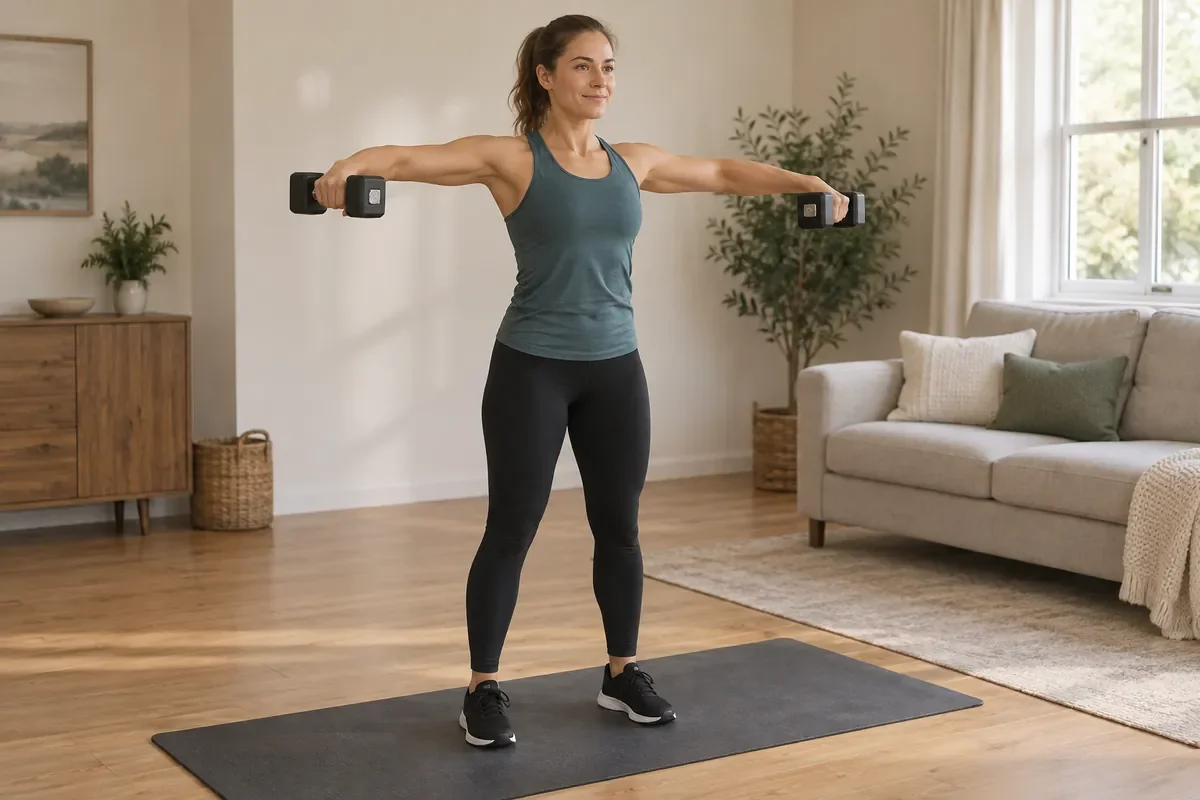
Dumbbell lateral raise
2 sets × 12–20 reps · Rest 60–90 seconds
Use light weights and a slight elbow bend. Raise your arms out to the sides without swinging.
Hammer curl
2 sets × 10–15 reps · Rest 60–90 seconds
Keep your palms facing inward and your elbows close to your sides. Lower under control.
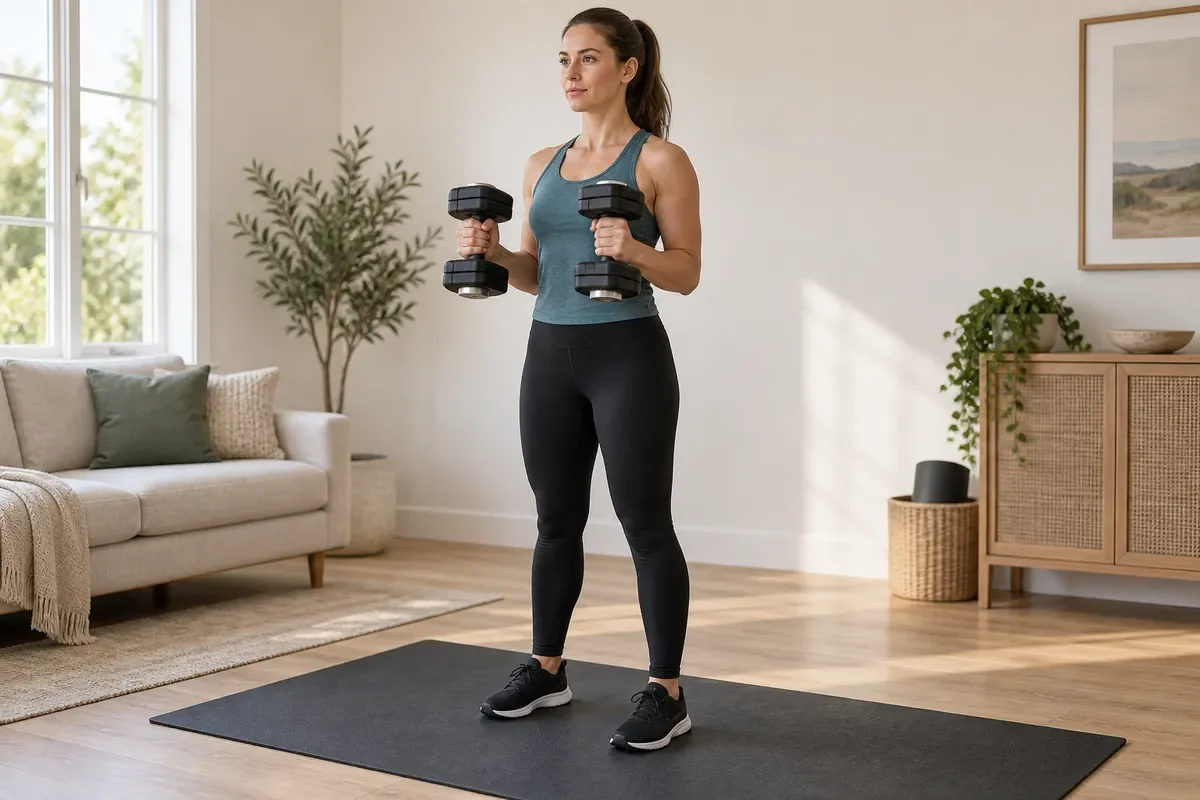
Day 2 · Lower A
Lead with the squat, then train the hip hinge and split squat. Finish with slow, controlled core work.
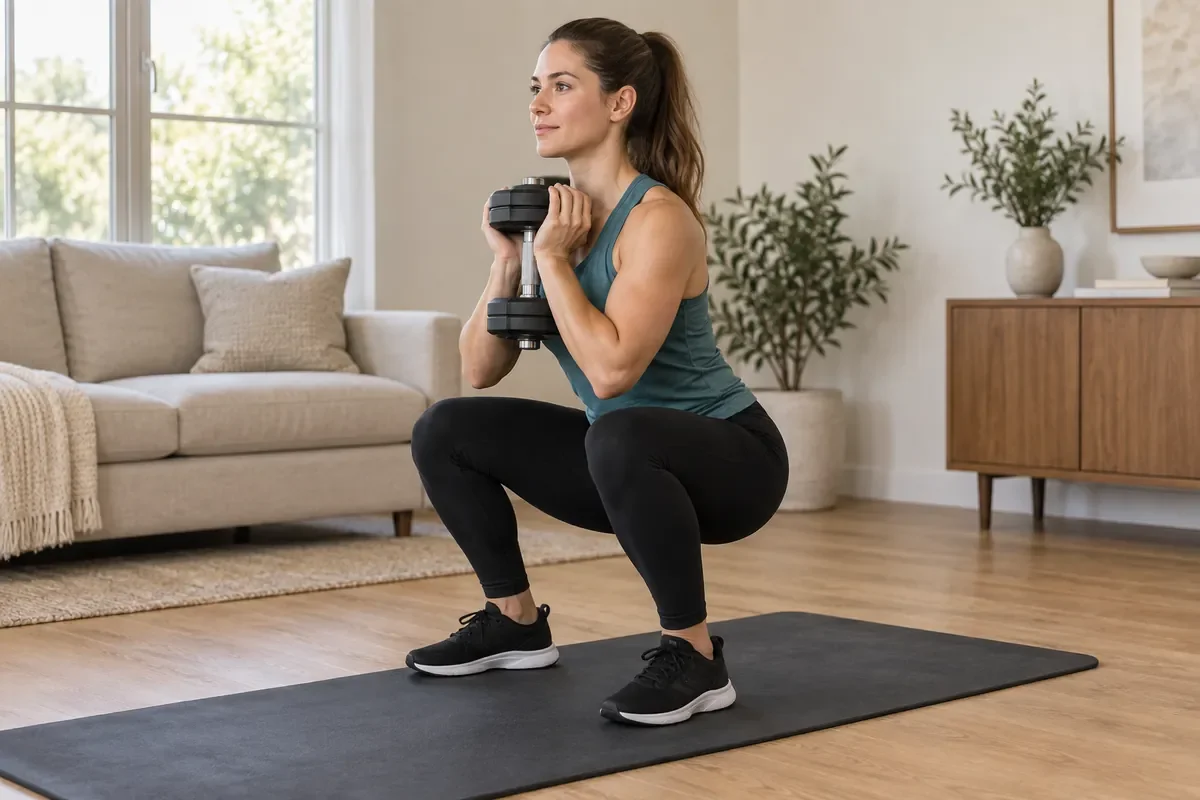
Dumbbell goblet squat
3 sets × 8–12 reps · Rest 2 minutes
Hold one dumbbell at your chest. Keep your whole foot planted and squat through a comfortable range.
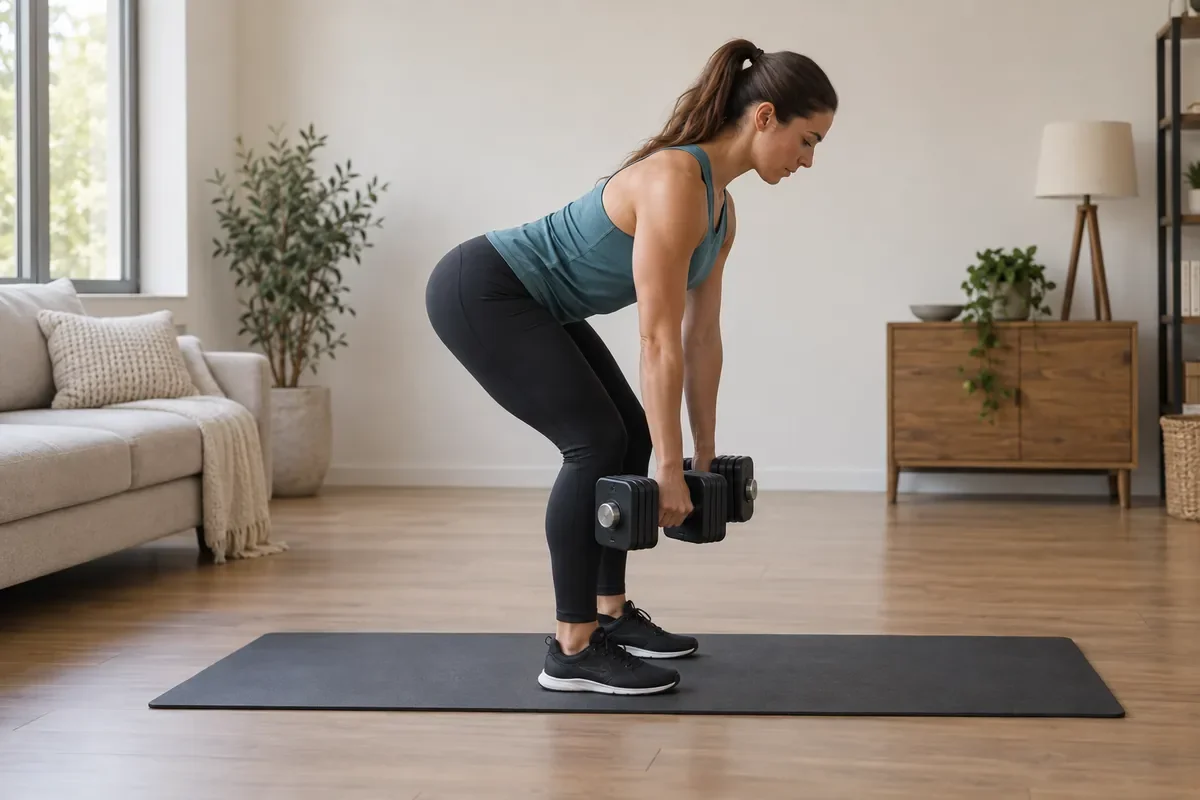
Dumbbell Romanian deadlift
3 sets × 8–12 reps · Rest 2 minutes
Push your hips back with softly bent knees. Keep the weights close and stop before your back begins to round.
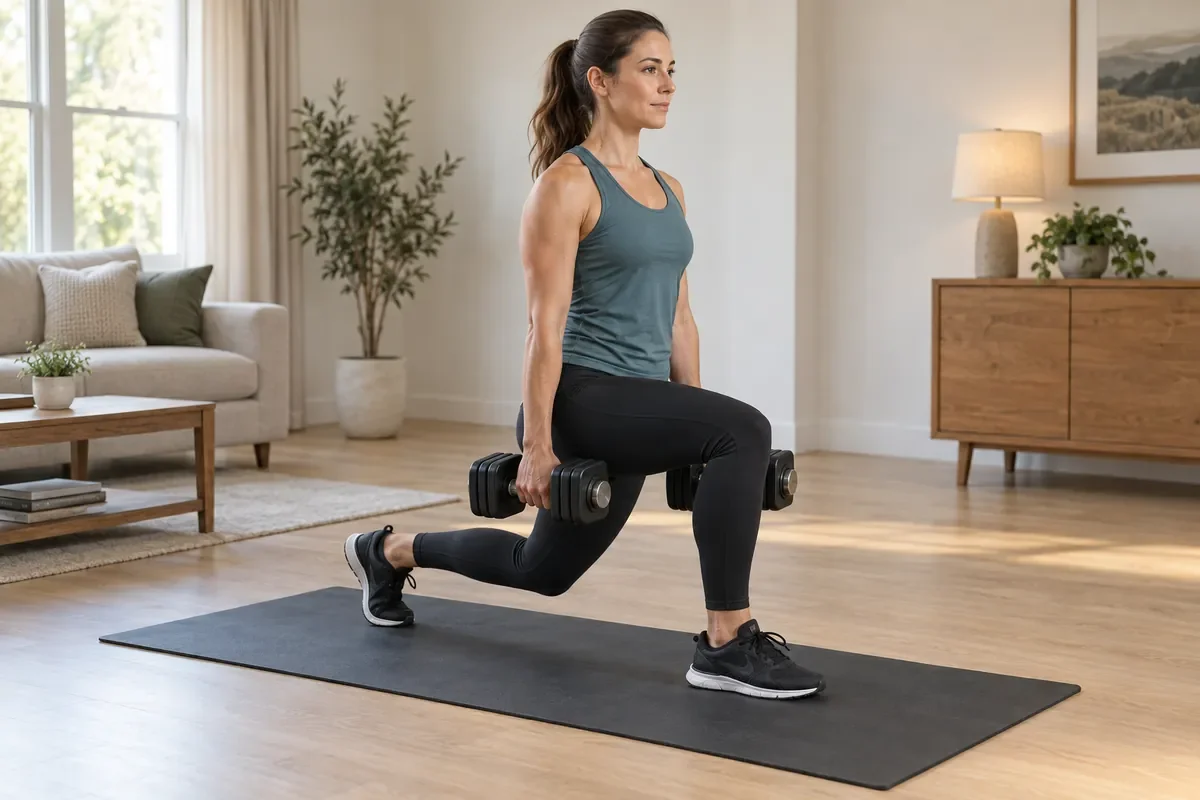
Stationary split squat
2 sets × 8–12 reps per side · Rest 90–120 seconds
Keep both feet on the floor in a staggered stance. Bend both knees and lower with control. Start without weights if needed.
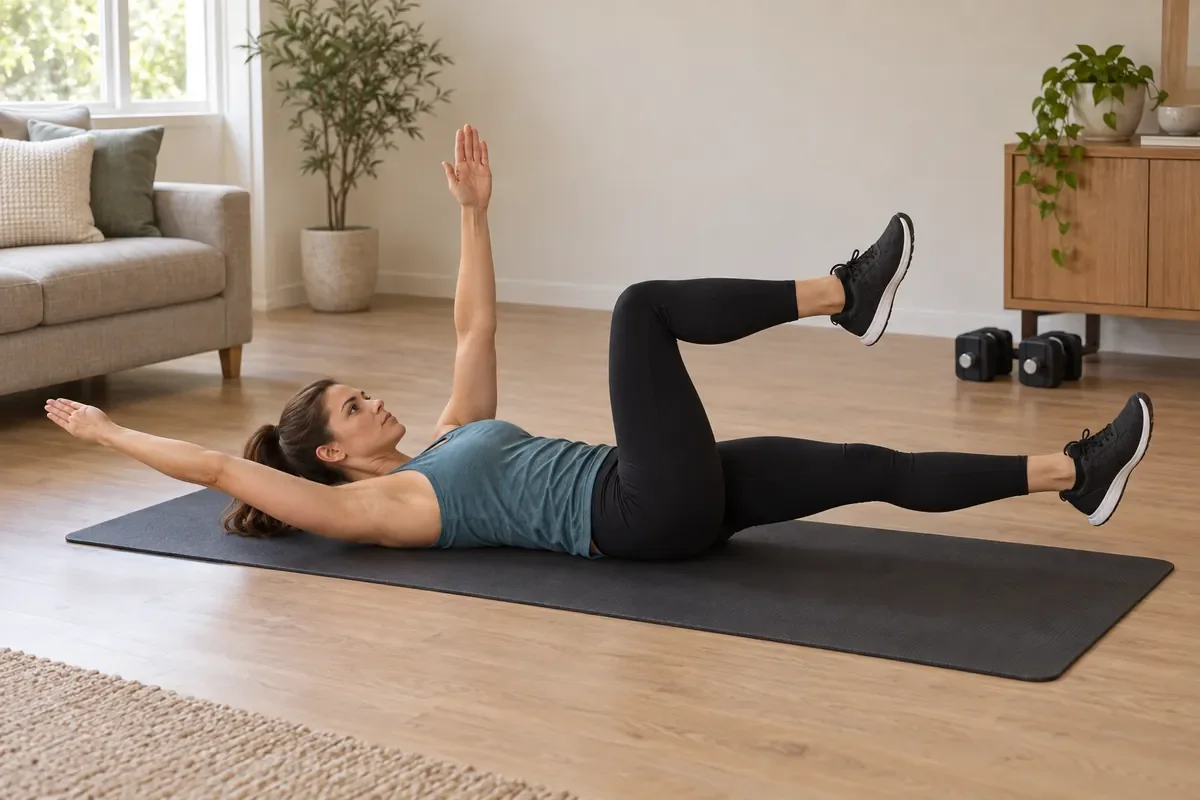
Dead bug
2 sets × 6–10 reps per side · Rest 60 seconds
Lie on your back with arms up and knees bent. Slowly extend opposite arm and leg without letting your lower back arch.
Day 3 · Upper B
Repeat the key upper-body movements to practice technique and compare your performance. This session adds one working set to the shoulder press; keep the other exercises consistent.
Dumbbell floor press
3 sets × 8–12 reps · Rest 2 minutes
Lie with knees bent. Lower until your upper arms gently touch the floor, then press up with wrists stacked over elbows.
One-arm dumbbell row
3 sets × 10–15 reps per side · Rest 90–120 seconds
Brace your free hand on your thigh, keep your torso steady, and draw the weight toward your hip.
Standing dumbbell shoulder press
3 sets × 8–12 reps · Rest 2 minutes
Keep your ribs down and avoid leaning backward. Use a comfortable overhead range.
Dumbbell lateral raise
2 sets × 12–20 reps · Rest 60–90 seconds
Use light weights and a slight elbow bend. Raise your arms out to the sides without swinging.
Hammer curl
2 sets × 10–15 reps · Rest 60–90 seconds
Keep your palms facing inward and your elbows close to your sides. Lower under control.
Day 4 · Lower B
Put the Romanian deadlift first while you are fresh. Use a slightly higher rep range for goblet squats and finish with side planks.
Dumbbell Romanian deadlift
3 sets × 8–12 reps · Rest 2 minutes
Push your hips back with softly bent knees. Keep the weights close and stop before your back begins to round.
Dumbbell goblet squat
3 sets × 10–15 reps · Rest 2 minutes
Hold one dumbbell at your chest. Keep your whole foot planted and squat through a comfortable range.
Stationary split squat
2 sets × 8–12 reps per side · Rest 90–120 seconds
Keep both feet on the floor in a staggered stance. Bend both knees and lower with control. Start without weights if needed.
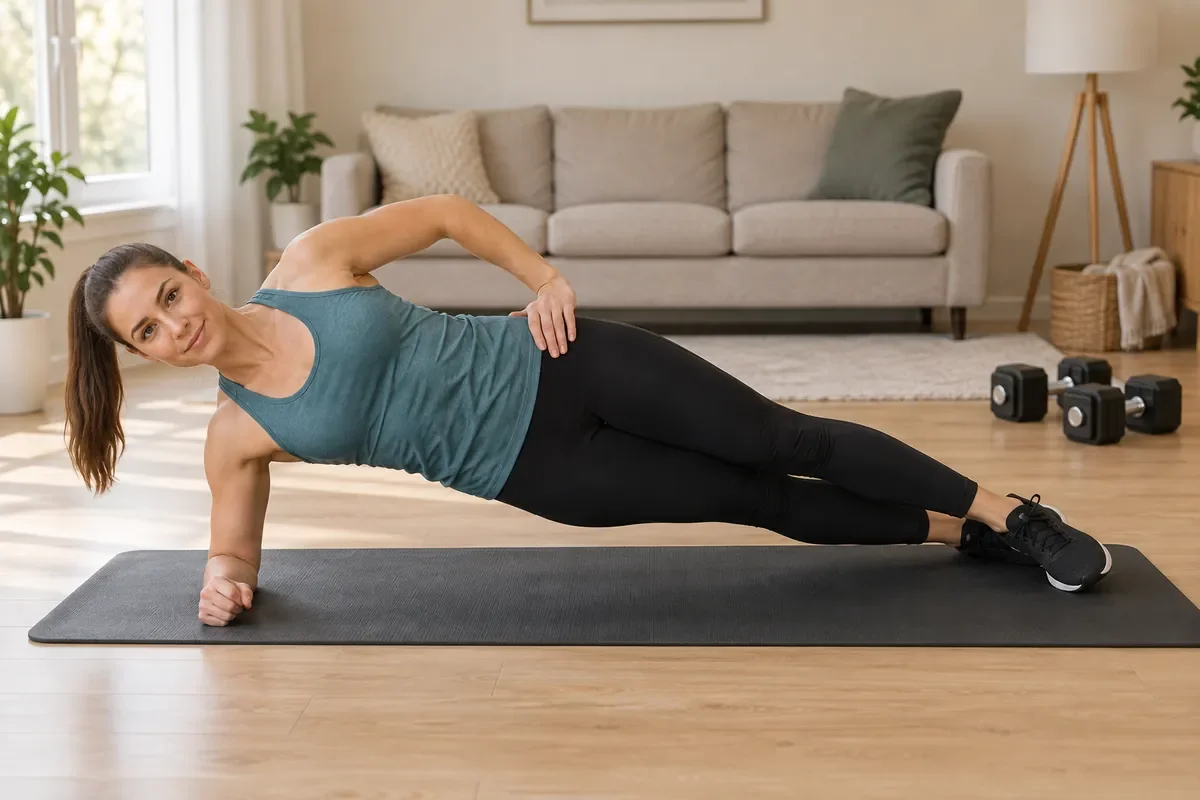
Side plank
2 sets × 15–30 seconds per side · Rest 60 seconds
Place your elbow beneath your shoulder and lift your hips. Bend your knees for an easier version.
How to make progress
Record the weight and reps for every working set. Keep the same load while you build toward the top of the prescribed range. Once you reach that target on every set with 1–3 good reps still available, try the smallest weight increase and return toward the lower end of the range.
For example: with a 3 × 8–12 exercise, work from 10, 9, 8 reps toward 12, 12, 12 over successive sessions. Increase only when those reps are controlled. Progress need not happen every week.
If performance drops across several sessions or you feel unusually fatigued, take extra recovery and temporarily reduce sets or load. Keep a weight that lets you move well; heavier is not automatically better.
Make the routine fit you
- Returning after a break: start with two working sets per exercise and lighter loads, then add the remaining sets only when you are recovering comfortably.
- Balance limits split squats: begin without dumbbells and use light fingertip support on a stable surface.
- Side planks are too demanding: keep your knees bent and use shorter holds with good alignment.
- Still learning the basics: explore our beginner training programs before taking on four weekly sessions.
Dumbbell upper/lower workout questions
Do I need a bench?
No. The presses use the floor or a standing position, and the row can be supported with your free hand on your thigh. Both feet stay on the floor for split squats.
Why repeat exercises across A and B?
This plan keeps the main movements familiar so you can practice them and track changes in load and repetitions. The lower-body order and some set or rep targets change between sessions.
Is an upper/lower split better than full-body training?
Choose the schedule you can follow and recover from. This split suits four training days; our full-body dumbbell plan suits three. Neither schedule guarantees better results for everyone.
Can dumbbell training build strength and muscle?
Resistance training can improve strength and muscle size, including in home-based routines. ACSM’s 2026 guidance emphasizes consistent participation, effort, and a program suited to the individual; training every set to failure is not required. See the ACSM resistance-training guidance. The routine on this page is a sample plan, not an ACSM-prescribed program.
What if a movement causes pain?
Stop that exercise. Do not push through pain or force a range that feels wrong; get individualized guidance if you are unsure how to adapt it.
Keep exploring
More dumbbell workouts · Full-body training plans · All workout categories