
A little space. A manageable plan. A place to begin.
Starting a fitness routine can feel like a big project. Home workouts give you a simpler first step: choose a few movements, set aside a short block of time, and practice in a space you know.
You do not need a fully equipped gym to begin. Bodyweight exercises, resistance bands, and dumbbells can all have a place in a home routine. The best starting point is a level of effort you can manage and a schedule you can repeat.
Your first goal: finish a manageable session and know when you will do the next one. Build confidence through practice before chasing heavier weights or longer workouts.
Why home workouts can suit beginners
1. Less time getting there
There is no gym commute or changing-room stop. A short session can fit before work, during a quiet part of the day, or after dinner. Choose a time when interruptions are less likely and put it in your calendar.
2. A familiar place to learn
If a busy gym feels intimidating, home can give you space to practice at your own pace. You can pause an exercise guide, adjust your setup, and repeat a movement without feeling rushed. If you are unsure about technique, a qualified trainer can still help in person or remotely.
3. A smaller initial commitment
You can start without a gym membership and add equipment when you know what you enjoy. Clear floor space and a stable chair may be enough for your first movement practice. A mat is optional for comfort.
4. Training that adapts to your level
Use a higher surface for push-ups, a chair for sit-to-stands, or lighter resistance while learning. Progress can mean a smoother movement, an extra controlled repetition, or a slightly more challenging variation.
Home training is a legitimate option: ACSM’s 2026 resistance-training guidance recognizes benefits from bodyweight exercise, elastic bands, and home-based routines. You do not need a particular machine or training location to get started.
What to focus on in your first few weeks
Keep your goals specific and under your control. Instead of promising yourself a visible transformation by a deadline, aim to:
Complete the sessions you planned.
Learn a few basic movements with control.
Find exercise variations that suit your current ability.
Record what you did so the next session has a clear starting point.
Strength, fitness, and body-composition changes take time and vary between people. Exercise can support your goals, but a workout alone does not guarantee weight loss or a particular appearance.
A simple first-week plan
Here is an example of how to begin. Adjust the duration and exercises to your starting point; it is a practice schedule, not a test.
Monday · Learn the movements
Set aside about 15–20 minutes. Start with a few minutes of easy marching or walking, then try one comfortable set of each movement below.
Chair sit-to-stand: 5–8 controlled repetitions from a stable chair that cannot slide. Use your hands for assistance if needed.
Wall push-up: 5–8 repetitions, keeping your body aligned and moving slowly.
Standing hip hinge: 5–8 unloaded repetitions. Soften your knees and move your hips back without forcing the range.
Supported calf raise: 8–10 repetitions while holding a stable support.
Rest as long as you need between movements. Stop before your technique becomes difficult to control. This short practice session is an introduction to movement, not a complete long-term strength program.
Tuesday or Wednesday · Move comfortably
Try a short walk or another activity you enjoy. Start with a duration that feels manageable; even a few minutes can be a useful beginning.
Thursday or Friday · Repeat and review
Repeat the movement practice with at least a day between strength sessions. Keep it similar so you can notice what feels more comfortable. There is no need to add extra sets immediately.
Your next step: choose a structured routine from our beginner training programs. As you progress, include pushing, pulling, squatting, and hip-hinge movements rather than relying on only the easiest exercises.
For longer-term health, the CDC recommends at least 150 minutes of moderate-intensity aerobic activity per week and muscle-strengthening activity on two days. You can work toward that gradually; it is not a first-week requirement, and some activity is better than none.
What equipment do you actually need?
Start with your space
Clear enough room to move, check that the floor is not slippery, and use stable supports. Avoid balancing on furniture or improvising a bench from chairs.
Add resistance when it serves your routine
Loop resistance bands: easy to store and useful for a range of exercises. Inspect them for damage and follow the manufacturer’s anchoring instructions.
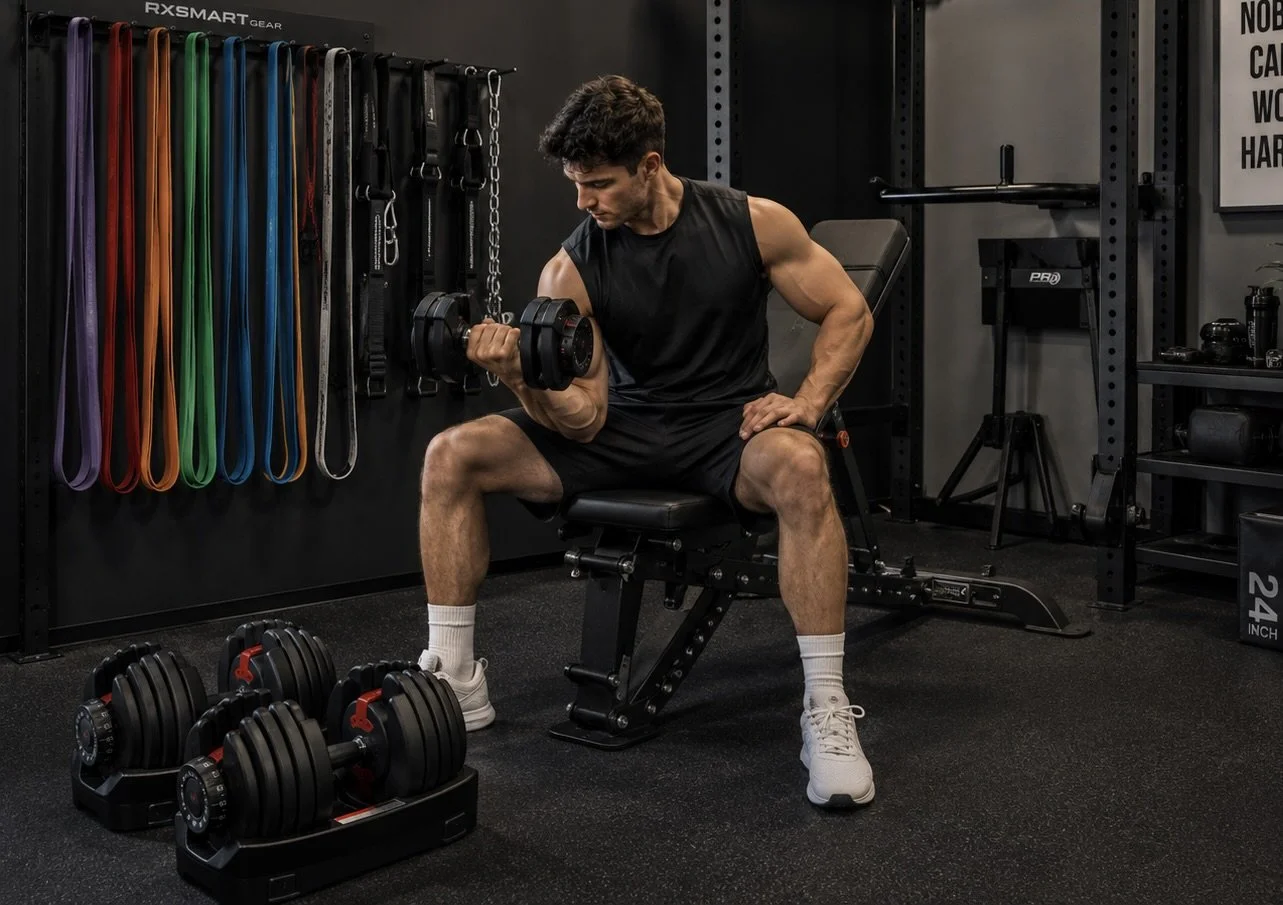
Adjustable dumbbells: offer different loads for different exercises. Choose resistance you can lift and put down with control.
Exercise mat: optional cushioning for floor work.
Bench or pull-up bar: optional additions for specific routines, not prerequisites for your first workout.
Explore our resistance band workouts or dumbbell workout plans when you are ready for more options. Check each plan’s experience level before following it.
Make progress without doing too much
Repeat a small set of exercises long enough to learn them. Once the same work feels comfortable and your technique stays consistent, make one modest change: add a repetition, use slightly more resistance, or choose a harder variation.
You do not need to increase every workout. Keep the same level when you are still learning, unusually tired, or struggling to recover. Beginners do not need an advanced weekly set target to start benefiting from practice.
Leave time between demanding sessions for the same muscles, eat regular balanced meals, and protect your sleep routine. Avoid turning a beginner plan into a complicated calorie or supplement project.
Common mistakes—and a practical fix
Doing too much on day one: choose a session you could realistically repeat later in the week.
Changing workouts constantly: repeat the basics so you can track your technique and effort.
Rushing repetitions: slow down and use a range you can control.
Buying everything first: let your chosen routine guide equipment purchases.
Treating soreness as the goal: judge progress by your practice and performance, not how sore you feel.
Ignoring discomfort: stop an exercise that causes pain and seek qualified guidance if you are unsure how to adapt it.
Beginner home-workout questions
Can beginners build strength at home?
Yes. Bodyweight exercises, bands, and weights can provide resistance. Choose movements suited to your ability and gradually increase the challenge as you become more capable.
How often should I start?
Two short, nonconsecutive strength sessions can be a practical starting schedule. Begin with less if needed and build gradually. Walking or other manageable activity can fit between sessions.
Do I need a bench or heavy dumbbells?
No. Start with suitable bodyweight variations or light resistance. A bench and heavier weights become useful only when they fit your exercises, ability, and goals.
Are short sessions worth doing?
Yes. A manageable session is a useful way to begin. Build your weekly activity over time rather than waiting until you can commit to long workouts.
What if I miss a session?
Resume at your next practical opportunity. Avoid doubling the next workout to make up for it. If missed sessions become common, shorten the plan or choose more realistic training days.
Choose your next step
Ready for a routine? Explore beginner training programs or browse workout categories.
Need a shorter option? Visit quick workouts and select a session that matches your ability.
Want to check a movement? Use the exercise library for step-by-step guidance.
This article provides general fitness information. Choose activities appropriate to your circumstances; if a health condition or injury affects your exercise choices, ask a qualified professional for individualized advice. Read our fitness disclaimer.