
Wrist Roller
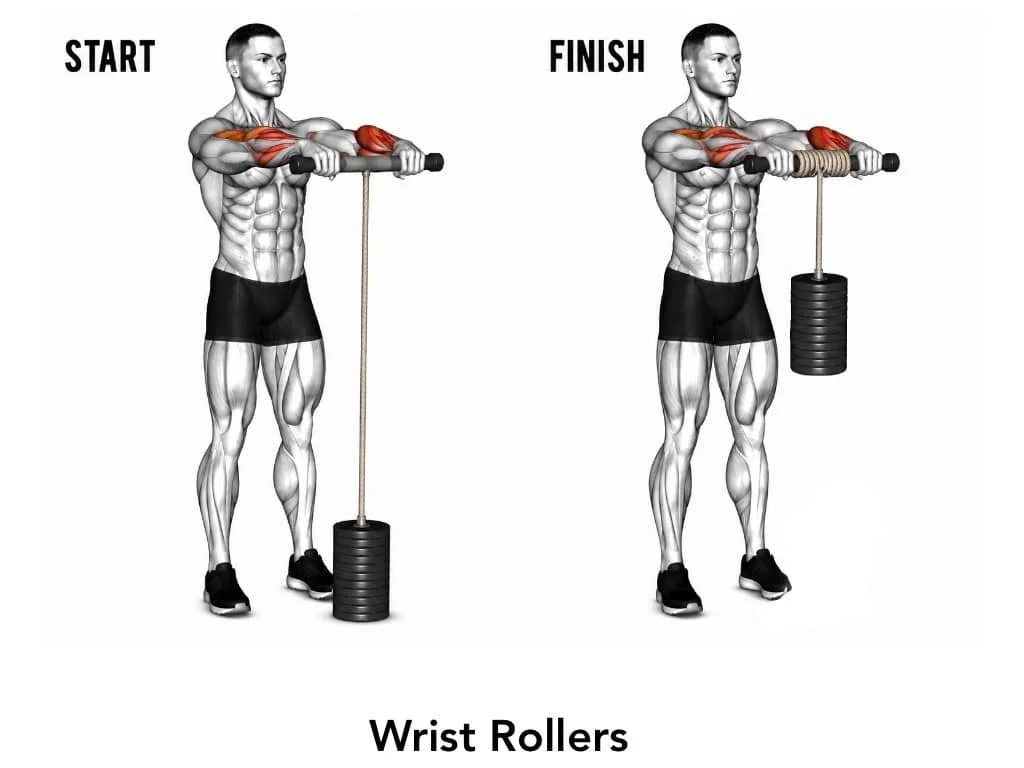
Exercise Description
The Wrist Roller is a forearm-strengthening exercise that involves rolling a weight up and down using a rope attached to a handle. By repeatedly flexing and extending the wrists, the exercise effectively targets both the forearm flexors and extensors while also improving grip strength, muscular endurance, and wrist stability. It is a popular exercise among strength athletes, climbers, martial artists, and anyone looking to develop stronger forearms and hands.
Primary Muscles Worked
Forearm Flexors (Wrist Flexors)
Forearm Extensors (Wrist Extensors)
Secondary Muscles Worked
Finger Flexors
Finger Extensors
Brachioradialis
Grip Muscles
Anterior Deltoids (Isometric Stabilization)
Upper Trapezius (Stabilization)
Core Muscles (Stabilization)
How to Perform Correctly
Setup
Hold the wrist roller handle with both hands using an overhand grip.
Extend your arms straight in front of your body at shoulder height.
Ensure a weight is attached securely to the rope hanging from the center of the roller.
Stand upright with your feet shoulder-width apart.
Engage your core and keep your chest lifted.
Movement
Rotate the handle using your wrists to wind the rope around the roller.
Continue rolling until the weight reaches the top.
Reverse the motion and slowly unwind the rope to lower the weight under control.
Alternate the leading hand periodically to ensure balanced development.
Continue for the prescribed number of repetitions or duration.
Common Mistakes to Avoid
Using Excessive Weight
Heavy loads often reduce wrist range of motion and encourage compensatory movements.
Dropping the Weight Too Quickly
Control both the raising and lowering phases to maximize muscle engagement.
Lowering the Arms During the Set
Keep your arms at shoulder height to maintain consistent tension.
Using Shoulder Movement Instead of Wrist Action
Focus on rotating the wrists rather than lifting with the shoulders.
Rushing the Exercise
Slow, controlled rotations produce better results and reduce injury risk.
Leaning Backward
Maintain an upright posture and avoid using body momentum.
Uneven Hand Contribution
Alternate which hand leads the rolling motion to prevent muscular imbalances.