
Weighted Crunch
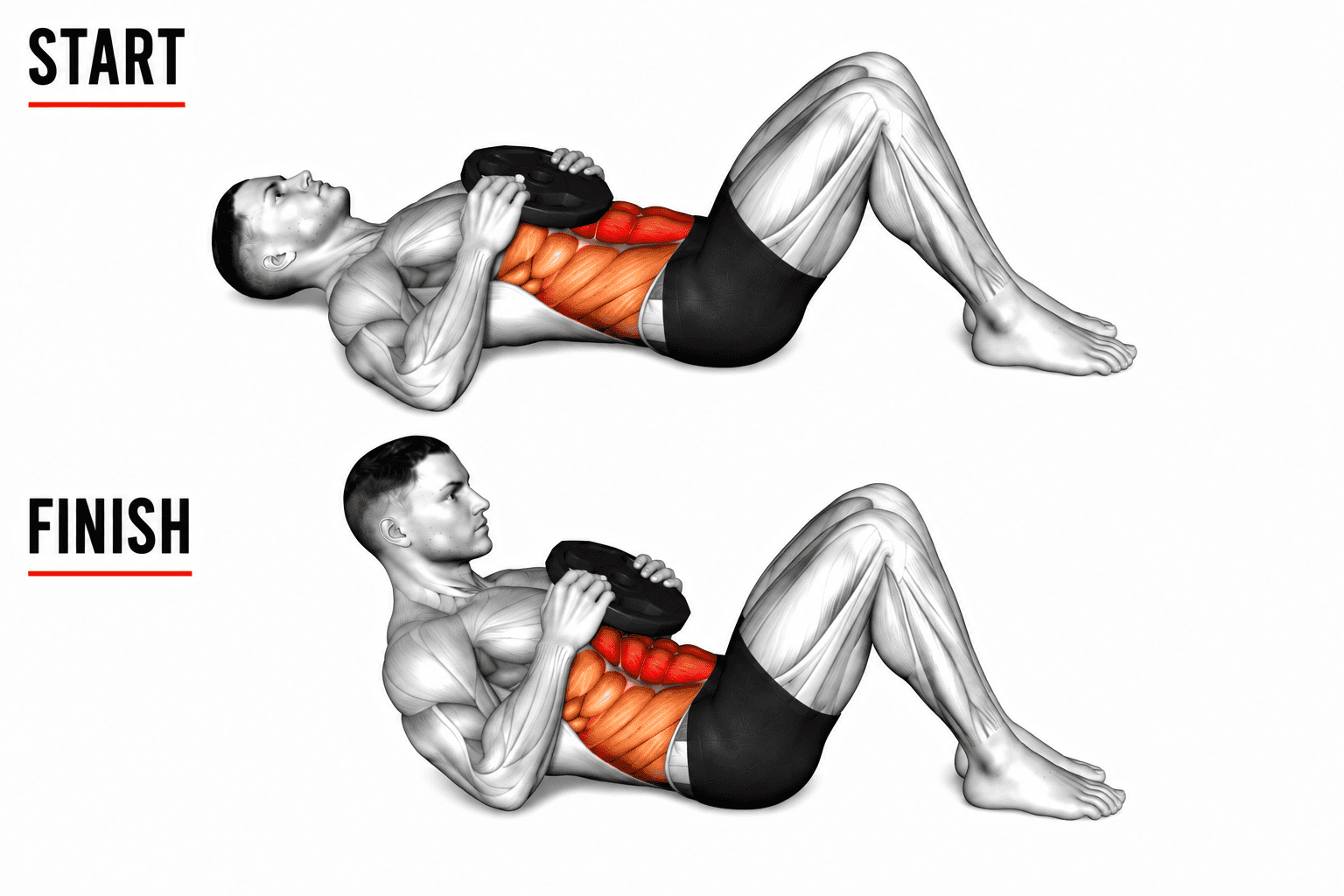
Exercise Description
The Weighted Crunch is a progression of the traditional crunch that increases resistance by holding a weight against the chest or behind the head. By adding external load, the exercise places greater demand on the abdominal muscles, making it effective for building core strength, muscular endurance, and abdominal hypertrophy. The movement focuses on spinal flexion, allowing the rectus abdominis to work through a controlled range of motion while minimizing excessive involvement from the hip flexors. The exercise can be performed using a weight plate, dumbbell, medicine ball, or other suitable resistance.
Primary Muscles Worked
Rectus Abdominis
Secondary Muscles Worked
External Obliques
Internal Obliques
Transverse Abdominis
Hip Flexors (Minimal Involvement)
Serratus Anterior
Shoulders and Arms (Weight Stabilization)
How to Perform Correctly
Setup
Lie flat on your back on an exercise mat.
Bend your knees and place your feet flat on the floor approximately hip-width apart.
Hold a weight plate, dumbbell, or medicine ball against your chest.
Engage your core and gently press your lower back into the floor.
Keep your head and neck in a neutral position.
Movement
Contract your abdominal muscles and lift your head, shoulders, and upper back off the floor.
Focus on curling your ribcage toward your pelvis rather than simply lifting your head.
Raise only until your shoulder blades clear the floor.
Pause briefly at the top position and squeeze your abdominals.
Slowly lower yourself back to the starting position under control.
Maintain constant tension on the abdominal muscles throughout the set.
Repeat for the desired number of repetitions.
Common Mistakes to Avoid
Using Excessive Weight
Heavy resistance often reduces abdominal engagement and encourages poor technique.
Pulling the Head Forward
Keep your neck neutral and allow the abdominals to perform the work.
Using Momentum
Lift and lower under control rather than jerking the body upward.
Turning the Exercise into a Sit-Up
Only lift the upper back from the floor to maintain abdominal isolation.
Holding the Breath
Breathe steadily throughout each repetition.
Allowing the Lower Back to Arch
Maintain gentle contact between the lower back and the floor.
Rushing the Repetitions
Focus on controlled contractions rather than speed.