
Sumo Deadlift
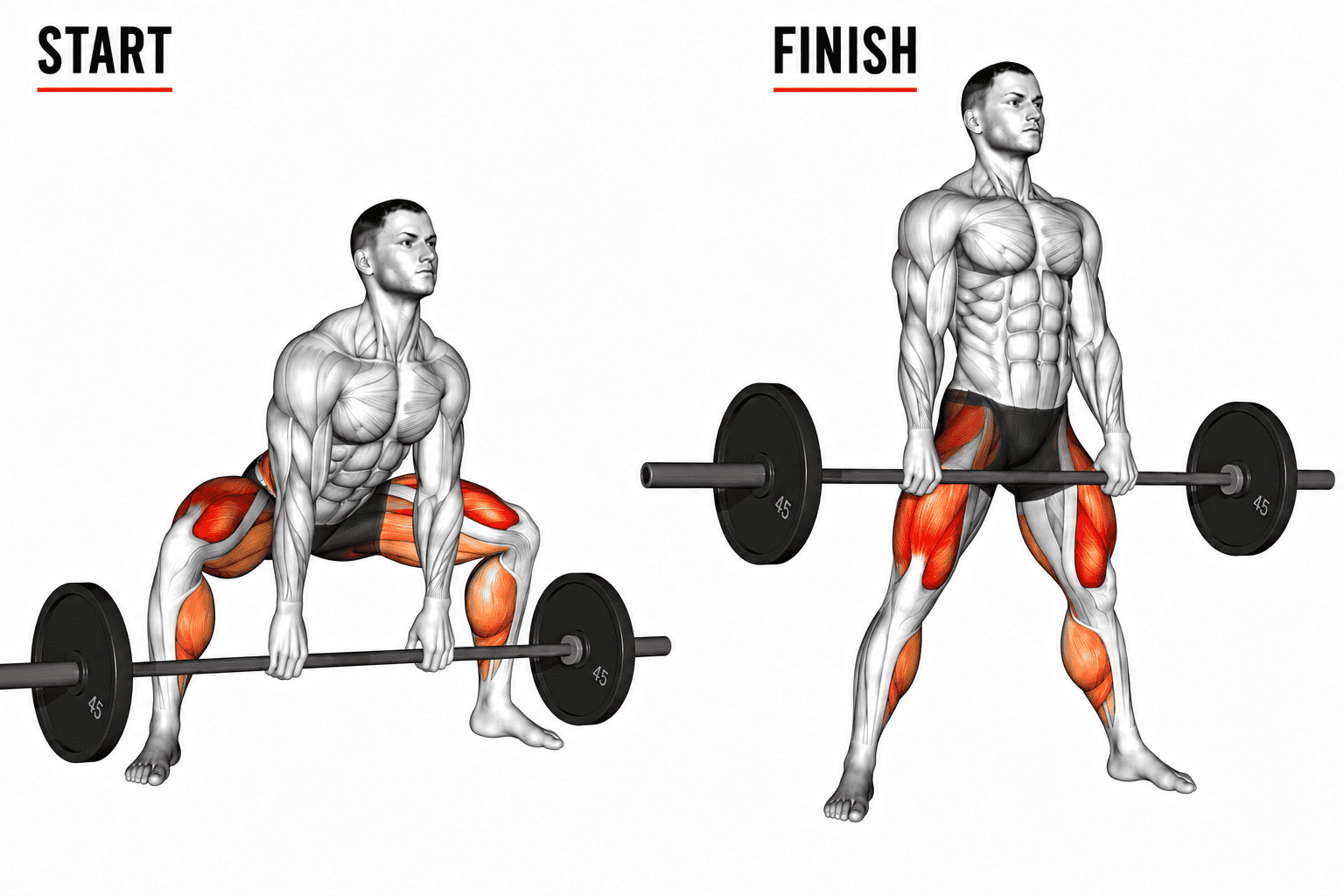
Exercise Description
The Sumo Deadlift is a compound full-body exercise performed with a wide stance and a narrower grip inside the legs. Compared to the conventional deadlift, the sumo variation places greater emphasis on the quadriceps and adductors while reducing the amount of forward torso lean required. This more upright position can decrease stress on the lower back for some individuals while still developing significant strength in the glutes, hamstrings, and posterior chain. The Sumo Deadlift is widely used in strength training, powerlifting, and athletic performance programs.
Primary Muscles Worked
Gluteus Maximus
Quadriceps
Adductor Magnus (Inner Thighs)
Secondary Muscles Worked
Hamstrings
Erector Spinae (Lower Back)
Latissimus Dorsi
Trapezius
Rhomboids
Forearm Flexors (Grip Muscles)
Rectus Abdominis
Obliques
Calves
Hip Stabilizers
How to Perform Correctly
Setup
Stand with your feet wider than shoulder-width apart.
Turn your toes outward approximately 30–45 degrees.
Position the barbell over the middle of your feet.
Bend at the hips and knees to grip the bar with your hands inside your legs.
Keep your chest lifted and shoulders pulled back.
Engage your core and maintain a neutral spine.
Position your knees in line with your toes and pull the slack out of the bar before lifting.
Movement
Drive your feet into the floor and extend your knees and hips simultaneously.
Keep the barbell close to your body throughout the movement.
Push your knees outward in line with your toes as you lift.
Maintain an upright torso and neutral spine.
Continue standing until your hips and knees are fully extended.
Squeeze your glutes at the top without leaning backward excessively.
Lower the bar by pushing your hips backward and bending your knees under control.
Return the barbell to the floor and reset before the next repetition.
Common Mistakes to Avoid
Allowing the Knees to Collapse Inward
Keep your knees tracking outward in line with your toes throughout the lift.
Rounding the Lower Back
Maintain a neutral spine from start to finish.
Setting the Hips Too High
High hips can shift the movement away from the legs and increase lower-back stress.
Allowing the Bar to Drift Forward
Keep the barbell close to your shins and thighs throughout the lift.
Hyperextending at Lockout
Stand tall without leaning backward excessively.
Jerking the Bar from the Floor
Create tension before initiating the lift rather than pulling abruptly.
Using Excessive Weight
Prioritize proper technique and consistent positioning before increasing resistance.