
Single-Arm Lateral Raise
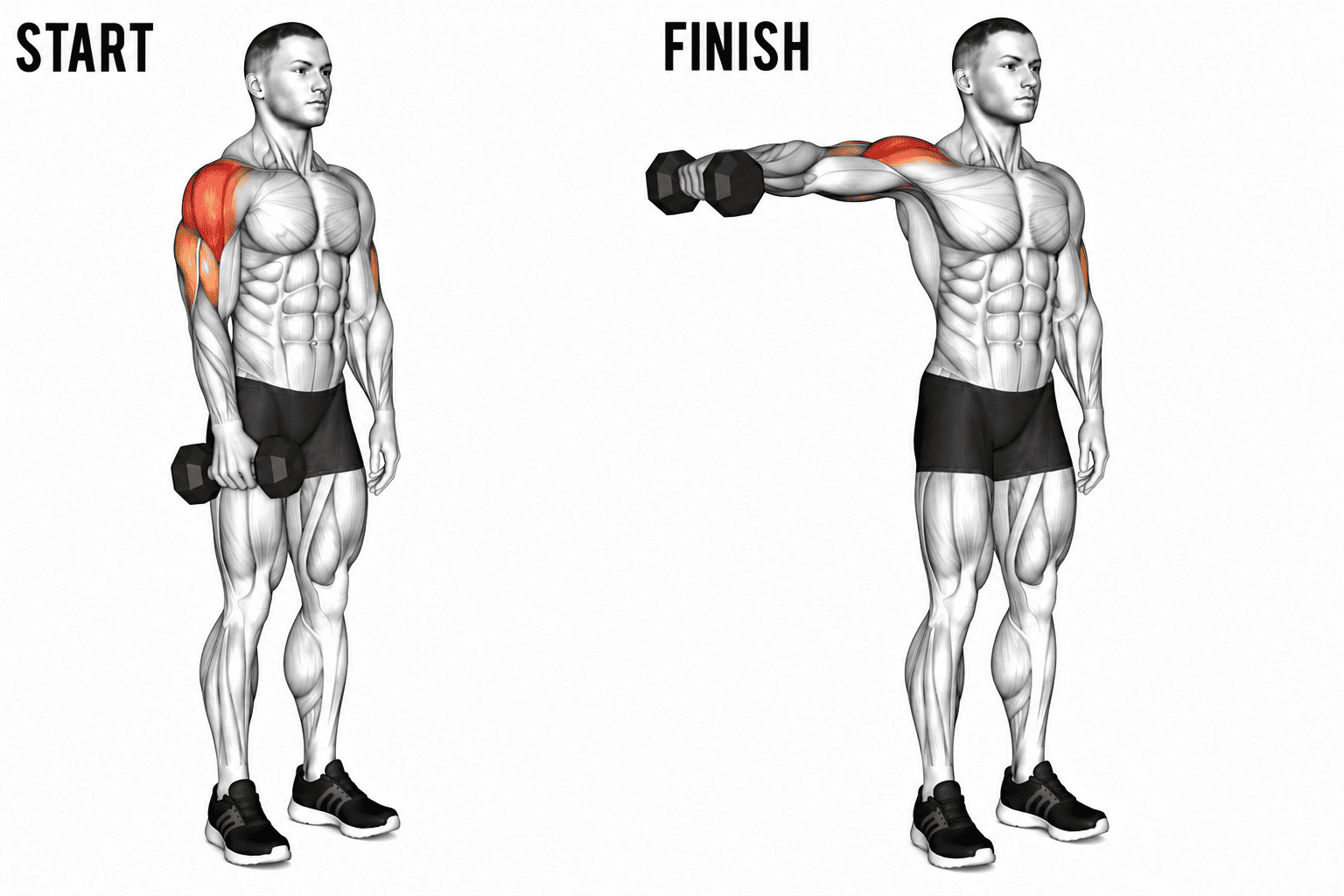
Exercise Description
The Single-Arm Lateral Raise is an isolation exercise that targets the lateral deltoid one arm at a time. Training each side independently helps improve muscular balance, coordination, and mind-muscle connection while allowing greater focus on proper movement mechanics. This exercise is highly effective for developing shoulder width and creating balanced shoulder development.
Primary Muscles Worked
Lateral Deltoids (Side Shoulders)
Secondary Muscles Worked
Anterior Deltoids (Front Shoulders)
Posterior Deltoids (Rear Shoulders)
Supraspinatus
Upper Trapezius
Rotator Cuff Muscles (Stabilizers)
Obliques
Core Muscles (Stabilization)
How to Perform Correctly
Setup
Stand upright holding a dumbbell in one hand at your side.
Place your feet shoulder-width apart for stability.
Keep a slight bend in the working arm’s elbow.
Engage your core and maintain a neutral spine.
Allow the non-working arm to rest naturally at your side or hold onto a stable object for support.
Movement
Raise the dumbbell out to the side in a controlled arc.
Lead the movement with your elbow rather than your hand.
Lift the weight until your arm reaches approximately shoulder height.
Pause briefly at the top position.
Slowly lower the dumbbell back to the starting position.
Complete all repetitions on one side before switching arms, or alternate sides as desired.
Common Mistakes to Avoid
Using Excessive Weight
Heavy weights often lead to poor form and increased involvement of the trapezius muscles.
Swinging the Body
Avoid using momentum or leaning to lift the weight.
Shrugging the Shoulder
Keep the working shoulder down and away from the ear throughout the movement.
Raising the Arm Too High
Lifting significantly above shoulder height may place unnecessary stress on the shoulder joint.
Straightening the Elbow Completely
Maintain a slight bend in the elbow to reduce joint stress.
Dropping the Weight Quickly
Control the lowering phase to maximize muscle activation.
Rotating the Torso
Keep your body stable and avoid twisting during the exercise.