
Seated Reverse Grip Wrist Curl
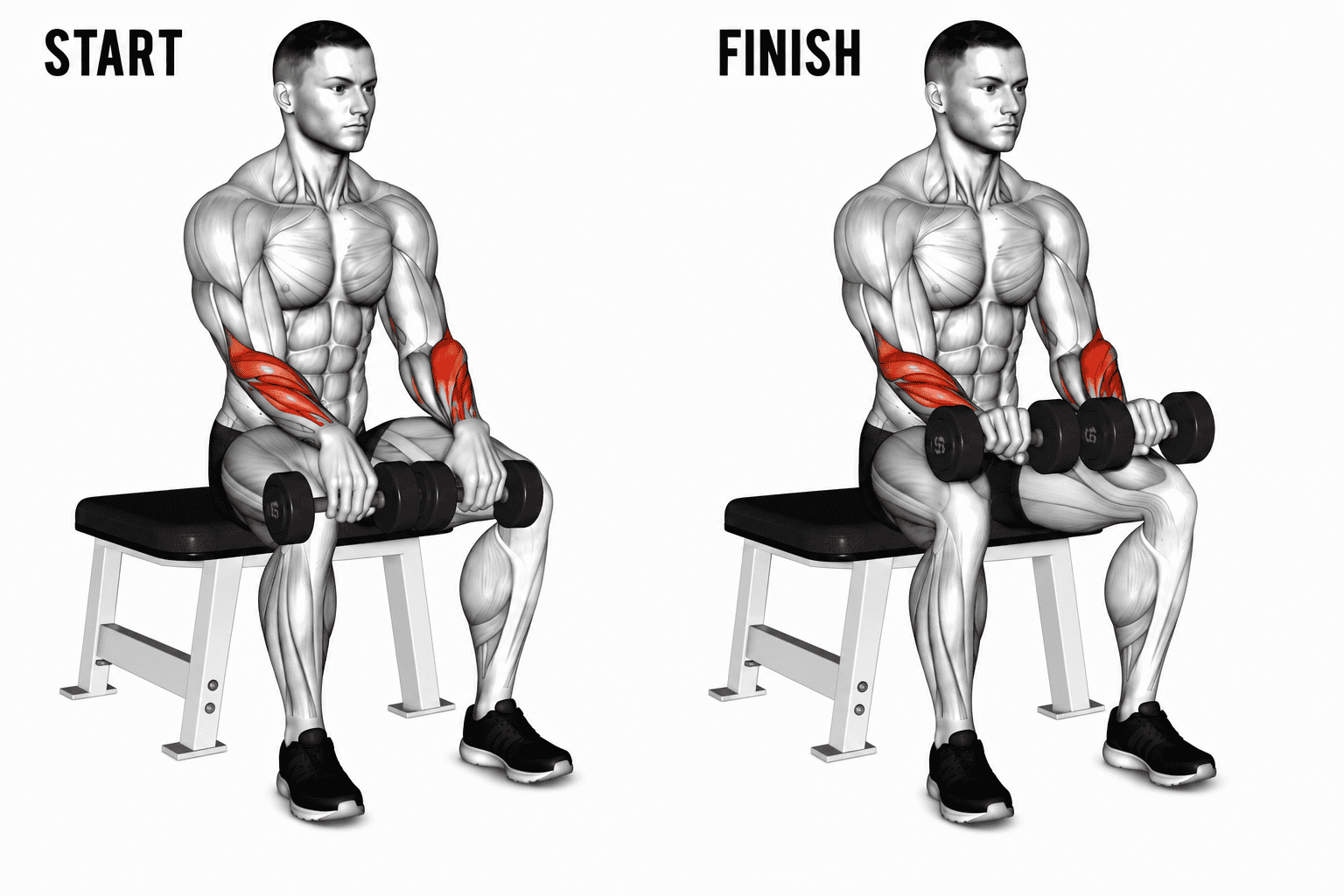
Exercise Description
The Seated Reverse Grip Wrist Curl is an isolation exercise that targets the forearm extensor muscles, which are responsible for extending the wrist and stabilizing the forearm during gripping activities. Performed with a barbell, dumbbells, or EZ-bar using an overhand (reverse) grip, this exercise helps improve forearm strength, wrist stability, muscular balance, and grip performance. It is particularly beneficial for athletes, lifters, and individuals looking to strengthen the often-overlooked muscles on the top of the forearm.
Primary Muscles Worked
Forearm Extensors (Wrist Extensors)
Secondary Muscles Worked
Brachioradialis
Extensor Digitorum
Forearm Flexors (Stabilization)
Finger Extensors
Grip Muscles
How to Perform Correctly
Setup
Sit on a bench with your feet firmly planted on the floor.
Hold a barbell, EZ-bar, or dumbbells with an overhand grip (palms facing down).
Rest your forearms on your thighs or on a bench with your wrists extending beyond the edge.
Keep your elbows fixed and your forearms fully supported.
Allow your wrists to move freely through their range of motion.
Movement
Lower the weight by allowing your wrists to flex downward.
Feel a controlled stretch in the muscles on the top of your forearms.
Raise the weight by extending your wrists upward as high as comfortably possible.
Squeeze the forearm extensor muscles at the top position.
Pause briefly at peak contraction.
Slowly lower the weight back to the starting position under control.
Repeat for the desired number of repetitions.
Common Mistakes to Avoid
Using Excessive Weight
Heavy loads often reduce range of motion and place unnecessary stress on the wrists.
Moving the Forearms
Keep the forearms fully supported and allow only the wrists to move.
Using Momentum
Avoid bouncing or jerking the weight during the exercise.
Incomplete Range of Motion
Fully lower and raise the wrists to maximize muscle activation.
Gripping the Weight Too Tightly
Excessive grip tension can limit wrist movement and reduce effectiveness.
Rushing the Repetitions
Perform each repetition slowly and under control.
Lifting the Elbows Off the Support
Keep the elbows and forearms stable throughout the exercise.