
Seated Dumbbell Calf Raise
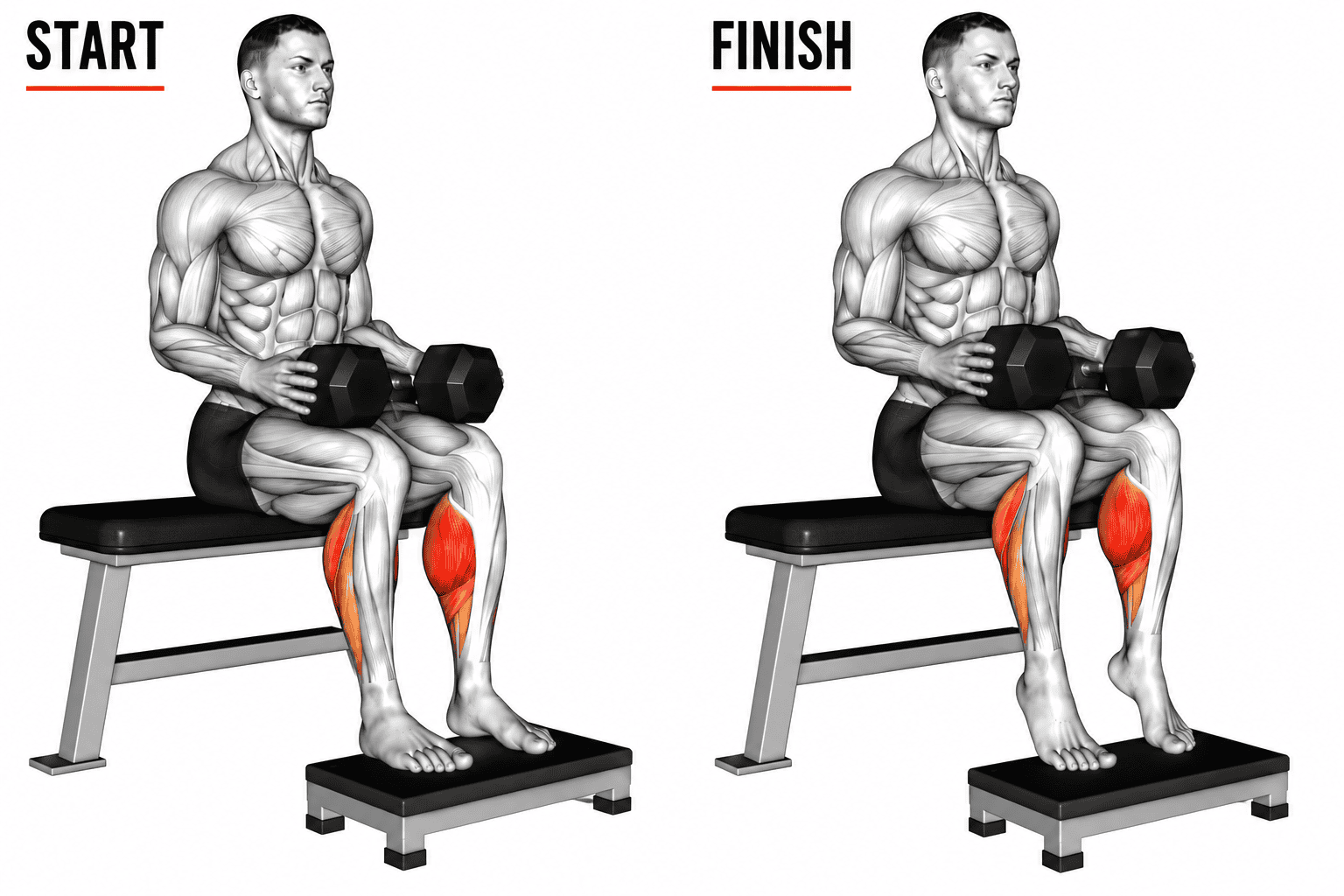
Exercise Description
The Seated Dumbbell Calf Raise is an isolation exercise that targets the calf muscles, with a particular emphasis on the soleus. Because the knees remain bent throughout the movement, the gastrocnemius contributes less than during standing calf raises, allowing the soleus to perform more of the work. This exercise is an excellent option for developing lower-leg strength, muscle size, ankle stability, and muscular endurance using minimal equipment.The exercise is typically performed while seated on a bench with one or more dumbbells resting across the thighs just above the knees.
Primary Muscles Worked
Soleus
Secondary Muscles Worked
Gastrocnemius
Tibialis Posterior
Peroneal Muscles
Intrinsic Foot Muscles
Ankle Stabilizers
How to Perform Correctly
Setup
Sit on a bench or sturdy chair with your feet flat on the floor.
Place a dumbbell across each thigh just above the knees, or use a single heavier dumbbell across both legs.
Position the balls of your feet on a small platform, weight plate, or block if available to increase range of motion.
Keep your knees bent at approximately 90 degrees.
Sit upright with your chest lifted and core engaged.
Movement
Lower your heels as far as comfortably possible to achieve a stretch in the calves.
Push through the balls of your feet and raise your heels as high as possible.
Squeeze your calf muscles at the top position.
Pause briefly at peak contraction.
Slowly lower your heels back to the starting position under control.
Repeat for the desired number of repetitions.
Common Mistakes to Avoid
Using Momentum
Avoid bouncing or performing fast, uncontrolled repetitions.
Incomplete Range of Motion
Fully lower and raise the heels during every repetition.
Using Excessive Weight
Heavy weights often reduce movement quality and range of motion.
Letting the Knees Move Excessively
Keep your thighs stable throughout the exercise.
Rushing the Lowering Phase
Control the descent to maximize muscle activation.
Allowing the Feet to Roll Inward or Outward
Keep pressure evenly distributed through the balls of the feet.
Performing Short Repetitions
Focus on a full stretch and full contraction for optimal results.