
Seated DB Tricep Extension
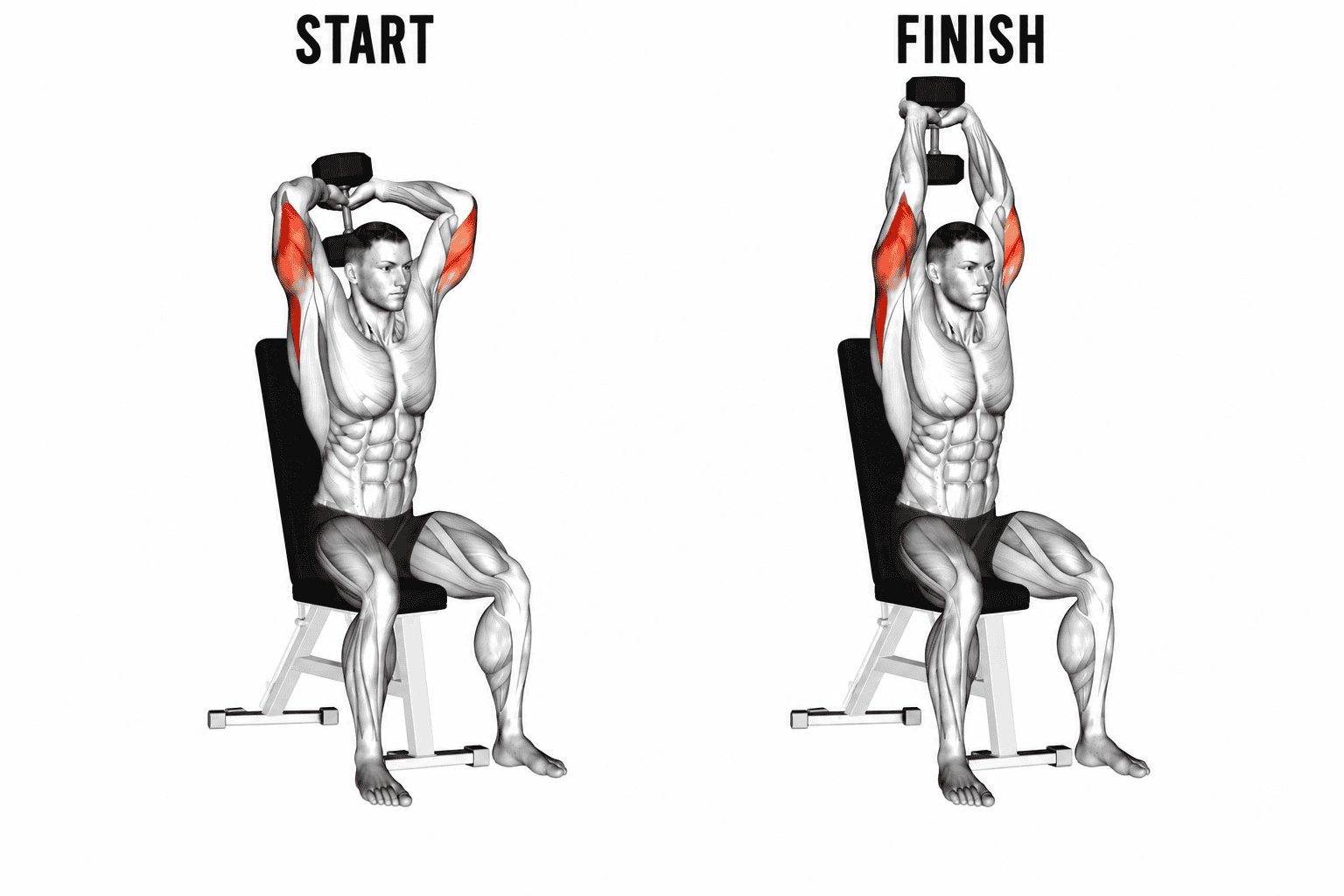
Exercise Description
The Seated Dumbbell Triceps Extension is an isolation exercise that targets the triceps by extending the elbows while holding a dumbbell overhead. Performing the exercise in a seated position provides greater stability and allows you to focus on triceps activation without the balance demands of standing variations. The overhead position places the long head of the triceps under a deep stretch, making this exercise highly effective for building upper-arm size, strength, and definition.
Primary Muscles Worked
Triceps Brachii (Long Head, Lateral Head, and Medial Head)
Secondary Muscles Worked
Anconeus
Anterior Deltoids (Stabilization)
Rotator Cuff Muscles (Stabilizers)
Upper Trapezius
Core Muscles (Stabilization)
How to Perform Correctly
Setup
Sit upright on a bench with your feet flat on the floor.
Hold a dumbbell with both hands beneath the top plate.
Press the dumbbell overhead until your arms are fully extended.
Keep your chest lifted and maintain a neutral spine.
Position your elbows close to your head and pointing upward.
Movement
Slowly lower the dumbbell behind your head by bending your elbows.
Keep your upper arms stationary throughout the exercise.
Lower the weight until you feel a comfortable stretch in your triceps.
Pause briefly at the bottom position.
Extend your elbows and raise the dumbbell back to the starting position.
Squeeze your triceps at the top of the movement.
Repeat for the desired number of repetitions.
Common Mistakes to Avoid
Allowing the Elbows to Flare Out
Keep the elbows close to the head to maximize triceps activation and maintain proper alignment.
Using Excessive Weight
Heavy weights often lead to poor control and increased stress on the shoulders and elbows.
Moving the Upper Arms
Only the forearms should move during the exercise.
Arching the Lower Back
Maintain an upright posture and engage your core to protect the spine.
Using Momentum
Avoid swinging the weight or using body movement to assist the lift.
Incomplete Range of Motion
Lower the dumbbell fully under control and fully extend the elbows at the top.
Lowering Too Quickly
Control the eccentric phase to maximize muscle engagement and reduce injury risk.