
Seated Bent-Over Reverse Fly
Exercise Description
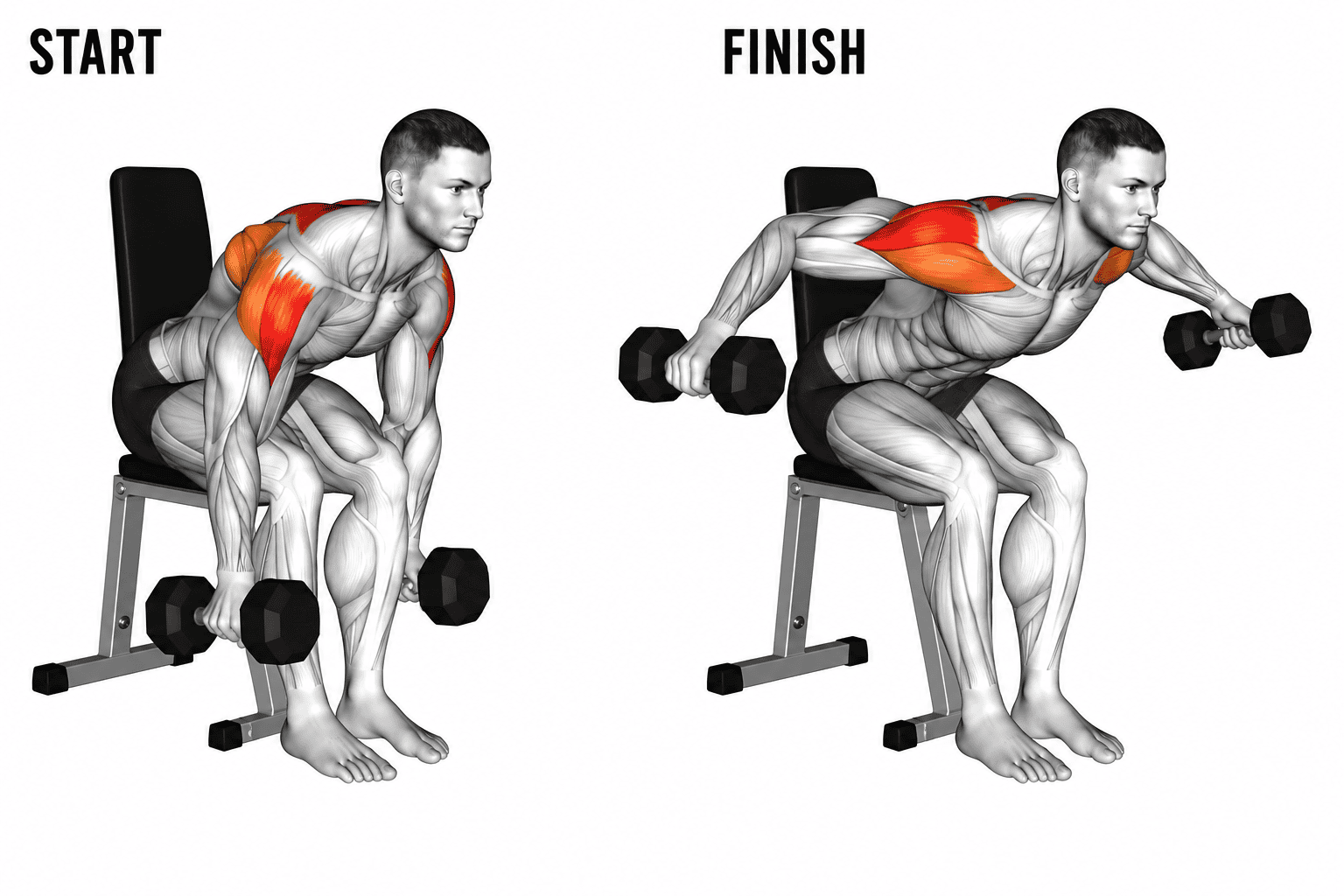
The Seated Bent-Over Reverse Fly is an isolation exercise that targets the rear shoulders and upper back. Performed while seated and bent forward at the hips, this exercise helps improve posture, shoulder stability, and balanced shoulder development. By minimizing lower-body involvement, it allows greater focus on the posterior deltoids and upper-back muscles responsible for pulling the shoulders back and maintaining proper posture.
Primary Muscles Worked
Posterior Deltoids (Rear Shoulders)
Secondary Muscles Worked
Rhomboids
Middle Trapezius
Lower Trapezius
Infraspinatus
Teres Minor
Rotator Cuff Muscles (Stabilizers)
Rear Fibers of the Deltoids
Forearm Muscles (Grip Stabilization)
How to Perform Correctly
Setup
Sit on the edge of a bench holding a dumbbell in each hand.
Place your feet firmly on the floor approximately shoulder-width apart.
Bend forward at the hips until your chest is close to your thighs.
Allow the dumbbells to hang below your shoulders with palms facing each other.
Keep your back flat and maintain a neutral neck position.
Engage your core to stabilize your torso.
Movement
Raise the dumbbells out to the sides in a wide arc.
Keep a slight bend in your elbows throughout the movement.
Lift until your arms are approximately level with your shoulders.
Focus on squeezing your rear deltoids and shoulder blades together at the top.
Pause briefly at peak contraction.
Slowly lower the dumbbells back to the starting position under control.
Repeat for the desired number of repetitions.
Common Mistakes to Avoid
Using Excessive Weight
Heavy dumbbells often lead to momentum and reduced rear-delt activation.
Shrugging the Shoulders
Keep the shoulders down and away from the ears throughout the exercise.
Swinging the Torso
Avoid using body movement to assist the lift.
Straightening the Arms Completely
Maintain a slight bend in the elbows to reduce joint stress.
Raising the Dumbbells Too High
Lifting significantly above shoulder height may shift emphasis away from the rear deltoids.
Rounding the Back
Maintain a flat back and proper posture throughout the movement.
Dropping the Weights Too Quickly
Control the lowering phase to maximize muscle activation and safety.