
Renegade Row
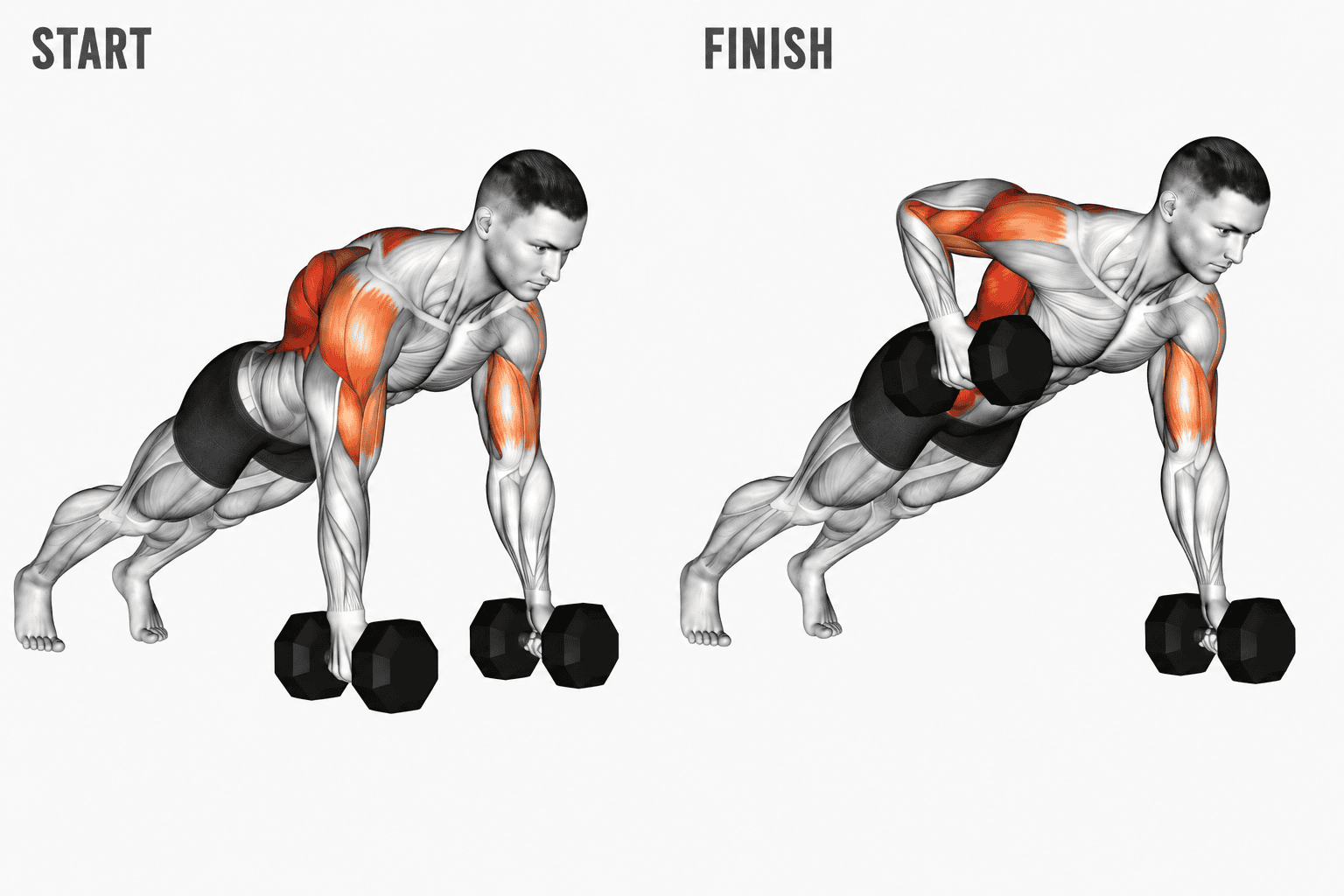
Exercise Description
The Renegade Row is a challenging compound exercise that combines a plank with a single-arm dumbbell row. It develops back strength, core stability, shoulder control, and anti-rotational strength simultaneously. Because the body must resist twisting while rowing the weight, the exercise is highly effective for improving functional strength, balance, and coordination while targeting multiple muscle groups at once.
Primary Muscles Worked
Latissimus Dorsi
Rhomboids
Rectus Abdominis
Obliques
Secondary Muscles Worked
Posterior Deltoids (Rear Shoulders)
Biceps Brachii
Trapezius
Serratus Anterior
Transverse Abdominis
Pectoralis Major
Triceps Brachii
Gluteus Maximus
Quadriceps
Forearm Muscles
How to Perform Correctly
Setup
Place two dumbbells on the floor approximately shoulder-width apart.
Grip the dumbbells and assume a high plank position.
Position your hands directly beneath your shoulders.
Keep your feet wider than shoulder-width apart for increased stability.
Engage your core and glutes to maintain a straight line from head to heels.
Movement
Shift your weight slightly onto one arm while maintaining a stable torso.
Row the opposite dumbbell toward your lower ribs by driving your elbow upward.
Keep your hips and shoulders as square to the floor as possible.
Pause briefly at the top of the row.
Lower the dumbbell slowly and under control back to the floor.
Repeat on the opposite side.
Continue alternating sides for the desired number of repetitions.
Common Mistakes to Avoid
Rotating the Hips Excessively
Twisting the body reduces core engagement and decreases exercise effectiveness.
Letting the Hips Sag
A sagging torso places unnecessary stress on the lower back.
Using Too Much Weight
Excessive weight often leads to poor control and excessive body rotation.
Shrugging the Supporting Shoulder
Keep the supporting shoulder stable and away from the ear.
Rushing the Movement
Perform each repetition slowly and under control.
Pulling with Momentum
Avoid using body movement to assist the row.
Narrow Foot Position
Feet that are too close together can make maintaining stability unnecessarily difficult.