
Plank
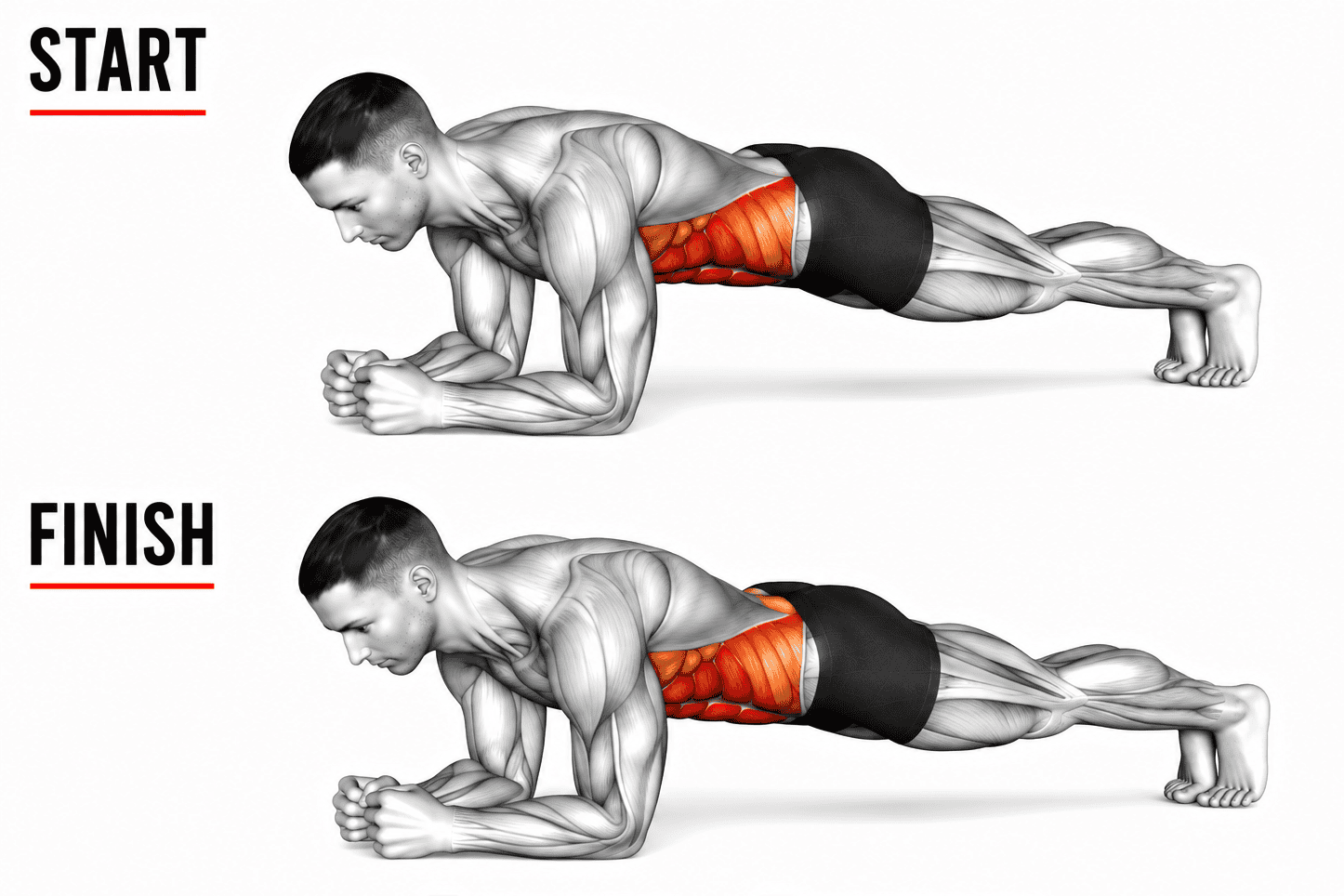
Exercise Description
The Plank is a foundational isometric core exercise that develops abdominal strength, core stability, and muscular endurance. Unlike exercises that involve movement of the spine, the plank trains the core to resist movement and maintain a stable body position. This makes it highly effective for improving posture, spinal stability, athletic performance, and overall functional strength. Because it requires no equipment and can be modified for all fitness levels, the plank is one of the most widely used exercises in fitness, rehabilitation, and sports performance programs.
Primary Muscles Worked
Transverse Abdominis
Rectus Abdominis
Secondary Muscles Worked
External Obliques
Internal Obliques
Erector Spinae
Gluteus Maximus
Gluteus Medius
Quadriceps
Deltoids
Serratus Anterior
Pectoralis Major
Hip Stabilizers
How to Perform Correctly
Setup
Lie face down on an exercise mat.
Position your forearms on the floor with your elbows directly beneath your shoulders.
Extend your legs behind you with your toes on the floor.
Engage your core and glutes.
Lift your body off the ground so that only your forearms and toes remain in contact with the floor.
Form a straight line from your head to your heels.
Movement
Maintain a neutral spine throughout the exercise.
Keep your hips level and aligned with your shoulders.
Tighten your abdominal muscles and glutes continuously.
Keep your head in a neutral position and look toward the floor.
Hold the position for the prescribed amount of time while maintaining proper posture.
Common Mistakes to Avoid
Allowing the Hips to Sag
Keep your core engaged and maintain a straight body line.
Raising the Hips Too High
Avoid turning the plank into an inverted “V” position.
Holding the Breath
Continue breathing normally while maintaining tension.
Looking Forward Excessively
Keep your neck neutral and your gaze directed toward the floor.
Rounding the Upper Back
Maintain a natural spinal alignment throughout the exercise.
Relaxing the Core
Actively brace your abdominal muscles for the duration of the hold.
Letting the Shoulders Shrug
Keep your shoulders stable and away from your ears.