
One-Arm Standing DB Extension
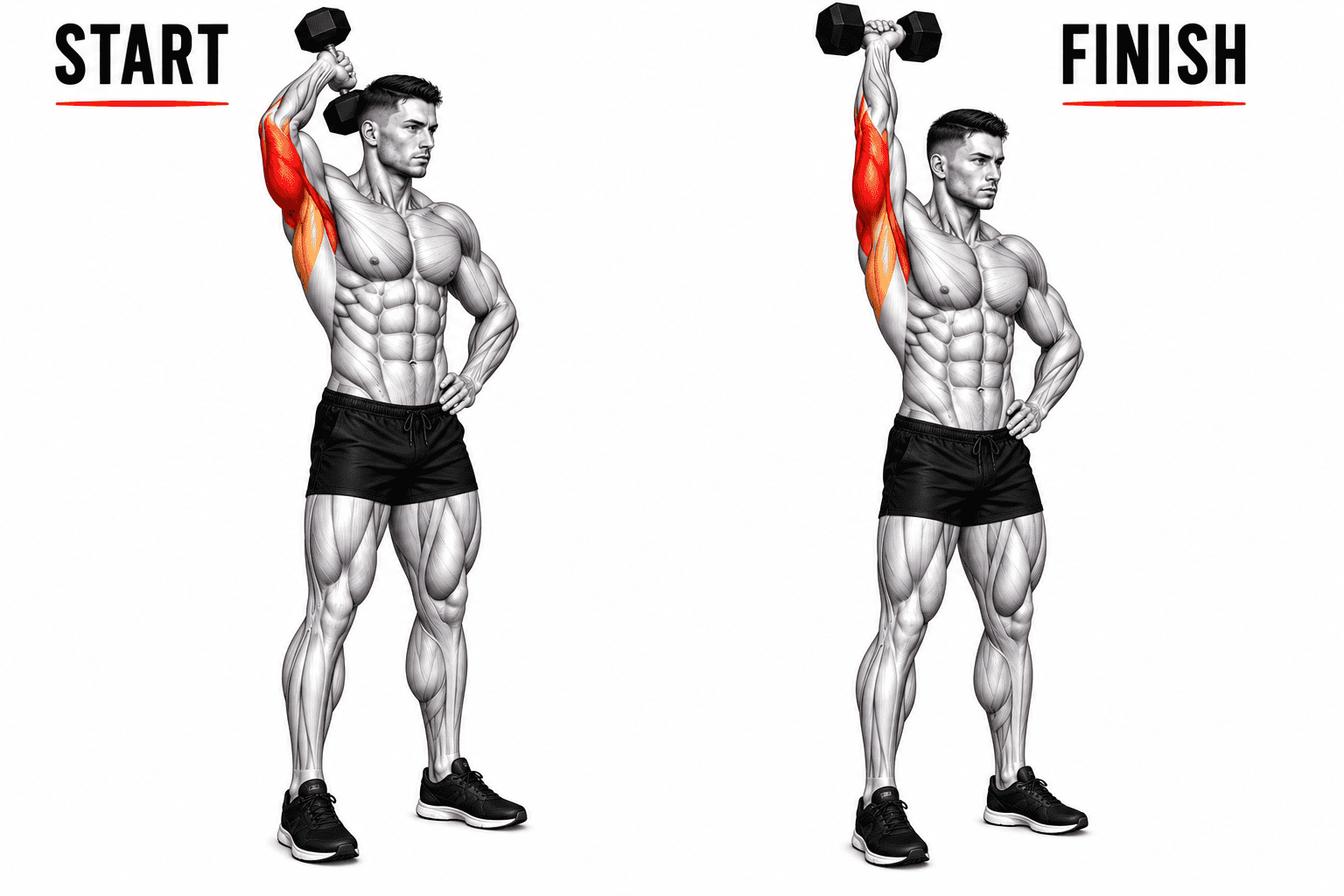
Exercise Description
The One-Arm Standing Dumbbell Triceps Extension is an isolation exercise that targets the triceps one arm at a time. By performing the movement unilaterally, it helps improve muscular balance, coordination, and mind-muscle connection while placing significant emphasis on the long head of the triceps. The standing position also challenges core stability and shoulder control throughout the exercise.
Primary Muscles Worked
Triceps Brachii (Long Head, Lateral Head, and Medial Head)
Secondary Muscles Worked
Anconeus
Anterior Deltoids (Stabilization)
Rotator Cuff Muscles (Stabilizers)
Upper Trapezius
Rectus Abdominis
Obliques
Erector Spinae (Lower Back Stabilizers)
How to Perform Correctly
Setup
Stand upright holding a dumbbell in one hand.
Press the dumbbell overhead until your arm is fully extended.
Position your feet shoulder-width apart.
Engage your core and maintain a neutral spine.
Keep your elbow close to your head and pointing upward.
Movement
Slowly lower the dumbbell behind your head by bending your elbow.
Keep your upper arm stationary throughout the movement.
Lower the weight until you feel a comfortable stretch in your triceps.
Pause briefly at the bottom position.
Extend your elbow and raise the dumbbell back to the starting position.
Squeeze your triceps at the top of the movement.
Complete all repetitions on one arm before switching sides, or alternate arms as desired.
Common Mistakes to Avoid
Allowing the Elbow to Flare Out
Keep the elbow close to your head to maximize triceps activation and maintain proper mechanics.
Using Excessive Weight
Heavy weights often lead to poor technique and reduced range of motion.
Moving the Upper Arm
Only the forearm should move during the exercise.
Arching the Lower Back
Engage your core and glutes to maintain a stable, neutral spine.
Using Momentum
Avoid leaning or swinging your body to assist the lift.
Incomplete Range of Motion
Lower the dumbbell fully under control and extend the elbow completely at the top.
Lowering the Weight Too Quickly
Control the descent to improve muscle engagement and reduce injury risk.