
Nordic Hamstring Curl
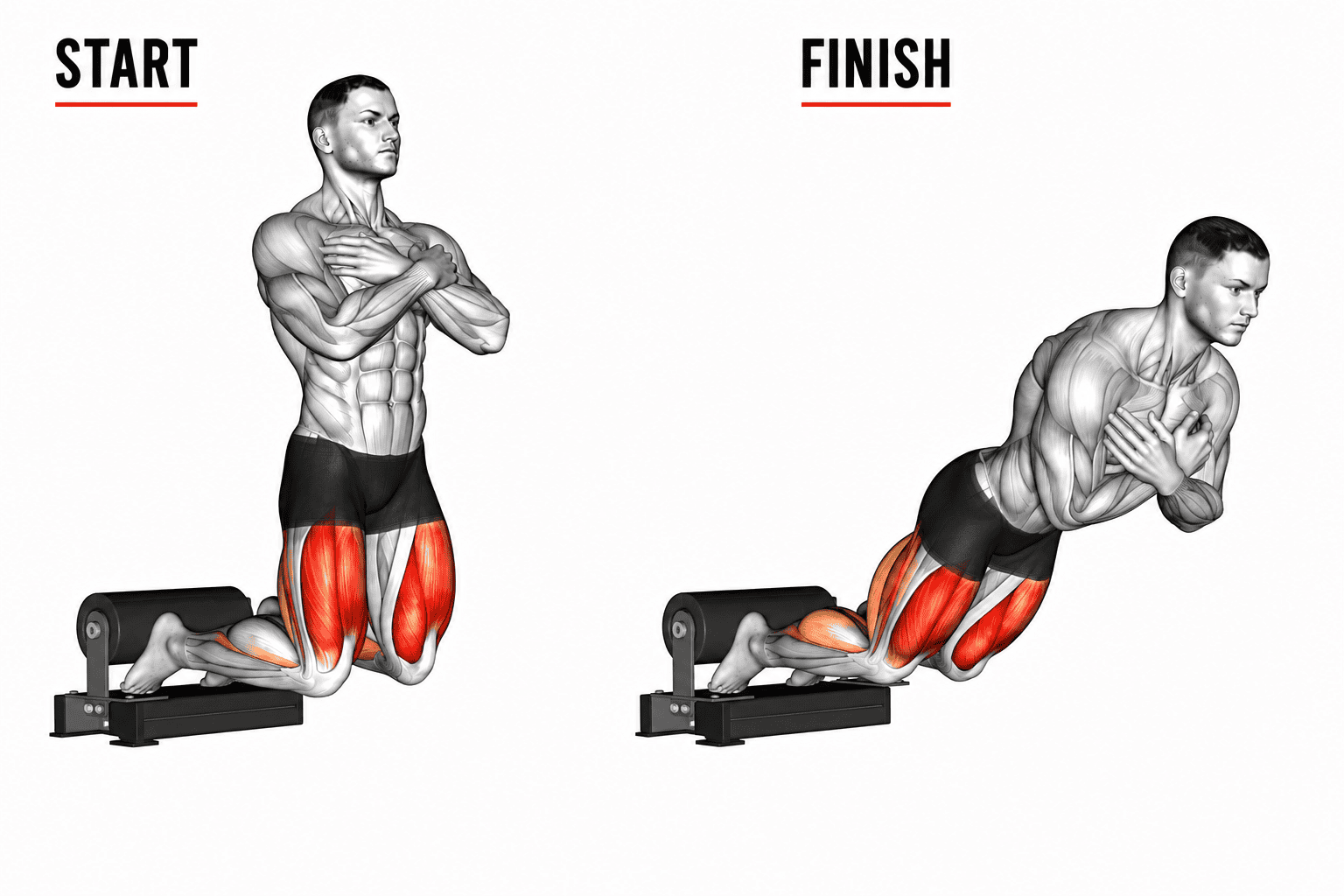
Exercise Description
The Nordic Hamstring Curl is an advanced bodyweight exercise that primarily targets the hamstrings through a powerful eccentric (lowering) contraction. Performed with the feet anchored and the body lowered toward the floor under control, this exercise is one of the most effective movements for developing hamstring strength, muscle mass, and injury resilience. It is widely used by athletes, strength coaches, and rehabilitation professionals to improve sprint performance and reduce the risk of hamstring strains.
Primary Muscles Worked
Hamstrings (Biceps Femoris, Semitendinosus, Semimembranosus)
Secondary Muscles Worked
Gluteus Maximus
Gastrocnemius (Calves)
Erector Spinae
Rectus Abdominis
Obliques
Hip Stabilizers
How to Perform Correctly
Setup
Kneel on a padded surface with your knees approximately hip-width apart.
Secure your ankles under a sturdy object or have a partner hold them firmly in place.
Keep your torso upright with your hips fully extended.
Cross your arms over your chest or place your hands in front of you to assist if needed.
Engage your core and glutes to maintain a straight line from your knees to your shoulders.
Movement
Slowly lean forward from the knees while keeping your hips extended.
Maintain a straight body position throughout the descent.
Resist gravity using your hamstrings as long as possible.
Continue lowering under control until you can no longer resist.
Catch yourself with your hands near the floor if necessary.
Lightly push off the floor and use your hamstrings to assist your return to the starting position.
Repeat for the desired number of repetitions.
Common Mistakes to Avoid
Bending at the Hips
Keep the hips extended and the body in a straight line throughout the movement.
Descending Too Quickly
Focus on controlling the lowering phase for maximum hamstring activation.
Allowing the Lower Back to Arch Excessively
Maintain a strong core brace and neutral spine.
Using Momentum
Avoid dropping forward and relying on speed rather than muscular control.
Incomplete Range of Motion
Lower as far as possible under control while maintaining proper form.
Poor Ankle Support
Ensure the feet are securely anchored before beginning.
Attempting Advanced Repetitions Too Early
Beginners should use assistance bands or push-off assistance until sufficient strength is developed.