
Lying Dumbbell Tricep Extension
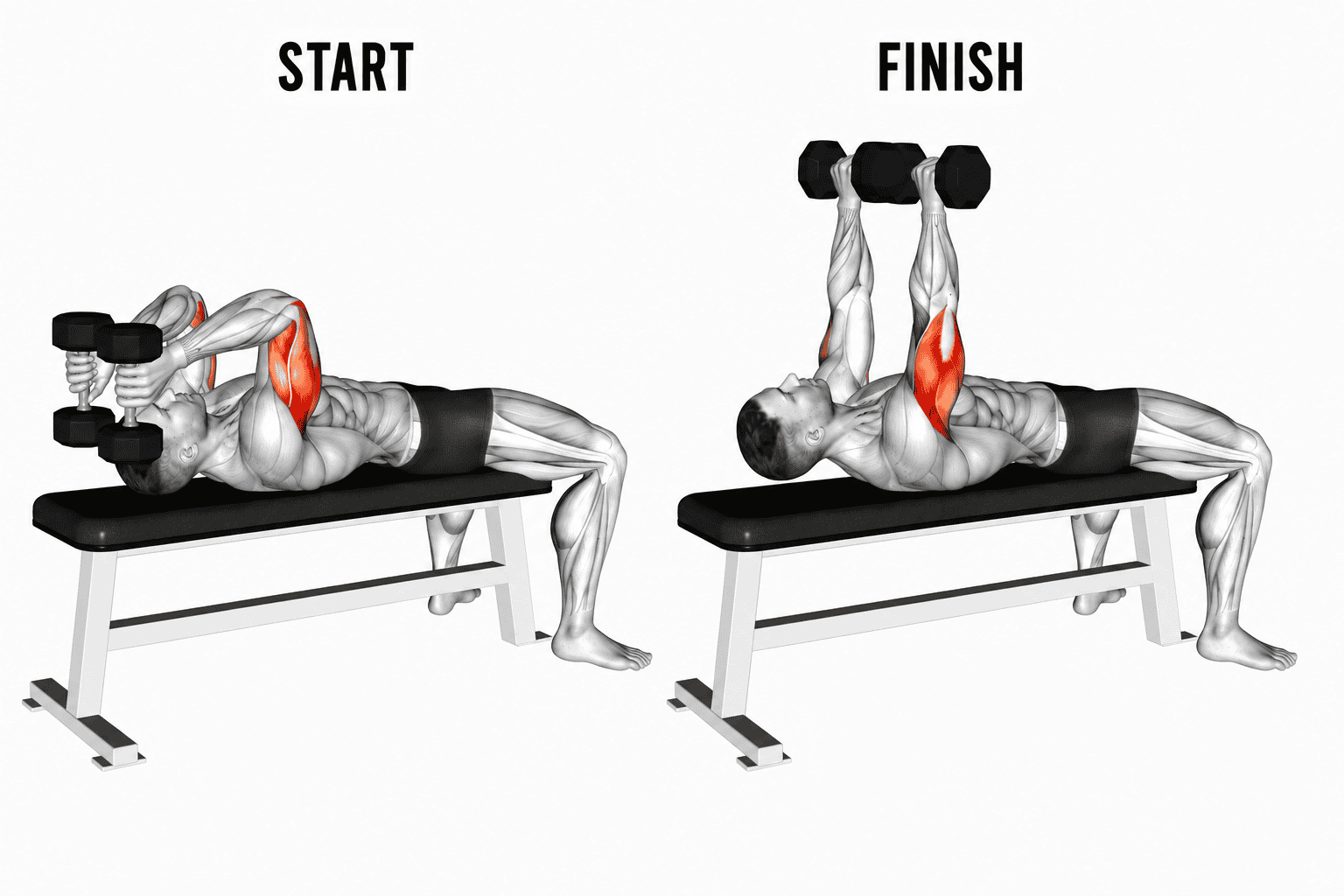
Exercise Description
The Lying Dumbbell Triceps Extension is an isolation exercise that targets the triceps by extending the elbows while lying on a flat bench. Commonly known as a dumbbell skull crusher, this exercise places significant tension on all three heads of the triceps throughout the movement, making it highly effective for building upper-arm size, strength, and definition. Using dumbbells allows each arm to work independently, helping improve muscular balance and coordination.
Primary Muscles Worked
Triceps Brachii (Long Head, Lateral Head, and Medial Head)
Secondary Muscles Worked
Anconeus
Anterior Deltoids (Stabilization)
Forearm Muscles (Grip Stabilization)
Rotator Cuff Muscles (Stabilizers)
How to Perform Correctly
Setup
Lie flat on a bench holding a dumbbell in each hand.
Press the dumbbells directly above your chest with your arms fully extended.
Position your palms facing each other (neutral grip).
Keep your feet firmly planted on the floor.
Engage your core and maintain a stable position on the bench.
Movement
Slowly lower the dumbbells by bending your elbows.
Allow the dumbbells to move toward the sides of your head or just behind it.
Keep your upper arms relatively stationary throughout the movement.
Lower the weights until you feel a comfortable stretch in your triceps.
Pause briefly at the bottom position.
Extend your elbows and return the dumbbells to the starting position.
Squeeze your triceps at the top of the movement.
Repeat for the desired number of repetitions.
Common Mistakes to Avoid
Allowing the Elbows to Flare Out
Keep the elbows relatively close together to maximize triceps activation and reduce shoulder stress.
Using Excessive Weight
Heavy weights often lead to poor control and increased strain on the elbows and shoulders.
Moving the Upper Arms
The upper arms should remain mostly stationary throughout the exercise.
Lowering the Weights Too Quickly
Control the descent to improve muscle activation and joint safety.
Incomplete Range of Motion
Use a full stretch and complete elbow extension for optimal results.
Bouncing Out of the Bottom Position
Avoid using momentum to lift the weights.
Locking Out Aggressively
Fully extend the elbows without forcefully snapping the joints into lockout.