
Dumbbell Step-Up
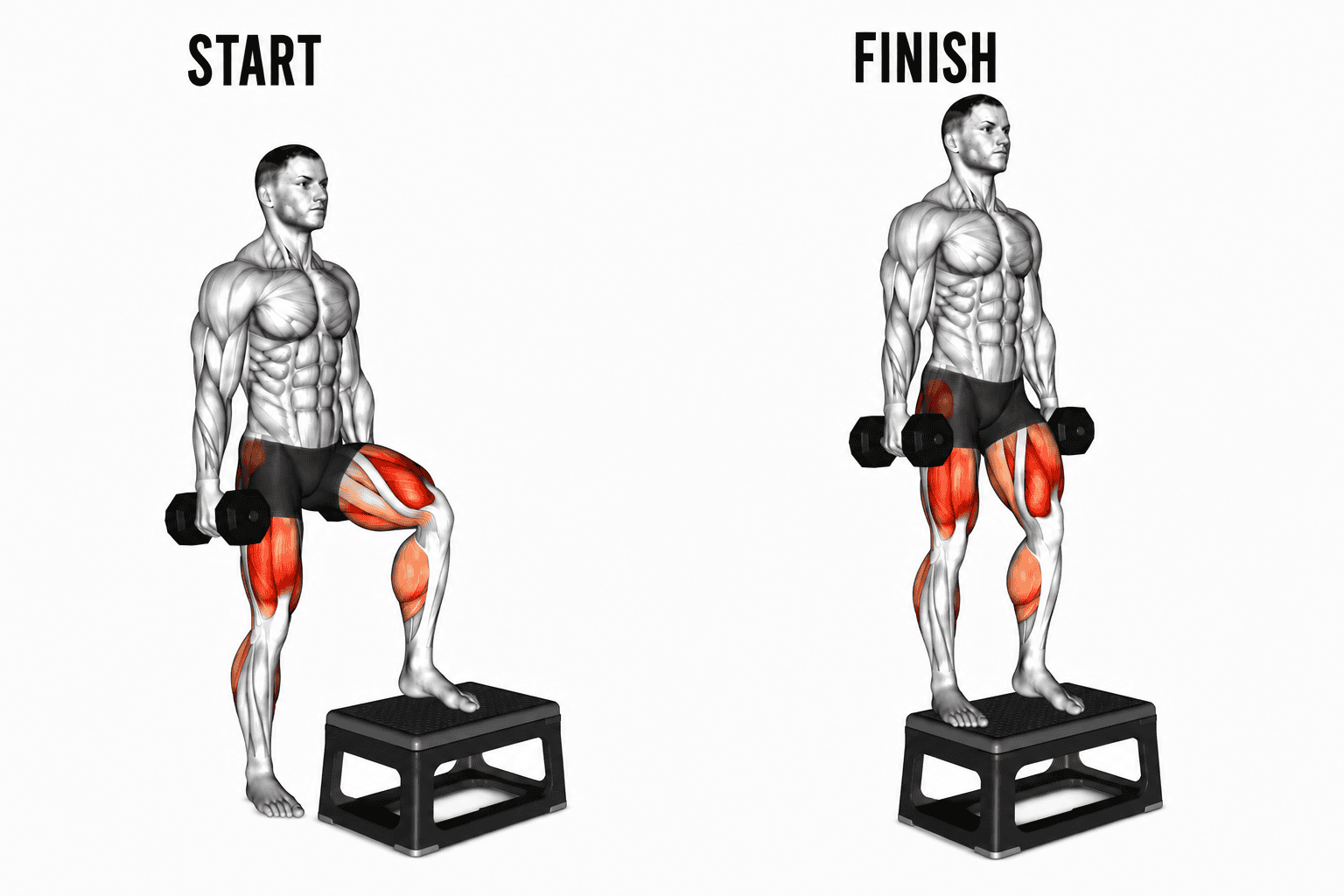
Exercise Description
The Dumbbell Step-Up is a functional lower-body exercise that involves stepping onto an elevated platform while holding dumbbells. This movement closely mimics everyday activities such as climbing stairs and is highly effective for developing leg strength, glute development, balance, coordination, and unilateral stability. Because each leg works independently, the Dumbbell Step-Up can also help identify and correct strength imbalances between the left and right sides of the body.
Primary Muscles Worked
Quadriceps
Gluteus Maximus
Secondary Muscles Worked
Hamstrings
Gluteus Medius
Calves (Gastrocnemius and Soleus)
Adductors
Hip Stabilizers
Rectus Abdominis
Obliques
Erector Spinae
Forearm Muscles (Grip Stabilization)
Upper Back Muscles (Stabilization)
How to Perform Correctly
Setup
Hold a dumbbell in each hand at your sides.
Stand facing a stable bench, box, or platform.
Choose a platform height that allows you to step up comfortably while maintaining proper form.
Position your feet hip-width apart.
Lift your chest, engage your core, and maintain a neutral spine.
Movement
Place one foot firmly on the platform.
Drive through the heel of the elevated foot and step onto the platform.
Extend your hip and knee until you are standing fully upright on the platform.
Avoid pushing excessively off the ground with the trailing leg.
Slowly lower yourself back to the starting position under control.
Complete all repetitions on one leg or alternate legs as desired.
Common Mistakes to Avoid
Pushing Off Too Much with the Trailing Leg
The working leg on the platform should perform most of the work.
Using a Platform That Is Too High
Excessive height may compromise technique and increase joint stress.
Allowing the Knee to Collapse Inward
Keep the knee aligned with the toes throughout the movement.
Leaning Excessively Forward
Maintain an upright torso and neutral spine.
Dropping Quickly During the Descent
Control the lowering phase to improve muscle activation and reduce injury risk.
Using Excessive Weight
Prioritize balance and proper mechanics before increasing resistance.
Looking Down Constantly
Keep your head neutral and your eyes focused forward.