
Dumbbell Shrug
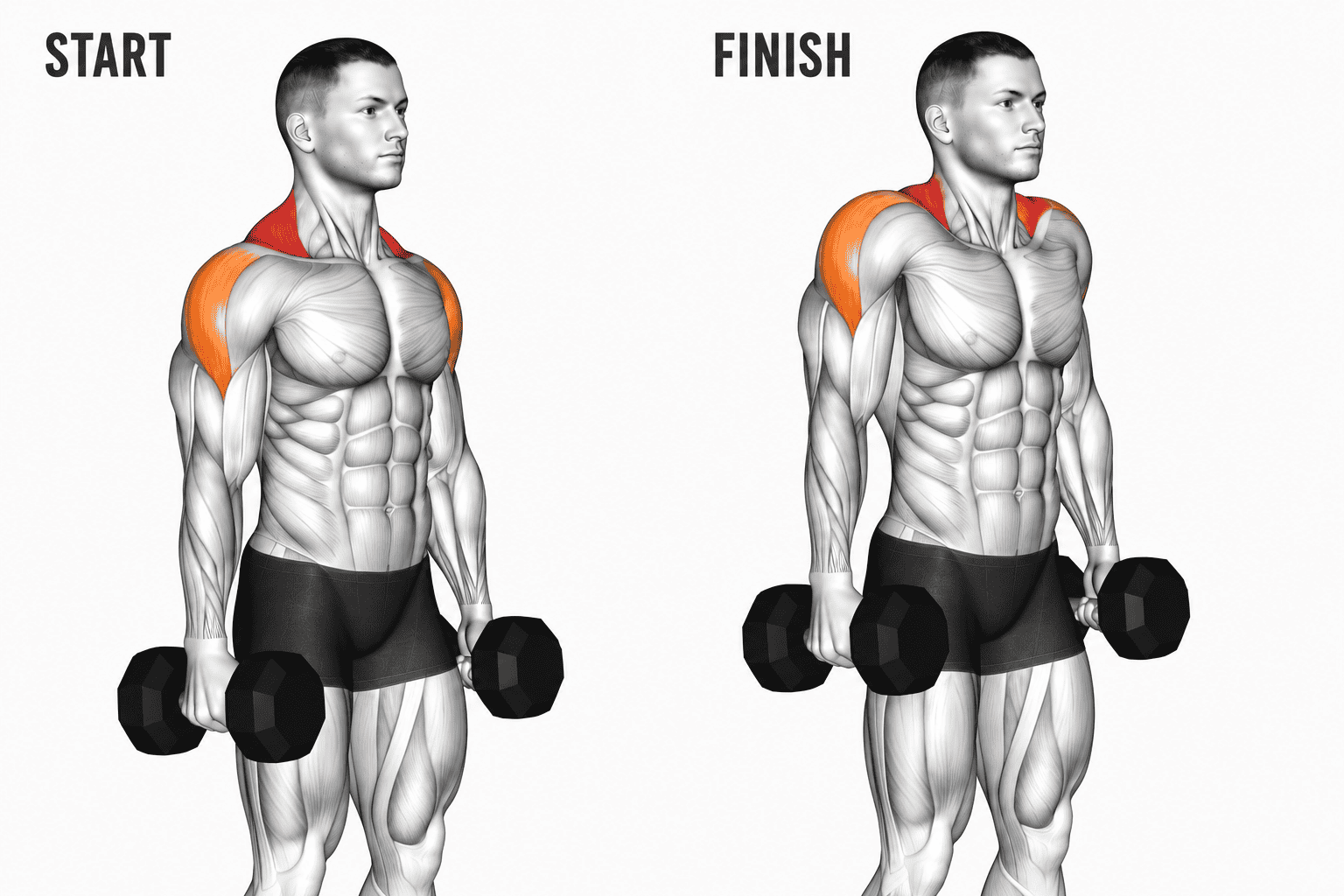
Exercise Description
The Dumbbell Shrug is an isolation exercise that targets the upper trapezius muscles, which are responsible for elevating the shoulders. It is one of the most effective exercises for developing upper trap size, neck-to-shoulder thickness, and shoulder girdle strength. Using dumbbells allows each side of the body to work independently and promotes a natural range of motion.
Primary Muscles Worked
Upper Trapezius
Secondary Muscles Worked
Levator Scapulae
Middle Trapezius
Forearm Flexors (Grip Muscles)
Rotator Cuff Muscles (Stabilization)
Core Muscles (Stabilization)
How to Perform Correctly
Setup
Stand upright with a dumbbell in each hand.
Position your feet shoulder-width apart.
Allow the dumbbells to hang at your sides with your arms fully extended.
Keep your chest lifted and shoulders relaxed.
Engage your core and maintain a neutral spine.
Movement
Raise your shoulders straight upward toward your ears.
Focus on contracting the upper trapezius muscles at the top of the movement.
Pause briefly at peak contraction.
Slowly lower your shoulders back to the starting position.
Allow the traps to fully stretch at the bottom.
Repeat for the desired number of repetitions.
Common Mistakes to Avoid
Rolling the Shoulders
Avoid rotating the shoulders forward or backward. The movement should be straight up and down.
Using Excessive Weight
Heavy weights often lead to reduced range of motion and poor technique.
Bending the Elbows
Keep your arms straight and allow the traps to perform the work.
Leaning the Torso
Avoid using body momentum or excessive torso movement.
Incomplete Range of Motion
Fully elevate the shoulders and allow them to return to a stretched position.
Rushing the Movement
Perform each repetition slowly and under control.
Looking Up or Down Excessively
Maintain a neutral head and neck position throughout the exercise.