
Dumbbell Leg Extension
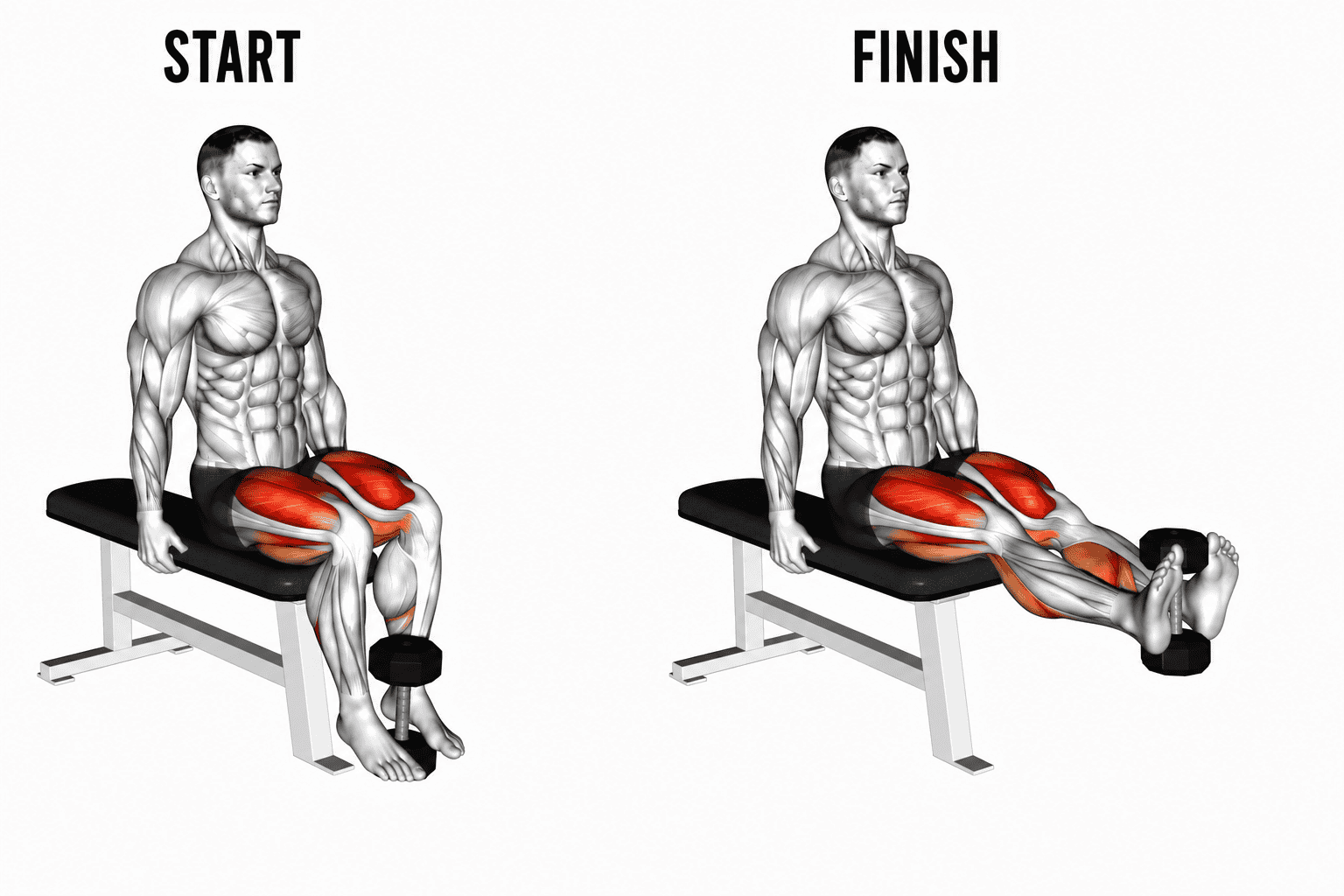
Exercise Description
The Dumbbell Leg Extension is an isolation exercise that targets the quadriceps by extending the knee against resistance. Typically performed while seated on a bench with a dumbbell held securely between the feet, this exercise provides an effective alternative when a leg extension machine is unavailable. It is particularly useful for developing quadriceps strength, muscle definition, and improving knee-extension performance.
Primary Muscles Worked
Quadriceps (Rectus Femoris, Vastus Lateralis, Vastus Medialis, Vastus Intermedius)
Secondary Muscles Worked
Hip Flexors (Stabilization)
Tibialis Anterior (Stabilization)
Core Muscles (Stabilization)
Adductors (Stabilization)
How to Perform Correctly
Setup
Sit on the edge of a bench or chair with your knees bent at approximately 90 degrees.
Secure a dumbbell between your feet by gripping the handle with the arches of your shoes.
Place your hands on the sides of the bench for stability.
Sit upright with your chest lifted and core engaged.
Keep your thighs stationary throughout the movement.
Movement
Extend your knees and raise the dumbbell until your legs are nearly straight.
Focus on contracting your quadriceps at the top of the movement.
Pause briefly at full extension.
Slowly lower the dumbbell back to the starting position under control.
Maintain tension in the quadriceps throughout the exercise.
Repeat for the desired number of repetitions.
Common Mistakes to Avoid
Using Excessive Weight
Heavy dumbbells can compromise control and place unnecessary stress on the knees.
Swinging the Weight
Avoid using momentum to lift the dumbbell.
Lowering Too Quickly
Control the eccentric phase to maximize muscle activation and reduce injury risk.
Allowing the Thighs to Move
Keep your upper legs stable throughout the exercise.
Incomplete Range of Motion
Fully extend and lower the legs through a comfortable range of motion.
Rounding the Back
Maintain an upright posture and neutral spine.
Failing to Secure the Dumbbell Properly
Ensure the dumbbell is held securely between the feet before beginning.