
Dumbbell Incline Fly
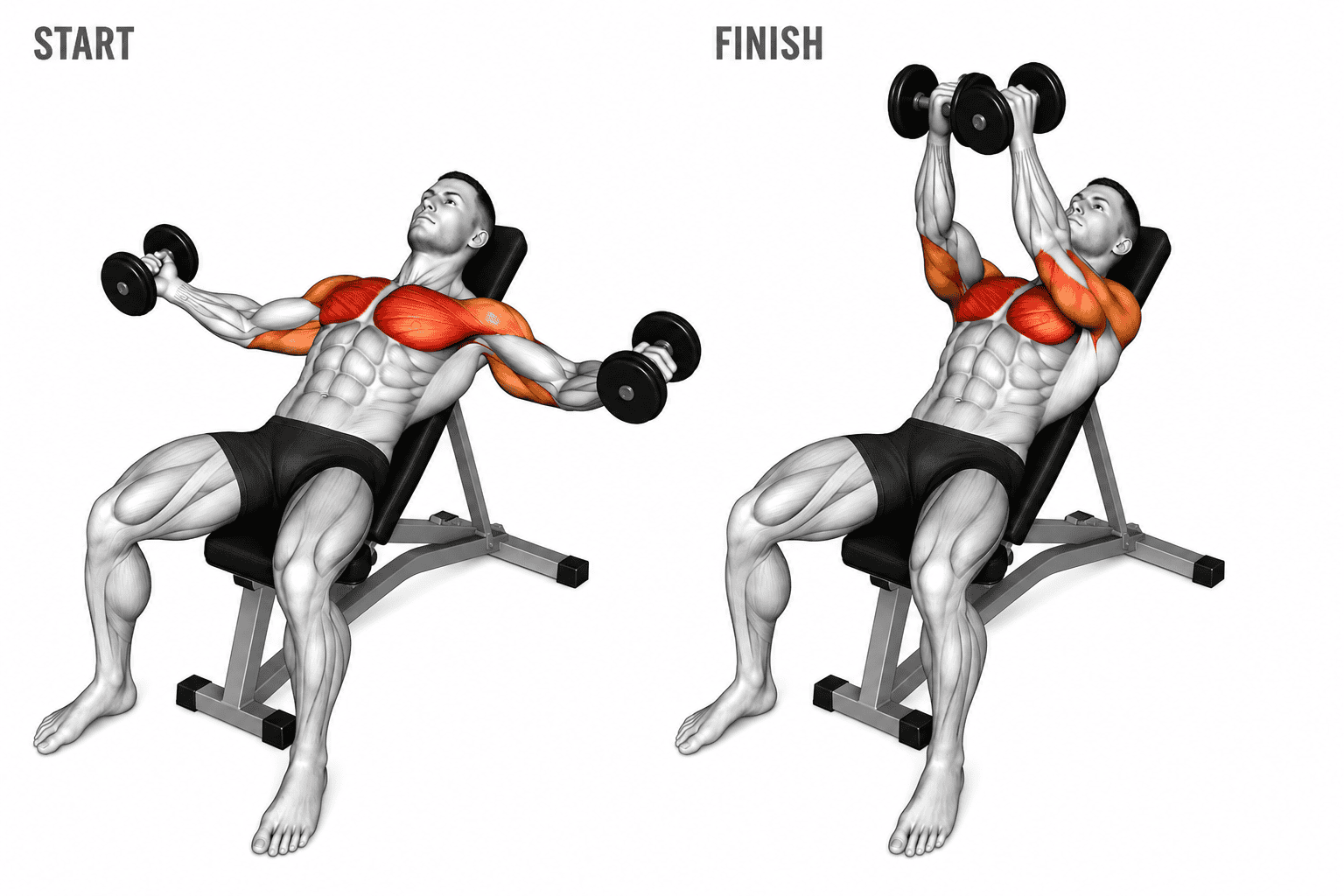
Exercise Description
The Dumbbell Incline Fly is an isolation exercise that targets the upper chest by moving the arms through a wide arc while maintaining a slight bend in the elbows. Performed on an incline bench, this exercise places greater emphasis on the upper fibers of the pectoralis major and helps improve chest muscle development, flexibility, and mind-muscle connection.
Primary Muscles Worked
Upper Pectoralis Major (Clavicular Head)
Secondary Muscles Worked
Anterior Deltoids (Front Shoulders)
Serratus Anterior
Biceps Brachii (Stabilization)
Rotator Cuff Muscles (Stabilizers)
How to Perform Correctly
Setup
Adjust a bench to a 30–45° incline.
Hold a dumbbell in each hand and lie back on the bench.
Press the dumbbells above your chest with palms facing each other.
Keep a slight bend in your elbows throughout the exercise.
Retract your shoulder blades and keep your chest lifted.
Movement
Lower the dumbbells out to the sides in a wide arc.
Continue lowering until you feel a comfortable stretch across the chest.
Keep the elbow angle relatively fixed throughout the movement.
Bring the dumbbells back together by squeezing your chest and following the same arc upward.
Stop just before the dumbbells touch at the top.
Repeat for the desired number of repetitions.
Common Mistakes to Avoid
Using Excessive Weight
Heavy weights often turn the exercise into a press and increase shoulder stress.
Bending the Elbows Too Much
Excessive elbow flexion changes the movement from a fly into a pressing exercise.
Locking the Elbows
Keeping the arms completely straight can place unnecessary stress on the elbow joints.
Lowering Too Deep
Excessive range of motion may strain the shoulder joint and connective tissues.
Allowing the Shoulders to Roll Forward
Keep the chest up and shoulder blades retracted throughout the exercise.
Using Momentum
Swinging the weights reduces chest activation and control.
Bringing the Dumbbells Together Forcefully
Avoid crashing the weights together at the top of the movement.