
Dips
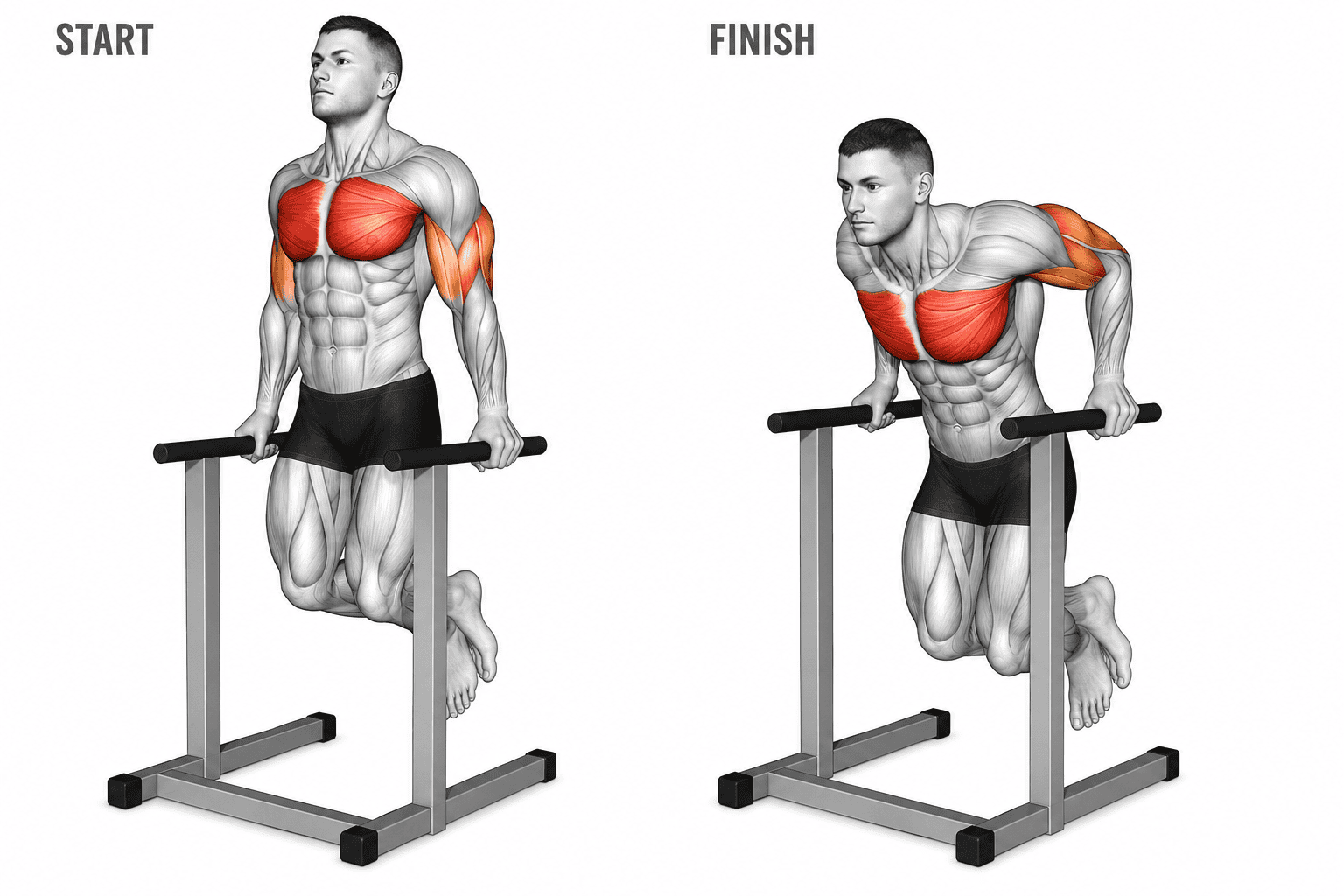
Exercise Description
Dips are a compound bodyweight exercise that develops upper-body strength and muscle mass by targeting the chest, triceps, and shoulders. Performed on parallel bars or a dip station, dips are highly effective for building pressing strength and can be progressed by adding external resistance or regressed with assistance bands or machines.
Primary Muscles Worked
Triceps Brachii
Pectoralis Major (Chest)
Secondary Muscles Worked
Anterior Deltoids (Front Shoulders)
Serratus Anterior
Upper Trapezius
Rhomboids
Core Muscles (Stabilization)
Forearm Muscles (Grip Support)
How to Perform Correctly
Setup
Grasp the parallel bars with a firm grip.
Press yourself up until your arms are fully extended.
Keep your shoulders down and away from your ears.
Cross your ankles or keep your legs slightly bent behind you.
Engage your core and maintain a stable body position.
Movement
Lower your body by bending your elbows in a controlled manner.
Slightly lean forward if you want greater chest involvement.
Continue lowering until your upper arms are approximately parallel to the floor or as far as your shoulder mobility comfortably allows.
Pause briefly at the bottom position.
Press through your palms and extend your elbows to return to the starting position.
Repeat for the desired number of repetitions.
Common Mistakes to Avoid
Descending Too Deep
Excessive depth can place unnecessary stress on the shoulder joints and connective tissues.
Shrugging the Shoulders
Allowing the shoulders to rise toward the ears reduces stability and increases shoulder strain.
Swinging the Body
Excessive momentum decreases muscle activation and control.
Flaring the Elbows Excessively
Wide elbow positioning can increase shoulder stress.
Incomplete Range of Motion
Partial repetitions may limit strength and muscle development.
Leaning Too Far Forward
Excessive forward lean can overload the shoulders and compromise control.
Locking Out Aggressively
Forcefully snapping the elbows into lockout may increase joint stress.