
Deadlift
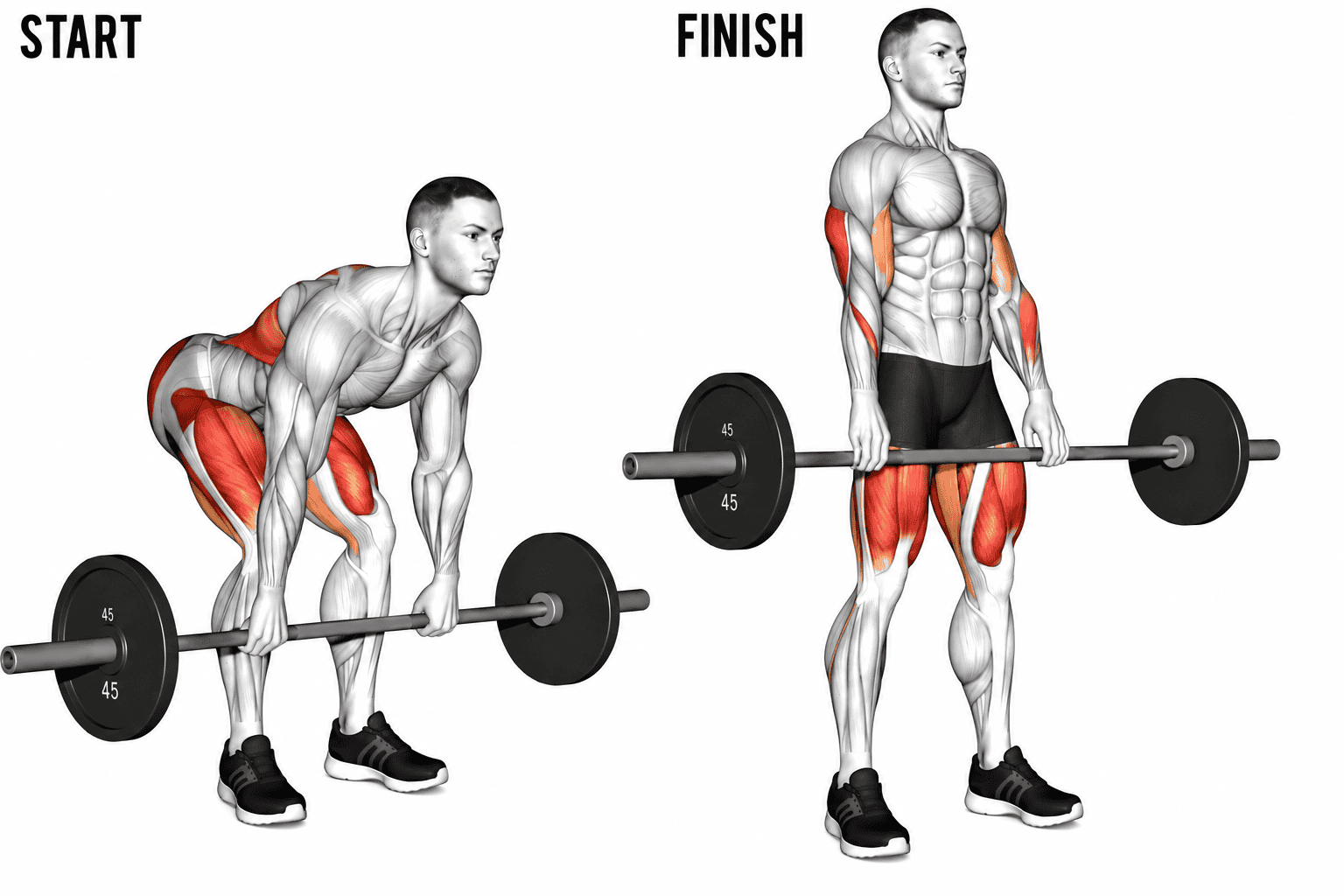
Exercise Description
The Deadlift is one of the most effective compound exercises for developing total-body strength, muscle mass, and functional movement. It involves lifting a loaded barbell from the floor to a standing position using the muscles of the hips, legs, back, and core. The deadlift is a foundational strength exercise that improves pulling power, posture, athletic performance, and everyday lifting mechanics.
Primary Muscles Worked
Gluteus Maximus
Hamstrings
Erector Spinae (Lower Back)
Secondary Muscles Worked
Quadriceps
Latissimus Dorsi
Trapezius
Rhomboids
Forearm Flexors (Grip Muscles)
Core Muscles
Adductors
Calves (Stabilization)
How to Perform Correctly
Setup
Stand with your feet approximately hip-width apart, with the barbell positioned over the middle of your feet.
Bend at the hips and knees to grip the bar just outside your legs.
Keep your chest up and shoulders slightly in front of the bar.
Maintain a neutral spine from head to hips.
Engage your core and pull the slack out of the bar before lifting.
Keep the bar close to your body throughout the movement.
Movement
Push through your heels and drive your feet into the floor.
Extend your knees and hips simultaneously to lift the bar.
Keep the barbell in contact with or very close to your legs.
Stand tall at the top by fully extending your hips and knees.
Avoid leaning backward excessively at lockout.
Lower the bar by pushing your hips back first, then bending your knees once the bar passes them.
Return the bar to the floor under control and repeat
Common Mistakes to Avoid
Rounding the Lower Back
A rounded spine increases stress on the spinal structures and can elevate injury risk.
Starting with the Bar Too Far from the Body
The farther the bar is from your center of gravity, the greater the strain on the lower back.
Pulling with the Arms
The arms should remain straight and act as hooks throughout the movement.
Hips Rising Too Quickly
Allowing the hips to shoot up shifts the load away from the legs and increases back stress.
Hyperextending at Lockout
Leaning backward excessively at the top places unnecessary stress on the lower back.
Jerking the Bar Off the Floor
Create tension before lifting rather than yanking the bar upward.
Looking Up Excessively
Keep the neck neutral and aligned with the spine.