
Dumbbell Pullover
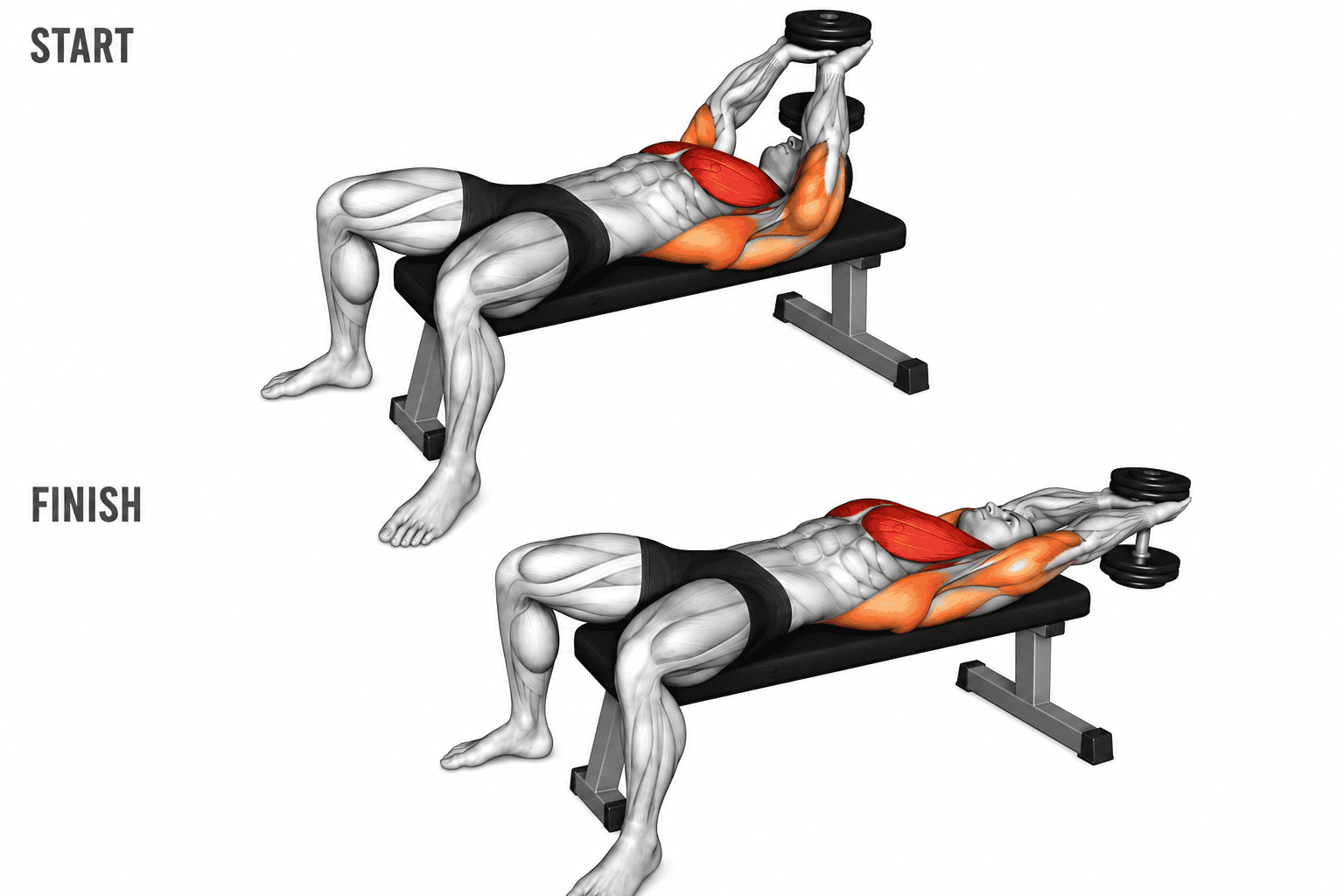
Exercise Description
The Dumbbell Pullover is a unique upper-body exercise that combines chest and shoulder movement through a large range of motion. When performed with proper technique, it can effectively target the chest while also engaging the muscles of the upper back and core. The exercise places the chest under a deep stretch, making it a valuable addition to a chest-building routine focused on muscle development and mobility.
Primary Muscles Worked
Pectoralis Major (Chest)
Sternal Head of the Pectoralis Major (Lower Chest Emphasis)
Secondary Muscles Worked
Latissimus Dorsi
Serratus Anterior
Triceps Brachii (Long Head)
Anterior Deltoids (Front Shoulders)
Rectus Abdominis (Core Stabilization)
Rotator Cuff Muscles (Stabilizers)
How to Perform Correctly
Setup
Lie perpendicular or lengthwise on a flat bench with a dumbbell held securely in both hands.
Hold the dumbbell above your chest with your palms supporting the underside of the top plate.
Plant your feet firmly on the floor.
Engage your core and keep your shoulder blades stable.
Maintain a slight bend in your elbows throughout the exercise.
Movement
Slowly lower the dumbbell backward and behind your head in a controlled arc.
Continue until you feel a comfortable stretch across your chest and shoulders.
Keep your elbows slightly bent and fixed throughout the movement.
Pull the dumbbell back over your chest using your chest muscles.
Pause briefly at the top while maintaining tension.
Repeat for the desired number of repetitions.
Common Mistakes to Avoid
Using Excessive Weight
Heavy weights can compromise form and place excessive stress on the shoulders and elbows.
Bending the Elbows Too Much
Turning the movement into a triceps exercise reduces chest involvement.
Lowering the Weight Too Far
Excessive range of motion may overstress the shoulder joint and connective tissues.
Arching the Lower Back Excessively
Maintain core engagement to avoid unnecessary lumbar strain.
Moving Too Quickly
Fast repetitions reduce muscle tension and increase injury risk.
Allowing the Shoulders to Lose Stability
Keep the shoulder blades controlled and avoid shrugging.
Using Momentum
Perform the movement slowly and deliberately rather than swinging the weight.