
How Much Protein Do You ReallyNeed?
Protein is the most talked-about macro in fitness — and also the most misunderstood. Too little and you leave gains on the table. Too much and you're wasting money. Here's what the science actually recommends.
Ask ten people in a gym how much protein you need, and you'll get ten different answers. "1 gram per pound." "2 grams per kilo." "As much as possible." The supplement industry has a vested interest in making you think more is always better. But decades of nutritional research paints a more nuanced — and reassuring — picture.
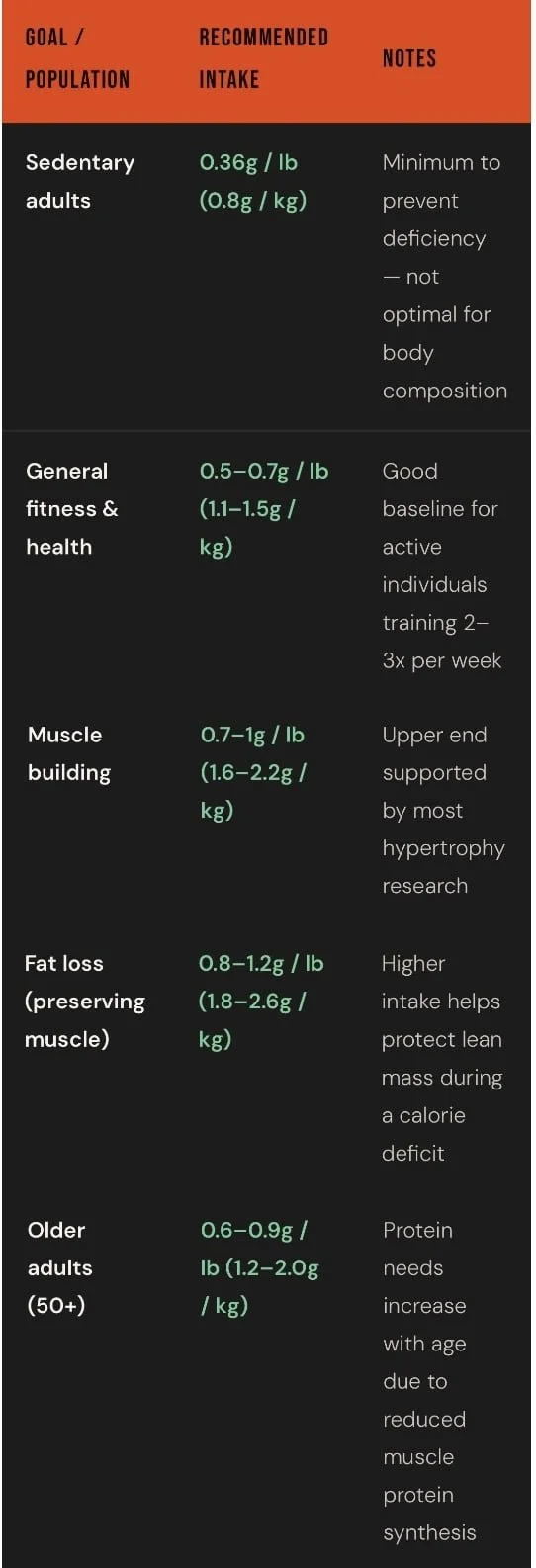
0.7–1g per lb of bodyweight — optimal range for most active people
0.36g per lb — the minimum RDA (likely too low for athletes)
40g max protein your body can use from a single meal
What Protein Actually Does
Protein isn't just a muscle-building nutrient — it's the structural foundation of almost every tissue in your body. Enzymes, hormones, immune cells, skin, hair, and yes, muscle fibres are all made from amino acids, the building blocks of dietary protein.
When you train, you create microscopic damage in muscle tissue. Protein provides the raw materials to repair and rebuild that tissue stronger than before. Without sufficient protein, this repair process is compromised — regardless of how well you train or sleep.
Beyond muscle: Adequate protein also supports satiety (keeping you fuller for longer), preserves lean mass during fat loss, supports immune function, and helps regulate blood sugar. It's the most functional macro in your diet.
How Much Do You Actually Need?
Requirements vary meaningfully depending on your goal, training intensity, age, and body composition. Here's what current research recommends:
Your Personal Protein Calculator
Find Your Daily Target. A quick research and the web will provide you with tonnes on protein intake calculators.
Best High-Protein Foods
Chicken Breast. 100g cooked=31g
Lean Beef. 100g cooked=26g
Tuna. 1 can (145g)=34g
Whole Eggs. 3 large eggs=18g
Greek yoghurt. 200g (full fat)=20g
Lentils. 200g cooked=18g
Myths vs Facts:
Myth
"You can only absorb 20–30g of protein per meal." Your body absorbs all the protein you eat — it just does so at different rates. Larger meals are digested more slowly, not wasted.
Fact
Spreading protein across 3–5 meals does optimise muscle protein synthesis. While total daily intake matters most, research suggests frequent protein feedings — roughly every 3–5 hours — maximise muscle-building signals throughout the day.
Myth
"More protein always means more muscle." Beyond ~1g per lb of bodyweight, additional protein provides no further muscle-building benefit — it simply becomes calories. Excess protein doesn't convert to extra muscle.
Fact
High protein intake is safe for healthy kidneys. The concern that high protein damages kidneys applies only to people with pre-existing kidney disease. In healthy individuals, research consistently shows no harmful effects from intakes up to 2g per lb of bodyweight.
Myth
"You need protein shakes to hit your targets." Whole foods can comfortably meet any protein target. Shakes are convenient, not necessary — a tool, not a requirement.
The Practical Bottom Line
For most people who exercise regularly, 0.7–1g of protein per pound of bodyweight per day is the sweet spot — enough to maximise muscle repair and growth, support fat loss, and keep hunger in check.
Don't overthink the timing, the source, or the exact gram count every day. Hit your daily target consistently, prioritise whole food sources, and let the rest take care of itself. Nutrition — like training — rewards consistency far more than perfection.
The Bottom Line
Aim for 0.7–1g per pound of bodyweight daily. Spread it across your meals, get most of it from whole foods, and stay consistent. That's all the complexity you actually need.