
Barbell Bench Press
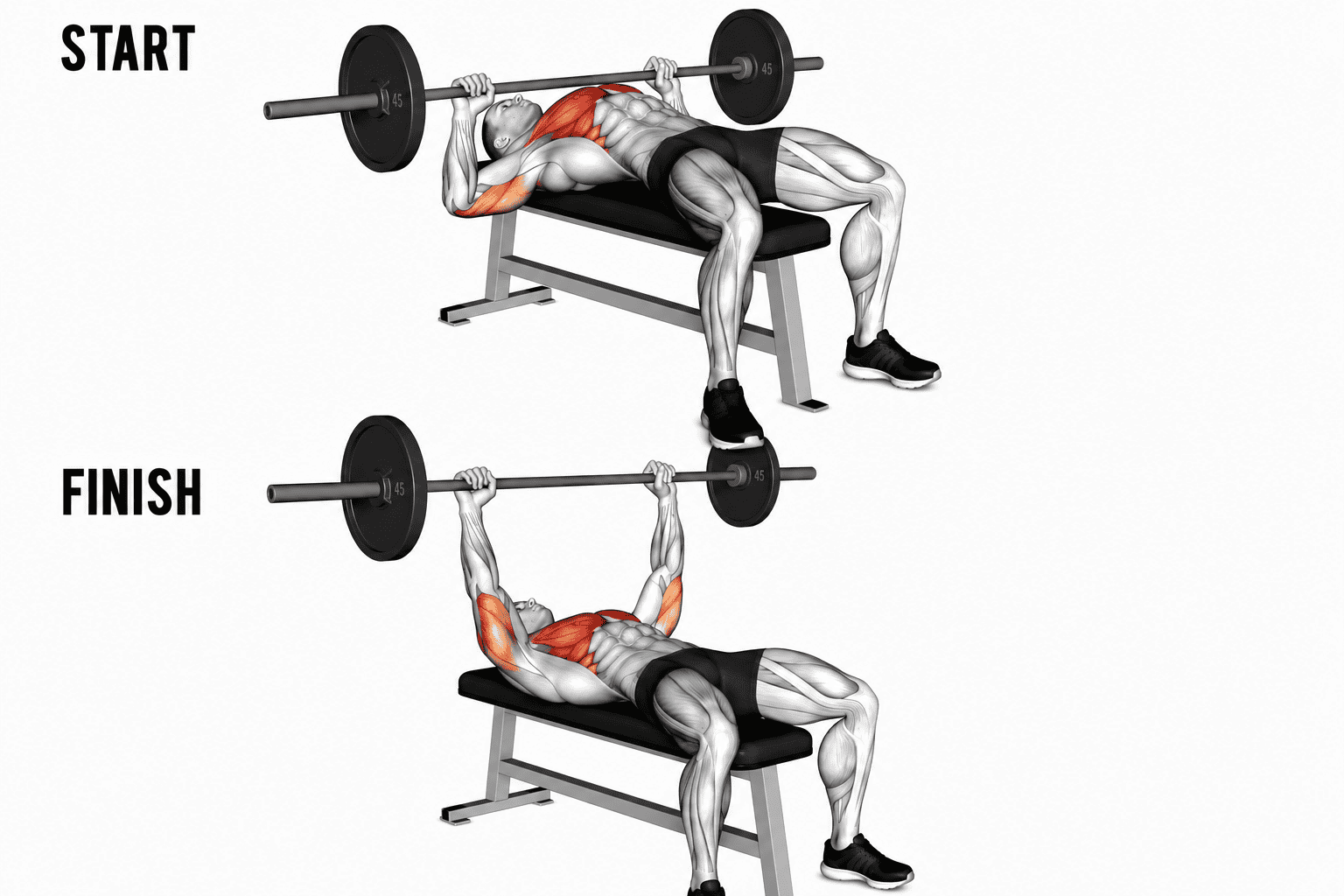
Exercise Description
The Barbell Bench Press is a fundamental compound exercise that develops upper-body strength and muscle mass. It primarily targets the chest while also engaging the shoulders and triceps. As one of the most effective pressing movements, it is widely used for strength, hypertrophy, and athletic performance.
Primary Muscles Worked
Pectoralis Major (Chest)
Secondary Muscles Worked
Anterior Deltoids (Front Shoulders)
Triceps Brachii
Serratus Anterior
Rotator Cuff Muscles (Stabilizers)
Upper Back Muscles (Stabilization)
How to Perform Correctly
Setup
Lie flat on a bench with your eyes directly under the barbell.
Place your feet firmly on the floor.
Grip the bar slightly wider than shoulder-width apart.
Retract and depress your shoulder blades.
Maintain a natural arch in your lower back while keeping your glutes on the bench.
Movement
Unrack the bar and hold it directly above your chest with straight arms.
Lower the bar under control to the mid-chest area.
Keep your elbows at approximately a 45–75° angle from your torso.
Lightly touch the chest without bouncing the bar.
Press the bar upward until your arms are nearly straight.
Repeat for the desired number of repetitions.
Common Mistakes to Avoid
Bouncing the Bar Off the Chest
Increases injury risk and reduces muscle tension.
Flaring the Elbows Excessively
Places unnecessary stress on the shoulder joints.
Lifting the Hips Off the Bench
Reduces stability and may strain the lower back.
Using an Incorrect Grip Width
Too wide can stress the shoulders; too narrow shifts emphasis away from the chest.
Partial Range of Motion
Failing to lower the bar sufficiently can limit muscle development and strength gains.
Losing Shoulder Blade Position
Allowing the shoulders to roll forward can increase shoulder stress.
Excessive Wrist Extension
Keep wrists neutral and stacked over the forearms.