
Barbell Bent-Over Row
Exercise Description
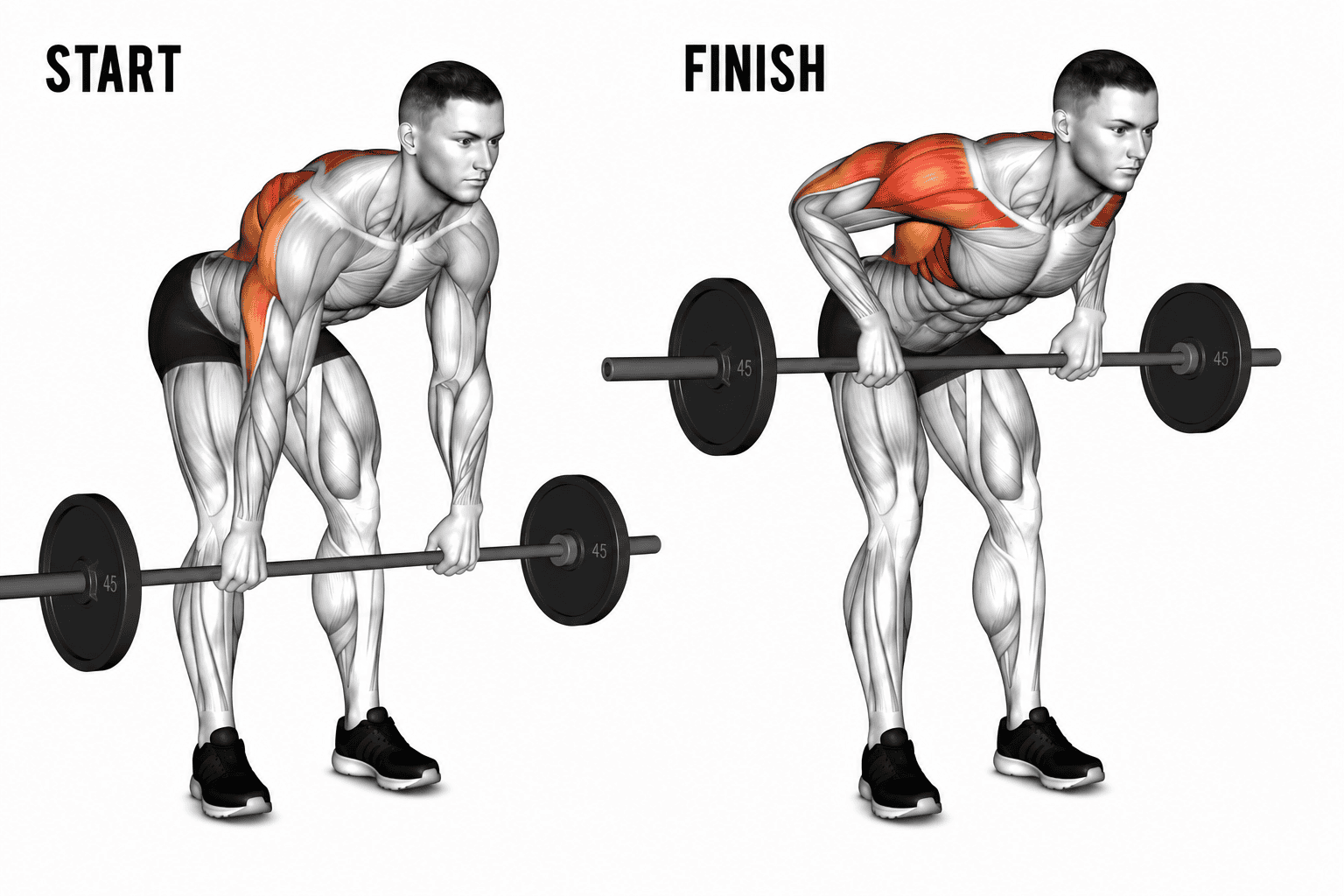
The Barbell Bent-Over Row is a compound pulling exercise that develops strength and muscle mass throughout the back. By rowing a barbell toward the torso while maintaining a bent-over position, this exercise targets the upper and middle back, improves posture, and enhances pulling strength. It is a fundamental movement for building a strong, balanced upper body and complements pressing exercises such as the bench press.
Primary Muscles Worked
Latissimus Dorsi
Rhomboids
Middle Trapezius
Secondary Muscles Worked
Posterior Deltoids (Rear Shoulders)
Biceps Brachii
Brachialis
Forearm Flexors
Erector Spinae (Lower Back)
Core Muscles
Teres Major
How to Perform Correctly
Setup
Stand with your feet approximately shoulder-width apart.
Hold a barbell with an overhand grip slightly wider than shoulder-width.
Bend at the hips and slightly at the knees until your torso is about 45–75 degrees to the floor.
Keep your chest up and maintain a neutral spine.
Let the barbell hang directly below your shoulders with your arms fully extended.
Engage your core and keep your shoulders pulled back.
Movement
Pull the barbell toward your lower chest or upper abdomen.
Drive your elbows backward while keeping them close to your body.
Squeeze your shoulder blades together at the top of the movement.
Pause briefly when the bar reaches your torso.
Lower the barbell slowly and under control until your arms are fully extended.
Repeat for the desired number of repetitions.
Common Mistakes to Avoid
Rounding the Lower Back
A rounded spine increases stress on the lower back and reduces stability.
Using Excessive Momentum
Swinging the torso to move the weight reduces back muscle engagement.
Standing Too Upright
An upright torso turns the exercise into a shrug-like movement and reduces back activation.
Pulling with the Arms Only
Focus on driving the elbows back and engaging the back muscles.
Allowing the Head to Extend Upward
Keep the neck neutral and aligned with the spine.
Using Too Much Weight
Excessive loading often leads to poor form and reduced range of motion.
Incomplete Range of Motion
Fully extend the arms at the bottom and row the bar all the way to the torso.