
Banded Pull-Down
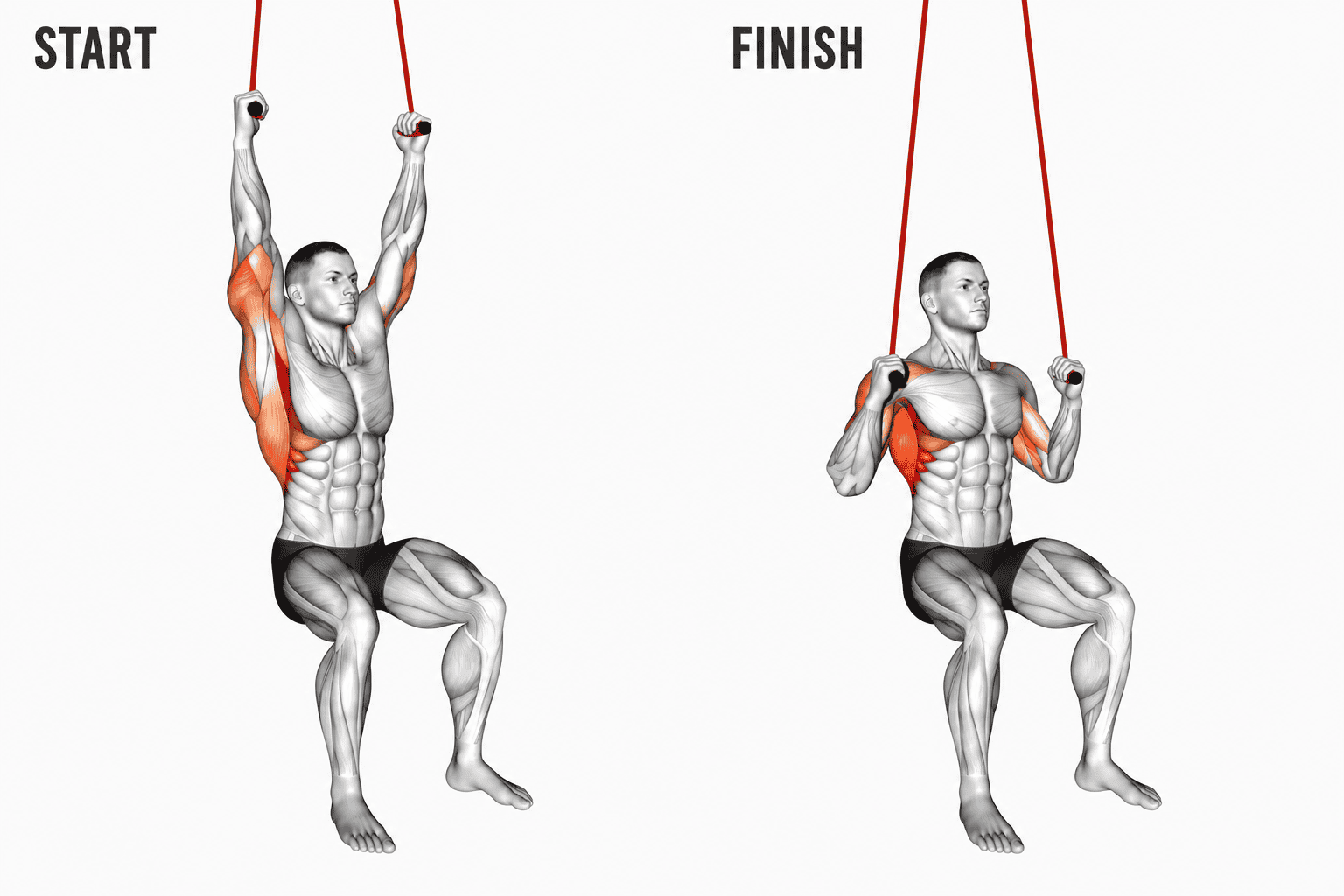
Exercise Description
The Banded Pull-Down is a resistance-band exercise that mimics the movement pattern of a lat pulldown machine. It primarily targets the muscles of the back, particularly the latissimus dorsi, while also engaging the arms and shoulders. This exercise is an effective way to build upper-body pulling strength, improve posture, and develop back muscle size using minimal equipment.
Primary Muscles Worked
Latissimus Dorsi
Secondary Muscles Worked
Biceps Brachii
Brachialis
Rhomboids
Middle and Lower Trapezius
Teres Major
Posterior Deltoids (Rear Shoulders)
Forearm Flexors
Rotator Cuff Muscles (Stabilizers)
Core Muscles (Stabilization)
How to Perform Correctly
Setup
Secure a resistance band to a stable anchor point above head height.
Sit, kneel, or stand facing the anchor point.
Hold the band with both hands using an overhand grip slightly wider than shoulder-width apart.
Extend your arms overhead and allow the band to create tension.
Lift your chest, engage your core, and keep your spine neutral.
Movement
Pull the band downward by driving your elbows toward your sides.
Focus on squeezing your shoulder blades down and back.
Continue pulling until your hands reach approximately upper-chest level.
Pause briefly at the bottom position.
Slowly extend your arms and return to the starting position under control.
Maintain tension in the band throughout the exercise.
Repeat for the desired number of repetitions.
Common Mistakes to Avoid
Pulling with the Arms Only
Focus on initiating the movement with the back muscles rather than relying solely on the biceps.
Shrugging the Shoulders
Keep your shoulders down and away from your ears throughout the exercise.
Leaning Back Excessively
Avoid using body momentum to assist the pull.
Incomplete Range of Motion
Fully extend the arms at the top and complete the pull at the bottom.
Allowing the Band to Snap Back
Control the return phase to maintain muscle tension and reduce injury risk.
Using Excessive Resistance
A band that is too heavy can compromise form and reduce range of motion.
Rounding the Upper Back
Keep your chest lifted and maintain good posture throughout the movement.