
Banded Face Pull
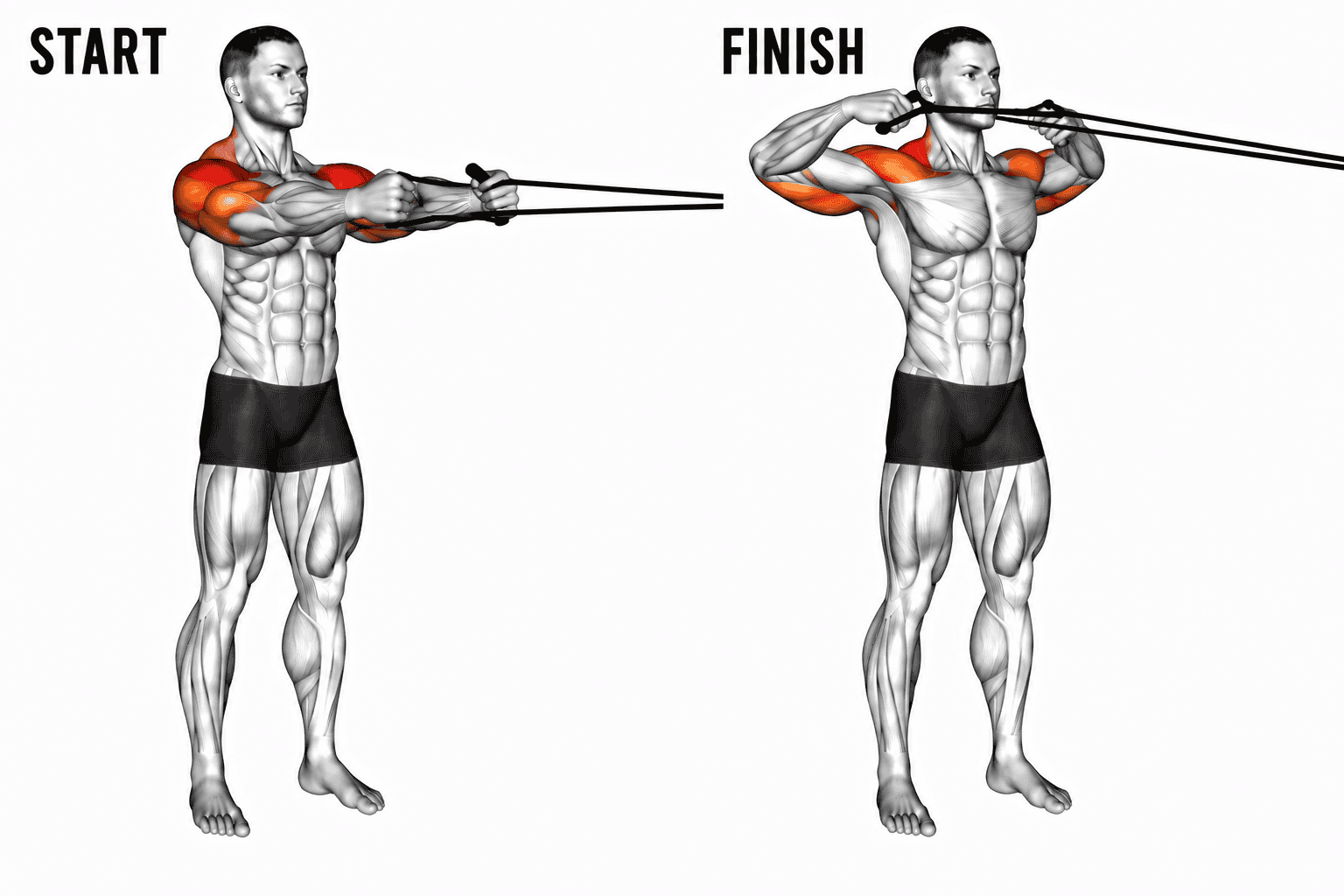
Exercise Description
The Banded Face Pull is a pulling exercise that targets the rear shoulders, upper back, and rotator cuff muscles. Performed with a resistance band anchored at face height, this movement helps improve posture, shoulder stability, and upper-back strength. It is commonly used to balance the effects of pressing exercises and prolonged sitting, making it an excellent exercise for both performance and shoulder health.
Primary Muscles Worked
Posterior Deltoids (Rear Shoulders)
Rhomboids
Middle Trapezius
Secondary Muscles Worked
Lower Trapezius
Rotator Cuff Muscles (Especially the External Rotators)
Teres Minor
Infraspinatus
Latissimus Dorsi
Biceps Brachii
Forearm Flexors
Core Muscles (Stabilization)
How to Perform Correctly
Setup
Secure a resistance band to a stable anchor point at approximately face height.
Hold the ends or handles of the band with both hands using a neutral or overhand grip.
Step back until the band is under tension with your arms fully extended.
Stand with your feet shoulder-width apart and knees slightly bent.
Engage your core and keep your chest lifted.
Maintain a neutral spine and relaxed shoulders.
Movement
Pull the band toward your face by driving your elbows outward and backward.
As the band approaches your face, rotate your shoulders externally so your hands move toward the sides of your head.
Squeeze your shoulder blades together at the end of the movement.
Pause briefly in the fully contracted position.
Slowly return your arms to the starting position under control.
Maintain tension in the band throughout the exercise.
Repeat for the desired number of repetitions.
Common Mistakes to Avoid
Pulling Too Low
Pulling toward the chest rather than the face reduces rear delt and rotator cuff involvement.
Shrugging the Shoulders
Keep the shoulders down and away from the ears throughout the movement.
Using Excessive Resistance
A band that is too heavy can compromise technique and reduce shoulder rotation.
Leaning Backward
Maintain an upright posture rather than using body weight to assist the pull.
Incomplete Range of Motion
Fully retract the shoulder blades and externally rotate the shoulders at the end of each repetition.
Allowing the Band to Snap Back
Control the return phase to maintain muscle tension and protect the joints.
Pulling with the Arms Only
Focus on squeezing the rear shoulders and upper-back muscles rather than relying solely on the biceps.