
Alternate Standing Curl
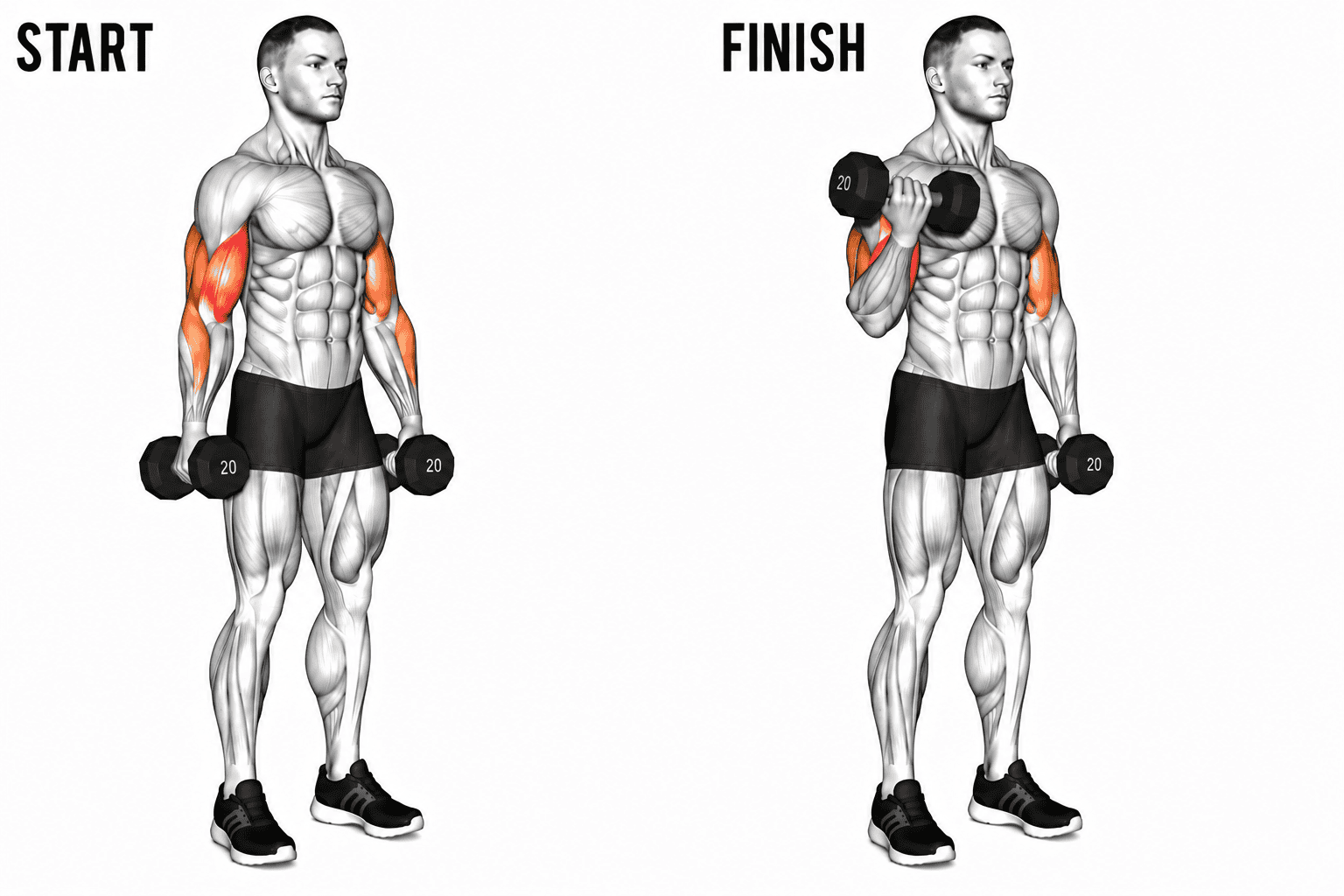
Exercise Description
The Alternating Standing Dumbbell Curl is a classic isolation exercise that targets the biceps while allowing each arm to work independently. Alternating between arms helps improve muscular balance, coordination, and mind-muscle connection while reducing the tendency to use momentum. This exercise is highly effective for building biceps size, strength, and overall arm development.
Primary Muscles Worked
Biceps Brachii
Secondary Muscles Worked
Brachialis
Brachioradialis
Forearm Flexors
Forearm Extensors (Stabilization)
Anterior Deltoids (Stabilization)
Core Muscles (Stabilization)
How to Perform Correctly
Setup
Stand upright holding a dumbbell in each hand.
Position your arms fully extended at your sides with palms facing forward.
Place your feet shoulder-width apart.
Lift your chest and pull your shoulders back.
Engage your core and maintain a neutral spine.
Keep your elbows close to your torso.
Movement
Curl one dumbbell upward by bending your elbow.
Keep your upper arm stationary throughout the movement.
Continue until the dumbbell reaches shoulder height.
Squeeze your biceps at the top position.
Slowly lower the dumbbell back to the starting position under control.
Repeat with the opposite arm.
Continue alternating arms for the desired number of repetitions.
Common Mistakes to Avoid
Swinging the Body
Avoid leaning backward or using momentum to lift the weights.
Moving the Elbows Forward
Keep your elbows close to your sides throughout the exercise.
Using Excessive Weight
Heavy dumbbells often reduce range of motion and compromise technique.
Shrugging the Shoulders
Keep the shoulders relaxed and avoid trap involvement.
Incomplete Range of Motion
Fully extend the arm at the bottom and complete the curl at the top.
Rotating the Torso
Keep your body stable and avoid twisting while alternating arms.
Lowering Too Quickly
Control the eccentric phase to maximize muscle activation and safety.