
Alternate Incline Curl
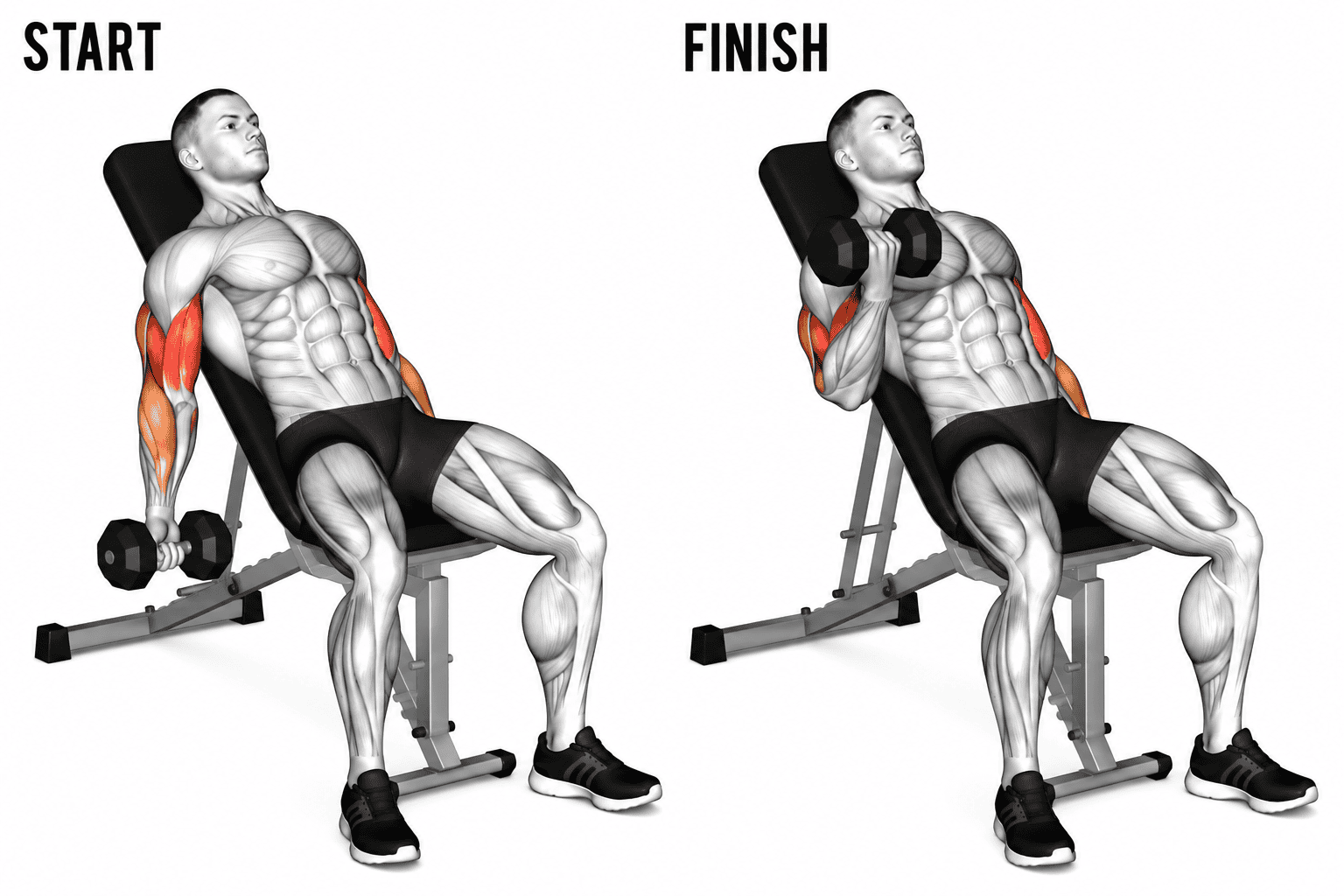
Exercise Description
The Alternating Incline Dumbbell Curl is a biceps isolation exercise performed while seated on an incline bench. The inclined position places the arms behind the torso, creating a greater stretch on the biceps, particularly the long head. Alternating one arm at a time allows for increased focus, improved mind-muscle connection, and balanced development between both arms. This exercise is highly effective for building biceps size, strength, and peak development.
Primary Muscles Worked
Biceps Brachii
Secondary Muscles Worked
Brachialis
Brachioradialis
Forearm Flexors
Forearm Extensors (Stabilization)
Anterior Deltoids (Stabilization)
How to Perform Correctly
Setup
Adjust an incline bench to approximately 45–60 degrees.
Sit back against the bench with a dumbbell in each hand.
Allow your arms to hang fully extended at your sides.
Position your palms facing forward.
Keep your chest lifted and shoulders pulled back.
Maintain contact between your back and the bench throughout the exercise.
Movement
Curl one dumbbell upward by bending your elbow.
Keep your upper arm stationary and slightly behind your torso.
Continue until the dumbbell reaches shoulder height.
Squeeze your biceps at the top position.
Slowly lower the dumbbell back to the starting position under control.
Repeat with the opposite arm.
Continue alternating arms for the desired number of repetitions.
Common Mistakes to Avoid
Swinging the Weight
Avoid using momentum to lift the dumbbells.
Moving the Elbows Forward
Keep your elbows behind or beside the torso to maintain tension on the biceps.
Using Excessive Weight
Heavy dumbbells often reduce range of motion and compromise form.
Lifting the Shoulders
Keep your shoulders relaxed and avoid shrugging during the movement.
Incomplete Range of Motion
Fully extend the arm at the bottom and complete the curl at the top.
Lifting Both Arms Simultaneously
Alternate arms as intended to maximize focus and control.
Lowering Too Quickly
Control the eccentric phase to increase muscle activation and reduce injury risk.