
Abdominal Bicycle
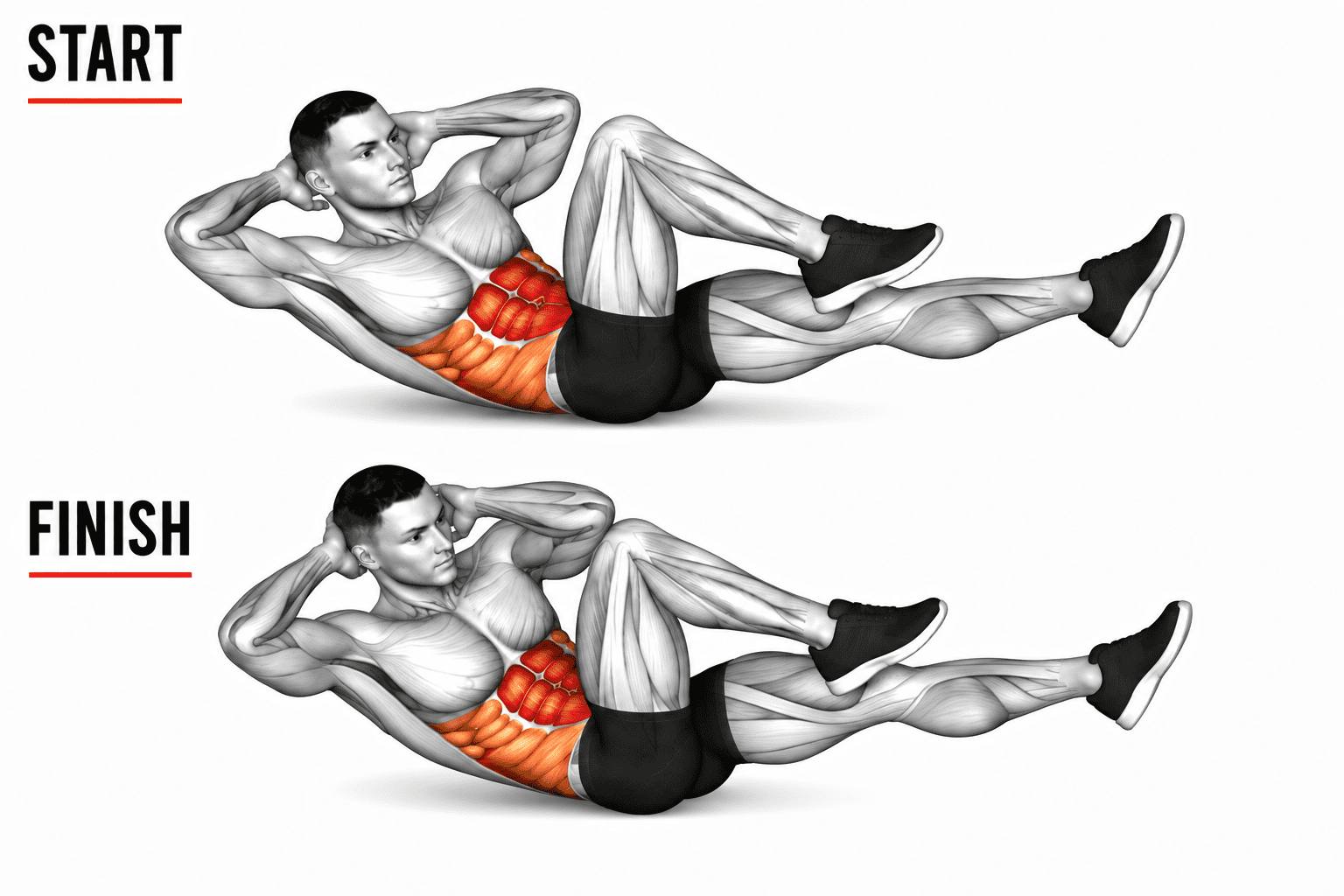
Exercise Description
The Abdominal Bicycle, commonly known as the Bicycle Crunch, is a bodyweight core exercise that targets the abdominal muscles through a combination of trunk flexion and rotation. The movement involves alternating elbow-to-knee contact while extending the opposite leg, creating continuous tension on the core. It is one of the most effective abdominal exercises for developing core strength, muscular endurance, coordination, and rotational stability.
Primary Muscles Worked
Rectus Abdominis
External Obliques
Internal Obliques
Secondary Muscles Worked
Transverse Abdominis
Hip Flexors
Rectus Femoris
Serratus Anterior
Quadriceps (Leg Extension Stabilization)
How to Perform Correctly
Setup
Lie flat on your back on an exercise mat.
Place your hands lightly behind your head without pulling on your neck.
Lift your shoulders slightly off the floor.
Raise your feet off the ground and bend your knees to approximately 90 degrees.
Engage your core and press your lower back gently into the floor.
Movement
Extend one leg straight while simultaneously bringing the opposite knee toward your chest.
Rotate your torso and bring the opposite elbow toward the bent knee.
Focus on rotating through the torso rather than pulling with the arms.
Alternate sides in a smooth, cycling motion.
Keep your shoulders elevated throughout the set.
Continue alternating sides for the desired number of repetitions or duration.
Common Mistakes to Avoid
Pulling on the Neck
Keep your hands lightly behind your head and allow the core to drive the movement.
Moving Too Quickly
Fast repetitions often reduce abdominal activation and increase momentum.
Allowing the Lower Back to Arch
Keep your lower back pressed gently into the floor throughout the exercise.
Using the Arms Instead of the Torso
Rotate through the ribcage and torso rather than forcing elbow-to-knee contact.
Extending the Leg Too High
Keep the extended leg low to maintain core tension, while avoiding excessive lower-back arching.
Holding the Breath
Maintain steady breathing throughout the movement.
Letting the Shoulders Drop
Keep the shoulder blades elevated to maintain abdominal engagement.