
The First Month of Working Out at Home: What to Expect and How to Succeed
Starting a home workout routine is one of the best decisions you can make for your health, fitness, and confidence.Whether your goal is to lose weight, build muscle, increase strength, or simply become more active, the first month lays the foundation for everything that follows.
The good news is that you don’t need a commercial gym to achieve impressive results. With adjustable dumbbells, resistance bands, a barbell, a pull-up bar, dip bars, and your own body weight, you can train every major muscle group and develop a strong, athletic physique from the comfort of your home.
Why the First Month Matters
The first four weeks are less about transforming your body and more about building habits that last. Many beginners expect dramatic physical changes immediately, but the biggest improvements often happen internally.
During the first month, your body begins adapting to regular exercise. Your muscles learn new movement patterns, your cardiovascular fitness improves, and your energy levels often increase. Even if the scale doesn’t move significantly, your body is already becoming stronger and more efficient.
Week 1: Building the Habit
The first week is all about consistency. Your workouts should focus on learning proper exercise technique rather than lifting the heaviest weight possible.
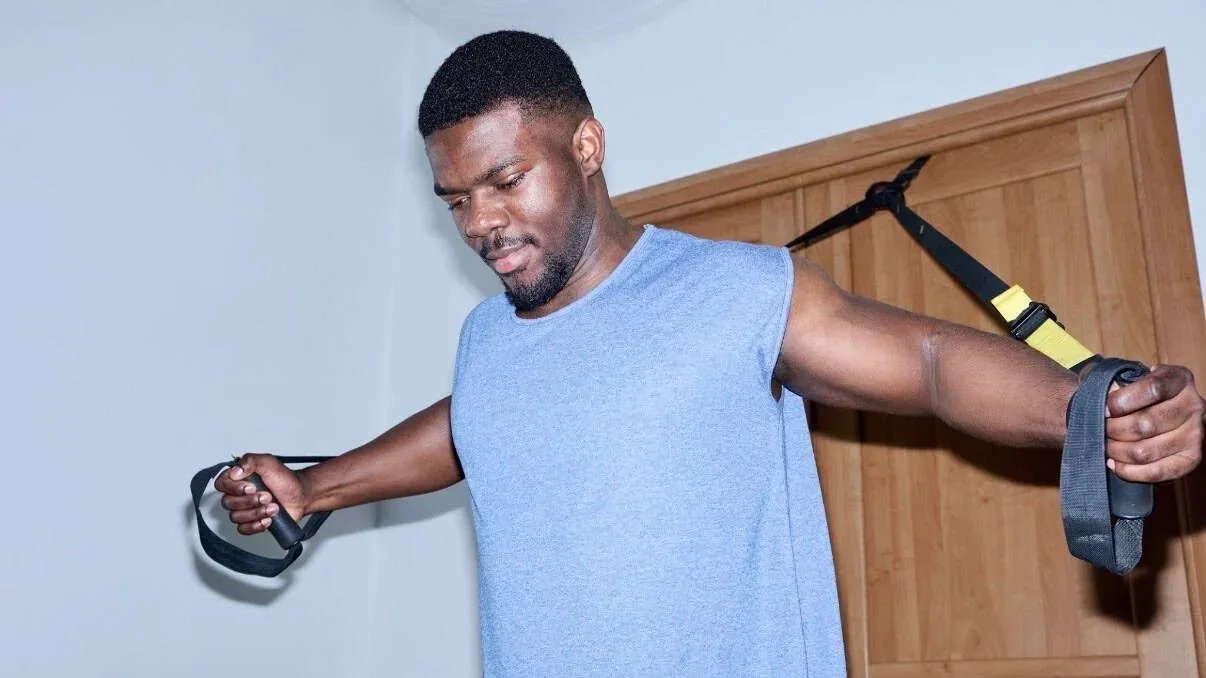
Adjustable dumbbells are perfect for beginners because they allow gradual progression while taking up very little space. Resistance bands can help improve movement quality and add variety, while bodyweight exercises teach fundamental movement patterns such as squats, push-ups, lunges, and planks.
Expect some muscle soreness during the first few days. This is a normal response to new physical activity and usually decreases as your body adapts.
The goal isn’t perfection. The goal is simply showing up and completing your planned workouts.
Week 2: Improved Confidence and Coordination
By the second week, exercises start to feel more natural. Movements that seemed awkward initially become smoother and more controlled.
Many beginners notice:
Increased energy levels throughout the day
Improved mood and focus
Better sleep quality
Reduced muscle soreness compared to week one
This is an excellent time to begin incorporating more equipment into your workouts.
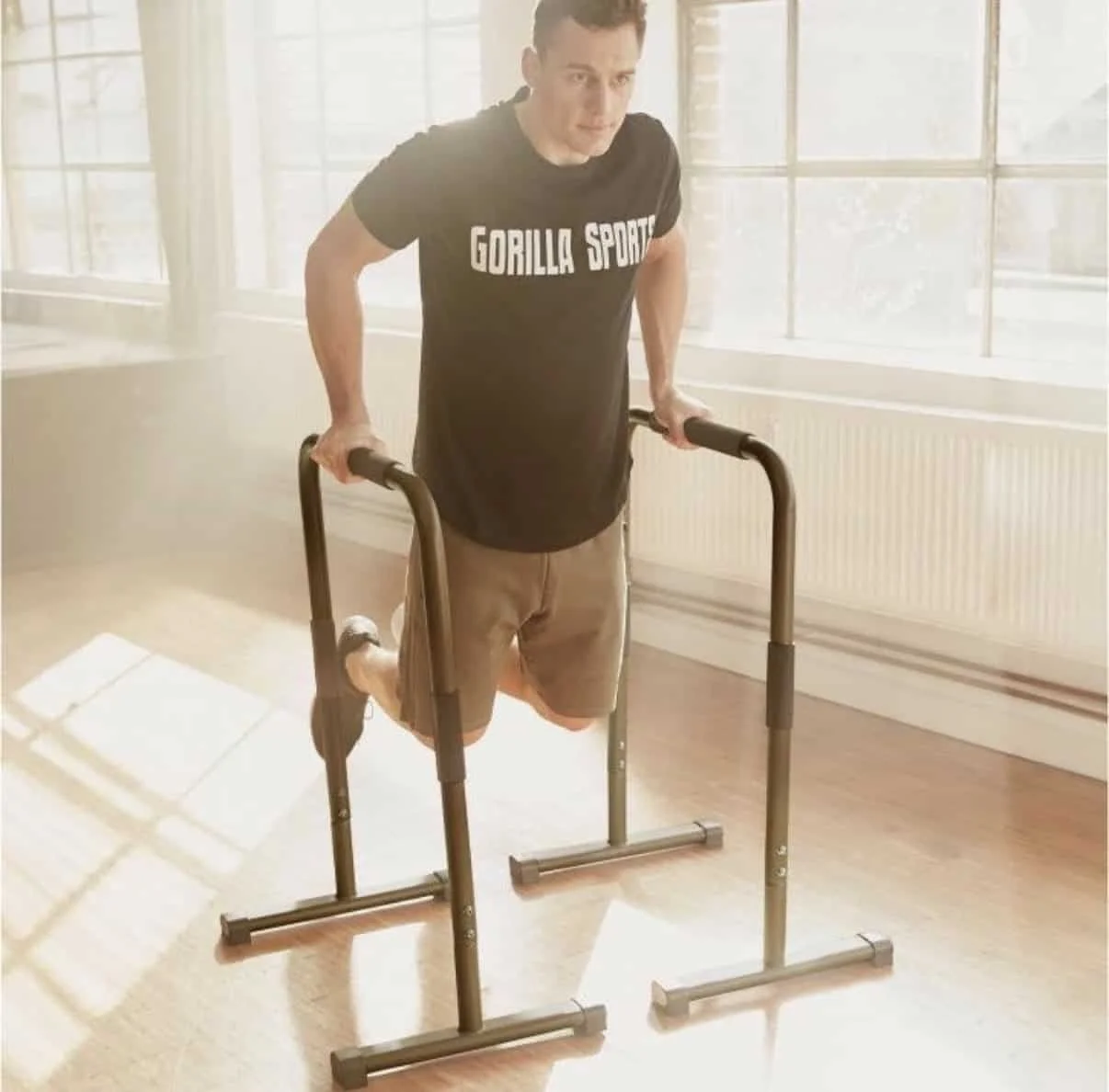
A pull-up bar can be used for assisted pull-ups, hanging knee raises, and grip-strength work. Dip bars provide an effective way to strengthen the chest, shoulders, and triceps while also improving core stability.
Week 3: Strength Gains Begin to Show
The third week is often where motivation increases because tangible progress becomes easier to notice.
You may find yourself:
Using heavier dumbbells
Performing more repetitions
Recovering faster between workouts
Feeling stronger during everyday activities
A barbell can now become a valuable addition to your routine. Basic movements such as barbell squats, Romanian deadlifts, and overhead presses allow you to progressively overload your muscles and continue building strength.
Progressive overload—the gradual increase of training difficulty—is one of the most important principles in fitness. Small improvements each week eventually lead to significant long-term results.
Week 4: Establishing a Routine
By the fourth week, working out starts feeling like a normal part of your lifestyle rather than something you have to force yourself to do.
This is often when people begin noticing early physical changes such as:
Slightly improved muscle definition
Better posture
Increased strength
Reduced body fat around the waist
Improved endurance
While dramatic transformations generally require several months of consistent training, these early signs are proof that your efforts are working.
The key is to remain patient and focus on long-term progress rather than short-term perfection.
The Best Exercises for Your First Month
A well-rounded home workout program should focus on movement patterns rather than individual muscles.
Lower Body
Goblet squats, lunges, Romanian deadlifts, and glute bridges help develop strength in the legs and hips while improving balance and coordination.
Upper Body Push
Push-ups, dumbbell presses, overhead presses, and dips strengthen the chest, shoulders, and triceps.
Upper Body Pull
Pull-ups, band-assisted pull-ups, dumbbell rows, and resistance band rows target the back and biceps while improving posture.
Core
Planks, hanging knee raises, dead bugs, and Russian twists build core stability and support overall athletic performance.
Nutrition During the First Month
Training is only one part of the equation. Proper nutrition plays a major role in determining your results.
Focus on consuming plenty of protein from lean meats, fish, eggs, dairy products, legumes, and protein-rich snacks. Stay hydrated throughout the day and prioritize whole foods whenever possible.
Rather than following an extreme diet, aim to create sustainable eating habits that support your training and recovery.
Small improvements made consistently will outperform restrictive diets almost every time.
Common Mistakes to Avoid
Many beginners make the mistake of doing too much too soon. Training every day, constantly changing exercises, or attempting advanced workouts can lead to burnout and injury.
Instead, focus on consistency, proper technique, and gradual progression.
Remember that fitness is a marathon, not a sprint. The people who achieve the best long-term results are usually the ones who stick with a simple plan and trust the process.
Final Thoughts
Your first month of working out at home is about much more than building muscle or losing fat. It is about creating habits, developing confidence, and proving to yourself that you can commit to positive change.
With adjustable dumbbells, resistance bands, a barbell, a pull-up bar, dip bars, and bodyweight exercises, you have everything needed to build strength, improve fitness, and achieve lasting results from home.
Stay consistent, focus on steady progress, and use the first month as the foundation for a healthier and stronger future.